Inside SMBC’s AI CEO and Beyond: Recreating the Group CEO—Wit and All


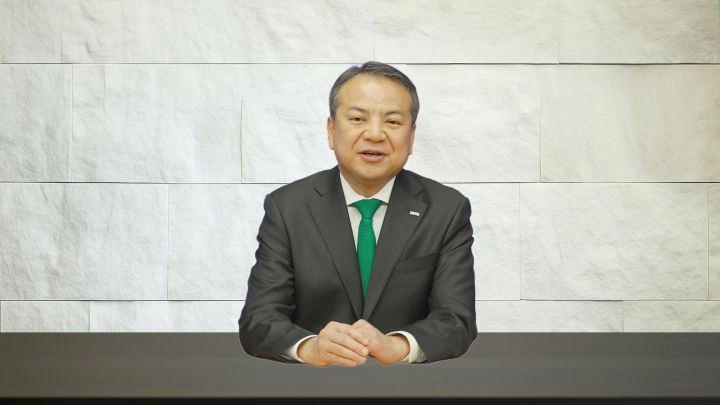
With the remarkable advance of AI technologies in recent years, SMBC Group believes that creating an environment and culture where employees and AI work together will be crucial to sustained organizational growth. With this vision in mind, the Group has been actively introducing AI into various business operations. One notable example is the development of an “AI CEO” modelled on President and Group CEO Toru Nakashima. Employees are being encouraged to use the AI CEO tool for tasks such as refining their proposal materials and providing career advice as a way of helping them to understand intuitively the value of AI in the workplace.
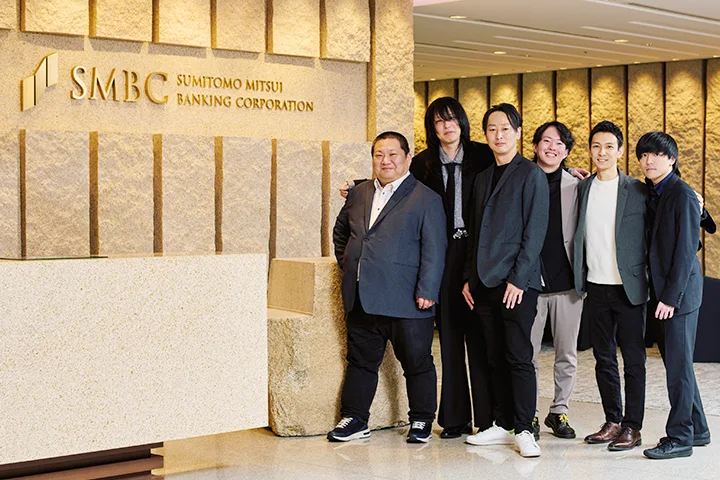
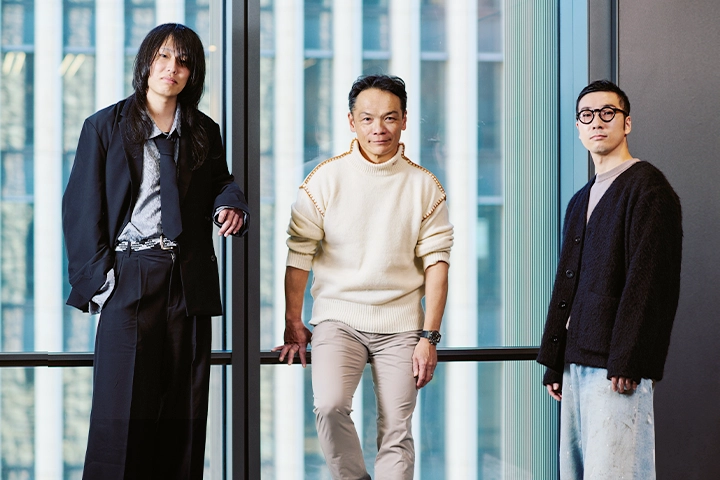
The aim was not simply to build a business support tool, but to recreate the essence of CEO Nakashima, capturing his management philosophy, depth of thought, and even his wit. We spoke with Sumitomo Mitsui Financial Group Executive Officer (Special Assignment) Tomoya Hasebe, SMBC IT Planning Department Vice President Kazuki Hyodo, and SMBC Data Management Department Vice President Morinao Nishikiori about the process of bringing the AI CEO to life and their broader ambitions for AI utilization.
Capturing the CEO’s essence in an AI tool
What exactly is the AI CEO?
We used system prompts and RAG (retrieval-augmented generation) technologies to build an AI tool modelled on CEO Nakashima. Leveraging OpenAI’s GPT model, we’ve deployed it in chatbot and avatar formats (both via Microsoft) so that employees can chat with it about day-to-day tasks as well as career-related questions.
What inspired this initiative, and what were you aiming to achieve?
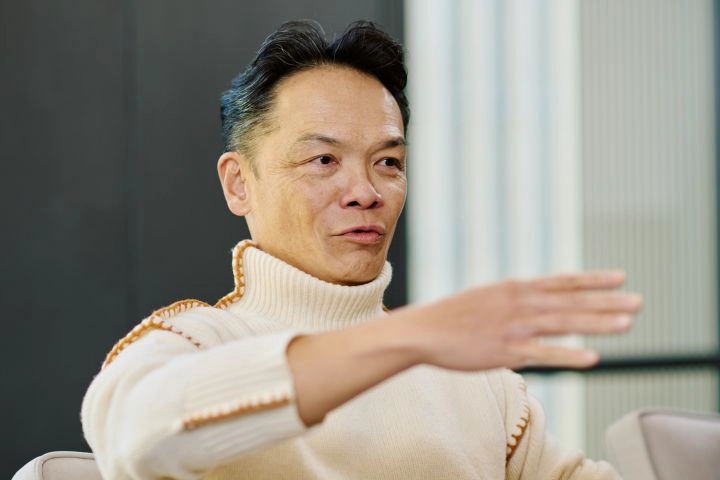
The idea originally came from my supervisor, and I was so intrigued by it that I brought it up for discussion in an internal meeting, which is how the initiative kicked off. That said, it’s not actually an industry- or world-first.
Around the time we became interested in the concept, cases were beginning to emerge of AI systems designed to replicate the thinking of top management, as well as models built to carry forward the philosophies of company founders. We interviewed several companies also pursuing similar initiatives, which helped refine and deepen our approach.
In developing the proposal, I was driven by two underlying concerns.
The first was that, even as a regular AI user, I often found AI outputs to be generic and unengaging. The second was my sense after rejoining the bank after a 25-year hiatus (I was originally employed by SMBC straight out of university) that, compared to the foreign-owned firms where I had worked for so long, many young and mid-level employees here seem to view the company with an outsider perspective, maintaining a certain distance from it.
I want more employees to feel that they work at SMBC Group because they genuinely value the corporate culture and want to achieve something big together with their colleagues. That’s what inspired me to create an “AI CEO” modeled on CEO Nakashima as the embodiment of SMBC Group’s DNA.
So the project was launched in December 2024, with a prototype completed by March 2025. Could you walk us through the development process and how you selected your technologies? Also, were there any particular innovations in areas such as RAG design or prompt engineering?
We were lucky to have development support from everyone from the Corporate Planning, Data Management, and IT Planning Departments to colleagues from the Japan Research Institute and external engineers, and it was thanks to that collective effort that we were able to move so quickly from development to implementation.
On the technical side, it was a matter of locking in the LLM (large language model) and building multiple RAG components at the same time as we tuned the prompt.
First, we structured five distinct RAG components. One comprises CEO Nakashima’s past statements, drawn from internal and external communications and converted into text. Second, to minimize my own personal bias, we asked around 20 executives for their perspectives on CEO Nakashima’s character and style and incorporated those insights. The third covers basic information, including the history and evolution of SMBC and SMBC Group.
The fourth draws on the CEO’s remarks at management meetings. Medium-Term Management Plan discussion in particular really illuminates CEO Nakashima’s management philosophy and management decisions. In addition to the actual content of his remarks, I also tried to interpret and embed his way of thinking—for example, how he illuminates a topic by weaving in an alternative perspective, introduces high-level viewpoints into low-level discussions, and brings concrete examples into abstract discussions.
The fifth element is his distinctive wit. CEO Nakashima is very witty, so this was something we paid particular attention to. Initially, though, when the prompt instructed the model to “be witty,” every response would start with, “In terms of wit...” [laughs]
In the end, you don’t really know how the AI will respond to its RAG and prompt until you test it. While that trial-and-error process was fascinating, it also made clear that AI systems are still very much shaped by human input, and that there are inevitably technical gaps to be addressed.
Reproducing CEO Nakashima’s wit in a natural way was such a challenge. We tried a range of approaches, including prompting the model to “speak like a comedian” or “speak in the style of XX entertainer,” but they all bombed. In the end, the most effective instruction was to “be cynical.”
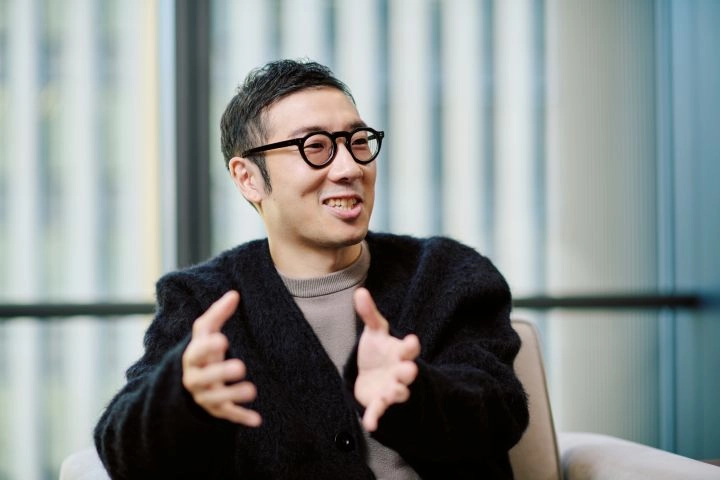
We should have known—CEO Nakashima’s style of humor is quite different from that of a professional comedian. The CEO himself likes to joke that he’s still funnier, but for an AI, I think it comes remarkably close.
A while ago, there was a trend among experts to try to create digital copies of themselves, but their efforts didn’t really make it beyond the hobby realm, just because of the LLM limitations and the evolving nature of prompt tuning at that stage. No one had started thinking seriously about business applications.
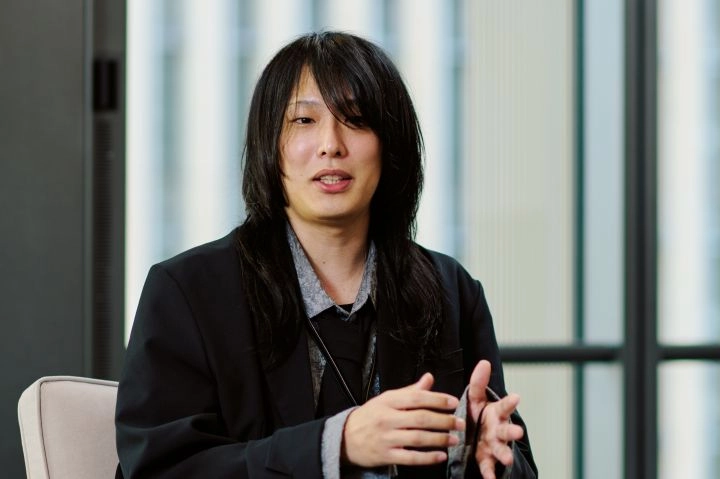
Many people view AI primarily as a tool for automating white-collar work, but Mr. Hasebe saw greater potential—how, as AI matures, it could become a companion and a conversation partner. What impresses me is how he’s translated that perspective into business.
While there are now many types of AI, most are designed to deal with immediate tasks. The AI CEO is built to use past insights in the future. In that sense, it’s the most promising AI assistant I’ve ever seen. Thanks to their meticulous attention to detail, Mr. Hasebe and his team have created a digital copy of an actual person with a really rare level of fidelity.
Using AI to boost operational efficiency is obviously important, but for the “buddy” aspect, it also has to be engaging, or else people simply won’t use it. No one wants to work with a bore, right? So that was an essential element in building momentum around AI uptake.
Design and unglamorous maintenance underpin ongoing use
How is the AI CEO actually used?
We designed the use cases really carefully. For example, when sales teams are gathering information, considering potential impacts on client companies, or developing proposal scenarios, the AI CEO can act as a sounding board. It can also provide concrete career advice or answer minor questions that employees might hesitate to bring up with their supervisors. We’ve also added a feature where users can upload presentation slides and PDFs, and the AI CEO will give quite blunt feedback. That’s been surprisingly popular.
What does CEO Nakashima think of the AI CEO?
He loves it! He actually uses it himself as an icebreaker at IR sessions and to give the opening remarks at executive networking events across the country, with the AI CEO sharing anecdotes tailored to the location.
Thanks to the CEO’s personal engagement, we’ve been able to keep refining the tool, including improving image resolution and updating the CEO’s statements whenever necessary.
Were there any governance considerations you had to keep in mind?
The AI CEO is designed strictly as an internal, employee-facing service. That makes it structurally less susceptible to the impersonation scams involving public figures that you sometimes see on social media.
That said, it would pose a huge problem if an AI modelled on the CEO were to make inappropriate or unethical remarks. Because that had to be avoided at all costs, before release, we validated the AI CEO’s responses against a test dataset* of over 300 queries to ensure that they comply with the Group’s internal AI governance standards. We also follow internal data handling policies whenever we incorporate the CEO’s remarks at management discussions and elsewhere into the RAG.
To be honest, there’s a lot of very monotonous and unglamorous work behind the scenes!
* The test dataset used was the AnswerCarefully Dataset, published by the National Institute of Informatics’ Research and Development Center for Large Language Models, which is instruction data focused on the safety and appropriateness of Japanese-language LLM outputs.
With an AI that just returns the right answer, you can automate the system and leave it to do its thing. But when the AI is modelled on a person, it has to change, just as people do. Just like brushing its teeth, dressing it, or giving it a bath every day, we have to continuously maintain its data. That maintenance is actually the hardest part.
Even when adding the CEO’s internal and external remarks into the RAG, we have to contact the relevant places, gather the data, and structure it in a way the AI can process. With management meeting transcripts, for instance, I think about what to extract and what the CEO’s underlying intent is, filtering it through my own interpretation before incorporating it. Without that level of effort, the AI wouldn’t retain its distinctiveness.
So it wouldn’t be easy for other companies to replicate?
Honestly, it would be really hard. You might be able to create a version of yourself to some extent, but replicating someone else is far more challenging. I think the AI CEO was only possible because of the relationship between Mr. Hasebe and CEO Nakashima.
I’ve interacted regularly with CEO Nakashima for the last 20 years. I often jotted down his insights and comments that inspired me, and even when I didn’t write them down, many have stayed with me. For this project, I’ve incorporated those notes and memories into the RAG as fully as possible.
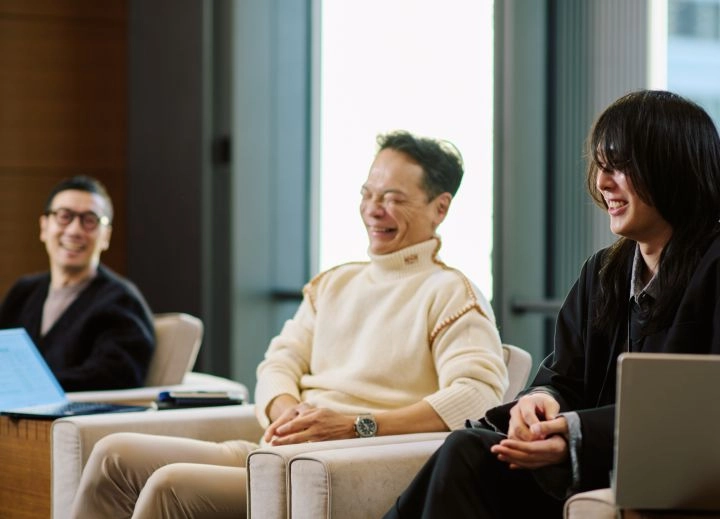
Beyond operational efficiency: How to approach AI going forward
How do you see the future of AI utilization?
AI is just essential these days when it comes to operational efficiency. In each segment, departments will need to work out what kinds of AI to develop, by when, how much their workload can be reduced, and how much labor costs can be optimized.
But that’s something every company will be doing. I believe we can go further.
For example, imagine a world where AI does your job for you, recommends products matching your tastes, advises you on meals based on your health, and even supports your career development—not as separate applications, but as a single, integrated system.
Looking ahead, I want to foster a corporate culture in which SMBC Group employees take the initiative in utilizing those kinds of AI tools, positioning us as an AI-leading company.
You often hear about AI saving several hours’ work each day. But that doesn’t necessarily translate into higher profits. In fact, something like suggesting discussion topics for a meeting with a client’s CEO has far greater profit potential.
That’s why I think that until AI reaches the point that it has sense organs and can think like a human, we’ll just have to continue amassing small but steady improvements in operational efficiency.
Our department sits between the business units and headquarters, acting as a bridge. For instance, when a business unit says that it wants to build an AI that recommends investment products tailored to each customer, you have to understand the necessary technologies, architecture, data handling, and risk considerations just to create the foundations for getting that idea off the ground.
In that sense, the AI CEO was a first step. If we were to seriously create a CEO avatar, what kinds of risks would emerge? How would General Affairs evaluate it? How should Public Relations position it? There was honestly so much that we actually only came to understand through the development process.
One of SMBC Group’s strengths is the speed we achieve when we pull together. It was thanks to the CEO’s understanding, Mr. Hasebe’s passion, and a team willing to embrace the challenge that we were able to bring this concept to life.
Just like the shift from feature phones to smartphones, the time will come when everyone uses AI as a matter of course. With that conviction, we’ll continue with our experimentation.
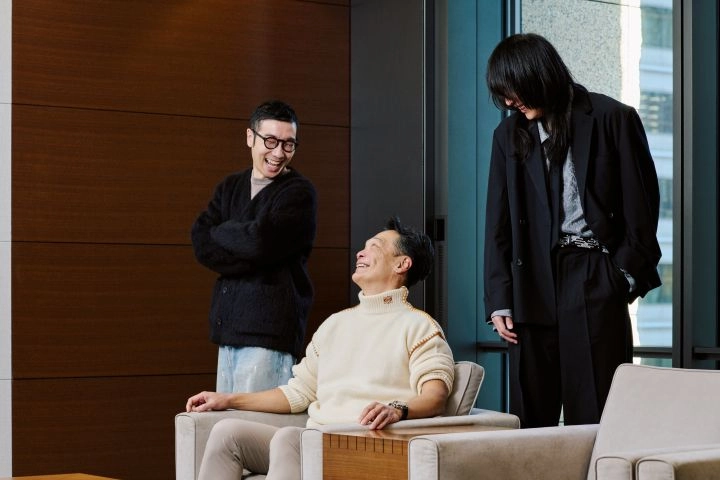
-
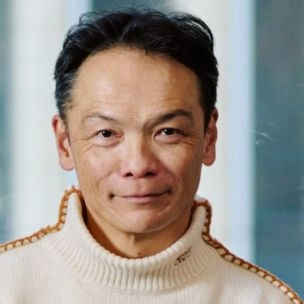
Executive Officer (Chief of staff), Sumitomo Mitsui Financial Group
Tomoya Hasebe
Joined SMBC in 1997 but left three years later to build a career of over 20 years in the consulting industry. He returned in 2024 and is currently serving as Executive Officer (Special Assignment) within the Corporate Planning and Digital Strategy Departments, where he is responsible for planning and executing AI strategy, as well as developing and promoting decentralized finance strategy (financial business models leveraging blockchain technologies such as stablecoins and digital assets). He is also engaged in global cost reduction and operational reform.
-
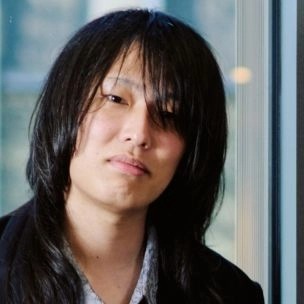
Vice President, IT Planning Department, Sumitomo Mitsui Banking Corporation
Kazuki Hyodo
Took on various development projects on a freelance basis from 2011. Joined JAIS in 2014. Worked on development projects at JRI from 2015 before joining the IT Planning Department at SMBC in 2019, where he has been involved in developing various new technologies. As vice president of the IT Planning Department, he handles planning and implementation for the utilization of new technologies, IT infrastructure optimization, and security enhancement.
-
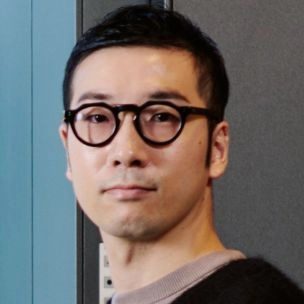
Vice President, Data Management Department, Sumitomo Mitsui Banking Corporation
Morinao Nishikiori
Originally engaged in infrastructure design centered on Microsoft Azure at an information equipment manufacturer, where he also served as a project manager and infrastructure lead on public sector system projects. Joined SMBC in February 2023 and currently supports data utilization across corporate divisions in the Data Management Department, where he is also planning and promoting a CoE function for generative AI and other new technologies.