"Design in India" — A New Chapter in Japan–India Co-Creation Asia Leaders Summit 2026 @ Bengaluru



In July 2026, in Bengaluru—the technology hub of southern India—the event “Asia Leaders Summit 2026” was held, hosted by Incubate Fund Asia, which jointly manages the SMBC Asia Rising Fund.
This year’s theme was “Japan–India collaboration in manufacturing, deep tech, and the space sector.” Executives from major Japanese corporations, investors, Indian startups, and research institutions—a diverse set of players representing both countries—came together.
This report shares the latest trends in India’s startup ecosystem, the initiatives of the SMBC Group, and the future potential for co-creation, drawing on our participation in Asia Leaders Summit 2026.
From “Make in India” to “Design in India”
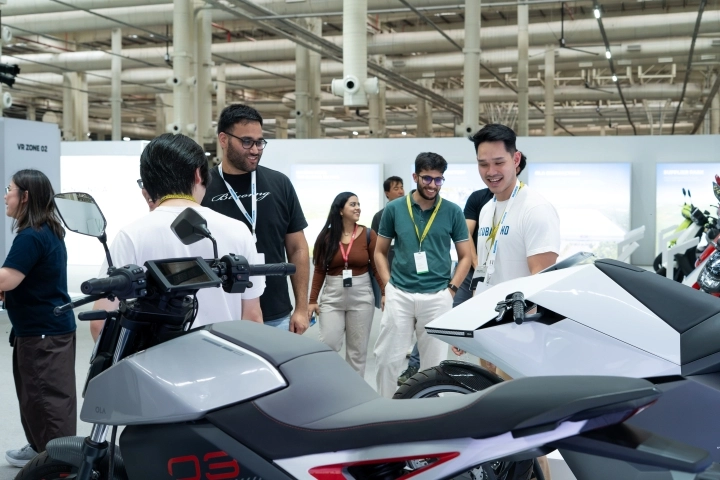
For many Japanese companies, India has long been both a vast consumer market and a manufacturing base backed by a skilled and abundant talent pool. As symbolized by “Make in India,” the country has steadily raised its profile as a key manufacturing hub within global supply chains.
The biggest discovery at this summit, however, was that beyond its established role in manufacturing products designed elsewhere, a “Design in India” movement is spreading—one in which companies design their own technologies, generate their own IP (intellectual property), and take them to global markets.
The driving force behind this is the concentration of outstanding talent.
According to the Indian government, India accounts for roughly 20% of the world’s semiconductor design talent (*1).
*1: Based on a Rajya Sabha (upper house) reply by India’s Ministry of Electronics and Information Technology (MeitY) on March 13, 2026.
AI engineers who honed their skills in Silicon Valley, technologists from ISRO (the Indian Space Research Organisation) and NASA, and young graduates of India’s top science and engineering institutions are, one after another, taking on the challenge of founding companies and developing businesses within India.
Behind this lies the national vision set out by the Indian government, “Viksit Bharat 2047.” By 2047—the 100th anniversary of independence—India aims to become an advanced economy with a nominal GDP of around US$30 trillion, accelerating investment in manufacturing, AI, semiconductors, and the space sector (*2). As a result, an industrial foundation where highly skilled talent can thrive is rapidly taking shape.
*2: India’s nominal GDP was US$3.96 trillion as of 2025. As examples of policy, the country aims to raise manufacturing’s share of GDP from 17% to 25%, make large-scale investments in AI and semiconductors, and grow its space economy roughly fivefold.
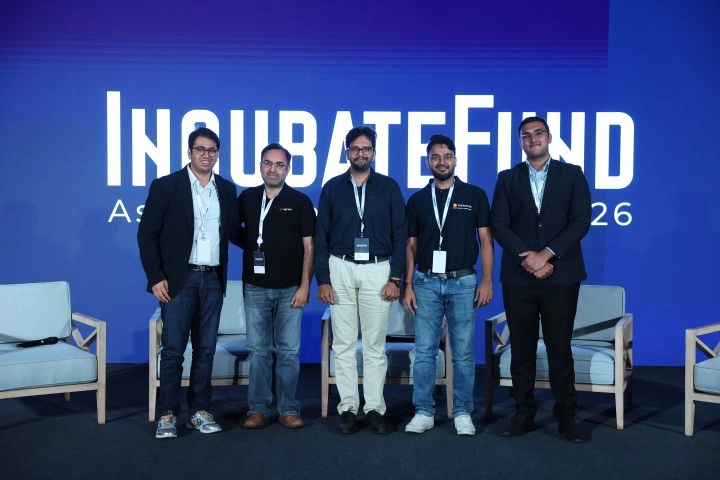
The four startups that took the stage at this summit also symbolized that change.
AGRANI Labs is developing GPUs (graphics processing semiconductors) essential to AI computation, while Enerzolve is advancing domestic production of power-control and energy-storage systems that had been heavily import-dependent. Bellatrix Aerospace develops and manufactures more than 80% of the key components of its space propulsion systems in-house, and Pixxel provides high-precision Earth-observation data services using its own constellation of satellites.
Many of these companies are teams of young engineers with an average age of around 30, and they are elevating India’s presence as a “global hub of innovation.”
This change is also evident in Japanese companies’ India strategies. Indian subsidiaries that were once cost-focused offshore development bases are now evolving into local R&D bases that “create solutions for the local market.”
In fact, one major Japanese manufacturer that spoke at the summit had originally established its Indian subsidiary to develop systems for the U.S. market. Today, however, with an eye on India’s rapidly growing market, it has redefined the subsidiary as a strategic base responsible for developing locally originated products and services.
It is not uncommon for the compensation of top software engineers in India to exceed that at the Japanese head office. Even so, what the company focuses on is not cost but “the value created by a small, highly skilled team.”
Supply Chain Realignment: A Major Opportunity for Japan
Amid rising geopolitical risk, companies are diversifying their procurement sources and manufacturing bases. As a result, supply chain resilience has become a shared management challenge worldwide.
From the Indian deep-tech companies at the summit, it was clear that the key theme is not mere cost competition but “building trusted supply chains.”
For example, one company in the space sector is managing several hundred suppliers and several thousand components while expanding collaboration with Japan, Europe, and the United States, building a procurement structure resilient to geopolitical risk. An AI-sector company, meanwhile, introduced a vision of keeping its design and IP in-house while co-creating manufacturing with global partners in Taiwan, the U.S., and—eventually—Japan.
Within this current, the precision manufacturing technology, quality control, and long-cultivated reliability that Japanese companies possess are beginning to hold greater value than ever before.
Indeed, from the founders of Indian startups, we heard remarks such as the following:
“A capital tie-up is only the first step in building a relationship; what we truly want is Japan’s precision-manufacturing know-how through joint development.”
“Japan’s culture of ‘precision engineering’ is exactly what Indian entrepreneurs most want to learn.”
Supply chain realignment is often discussed in the context of risk management. Seen from another angle, however, this tectonic shift is bringing new co-creation opportunities to Japanese companies. Precisely because India is now steering toward “Design in India,” the potential for Japan–India co-creation may be wider than ever.
Co-Creation in Practice — A Community That Learns Together
At the same time, the more co-creation opportunities widen, the more success hinges on how they are pursued.
In the SMBC Group–hosted session “Business Co-creation Dojo,” SMBC Asia Rising Fund portfolio companies Vayana and Olyv, together with the management of YES BANK (in which the SMBC Group holds a stake), were invited to discuss the practice of co-creation in the Indian market and the lessons learned.
What was voiced in common from the different standpoints of startups and banks was the theme of “how to build co-creation as a repeatable mechanism.”
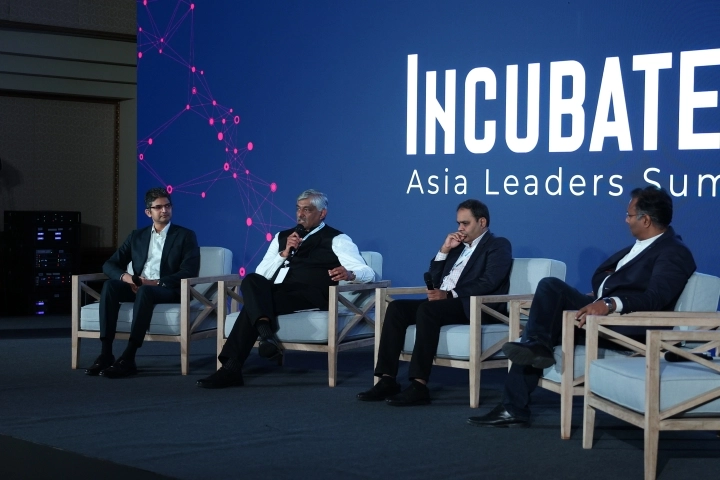
Vayana is a fintech company that provides the financial infrastructure supporting credit and trade finance for small and medium-sized enterprises. The company says that what matters in co-creation is not the technology itself, but how much a business can be grown and who takes responsibility for the outcomes. In other words, co-creation is shifting from simply providing technology to becoming an "outcome partner" that delivers results together.
Olyv provides digital financial services for individuals with limited access to traditional financial services. The company noted that for co-creation to work, it is important for startups and large corporations to understand not only each other’s strengths but also their constraints and responsibilities. Such mutual understanding, it says, becomes the foundation of a long-term relationship of trust.
That said, scaling co-creation requires not only accountability for outcomes and relationships of trust, but also governance. From that perspective, YES BANK’s approach was instructive.
The bank has touchpoints with more than 10,000 fintech companies and holds a top-tier share of India’s digital payment transactions (*3). That scale is underpinned by real-time risk management, along with governance that embeds security and data protection.
The bank has also institutionalized a forum where business units continuously bring in and validate co-creation ideas. Its governance function supports these efforts from the standpoints of risk management and security, striking a balance between innovation and control.
*3: As of Q1 of fiscal 2026, on UPI (Unified Payments Interface), India’s largest real-time payments platform, YES BANK held a 58.7% share on the beneficiary (receiving) side (No. 1 in the industry) and a 36.0% share on the remitter (paying) side (No. 2 in the industry).
Accountability for outcomes, mutual understanding, and governance—all of these are indispensable to making co-creation a repeatable mechanism.
In the session, Mr. Mayoran Rajendra, who leads the SMBC Asia Rising Fund, spoke as follows about the essence of a co-creation ecosystem:
“Co-creation does not happen on its own. It is something you deliberately create.”
To date, the SMBC Asia Rising Fund has invested in more than ten Indian startups, advancing the creation of co-creation opportunities with the SMBC Group and its customers.
On the other hand, investment alone does not give rise to new businesses or synergies. There needs to be a place where players from different companies, industries, and countries can understand one another and discuss matters candidly.
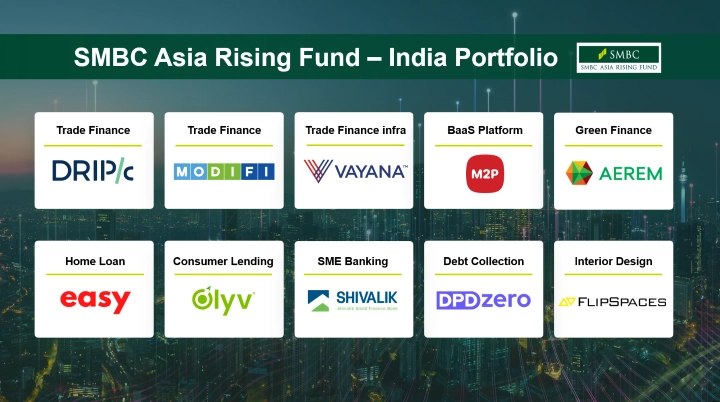
It is with this thinking that we are advancing the Business Co-creation Dojo. Launched in Singapore in 2024, this Bengaluru edition marked its fifth session. To date, more than 300 corporate participants in total have taken part, with startups, large corporations, and financial institutions sharing insights across industries and borders.
What the Dojo aims for is not just networking. By sharing not only success stories but also failures and challenges, it seeks to enable participants to learn together as a repeatable mechanism—one that does not depend on the personal networks or individual capabilities of the people in charge of co-creation.
That mechanism is exactly what the SMBC Asia Rising Fund is aiming to build. Connecting different companies, industries, and countries while expanding the possibilities of co-creation—the SMBC Group will continue to support this creation of value.
-
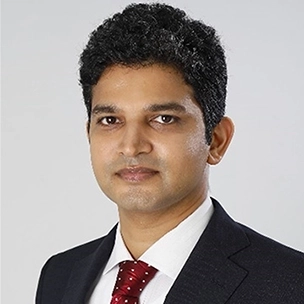
Managing Director, AI Transformation Department, Sumitomo Mitsui Banking Corporation
Mayoran Rajendra
Graduated with a master’s degree in Precision Machinery Engineering from the Graduate School of Engineering at the University of Tokyo.In 2009, he joined GE Healthcare Japan, where he worked on MRI research and development as a new-product development engineer. He was subsequently selected for GE’s leadership program for engineers, leading projects across a broad range of fields including manufacturing, IT, marketing, and supply chain. In 2015, he moved to GE Japan, where he spearheaded the launch of its industrial IoT business. As a pioneer in the field, he drove numerous IoT and digital transformation projects in the power, aviation, and manufacturing sectors. In August 2020, he joined Sumitomo Mitsui Banking Corporation. Today, as the head of the AI Transformation division, he oversees SMBC’s AI-driven transformation strategy and leads the building of digital financial solutions and a partner ecosystem. He also promotes startup investment and co-creation through the SMBC Asia Rising Fund (APAC) and the SMBC Fin Atlas Beyond Fund (U.S.).