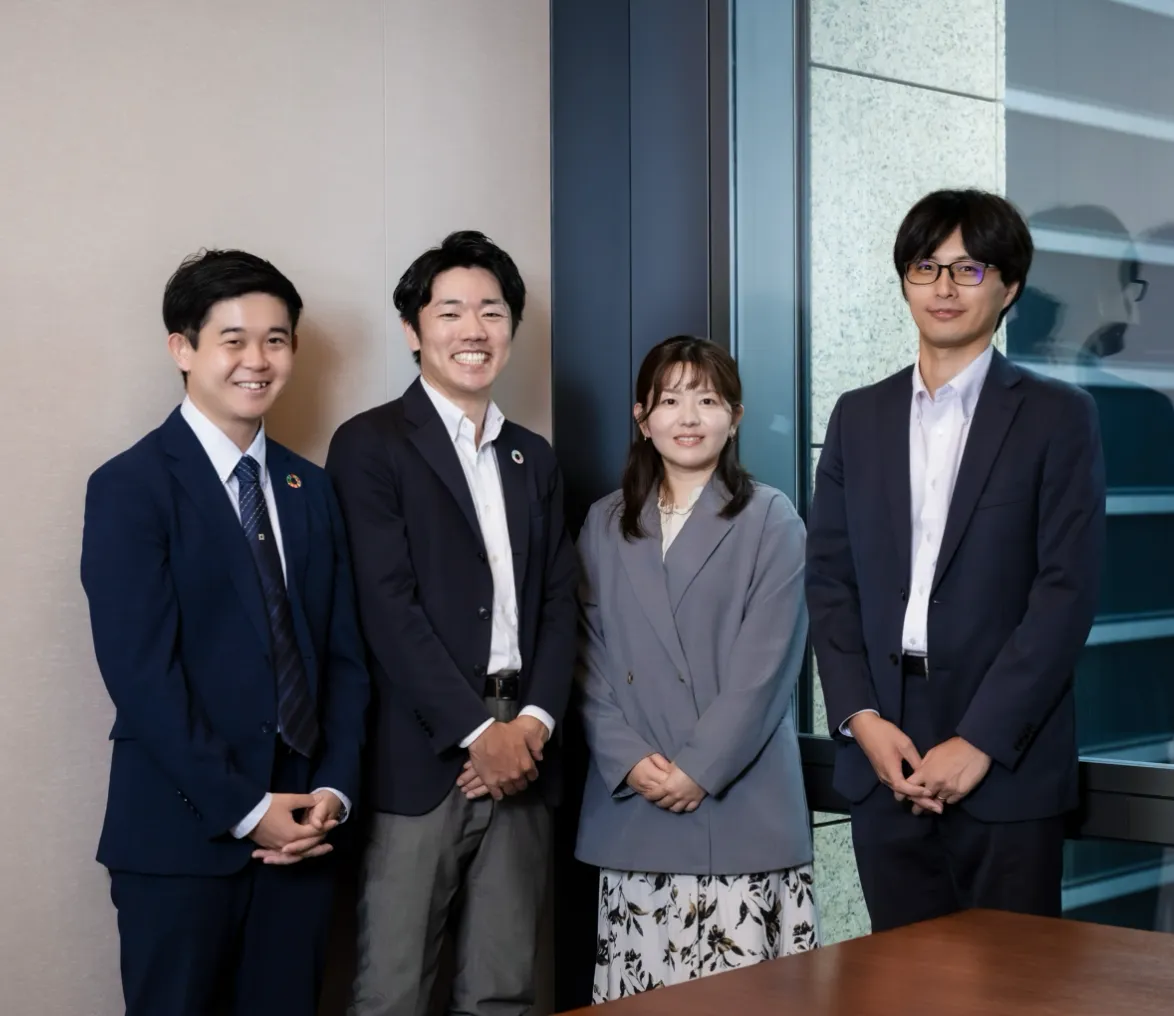




As companies work toward carbon neutrality by 2050, many are stepping up efforts to reduce greenhouse gas (GHG) emissions. YANMAR Group is among those actively advancing sustainability management. Under its “YANMAR GREEN CHALLENGE 2050,” the company has set an ambitious goal of achieving carbon neutrality in its own operations by 2030. A major hurdle to reaching this target is cutting Scope 2 emissions, the indirect emissions from electricity use, because the company cannot secure enough renewable power generation capacity solely within its domestic plant sites. Procuring electricity from off-site sources therefore became essential.
Addressing this challenge, Takuya Inokuchi from the Osaka Corporate Business Dept. I at Sumitomo Mitsui Finance and Leasing Co., Ltd. (SMFL) held discussions with YANMAR Group, drawing on the trust built through years of collaboration. Recognizing that the renewable energy expertise of group company SMFL MIRAI Partners Co., Ltd. (SMFL MIRAI Partners) could provide a solution, he brought SMFL MIRAI Partners and YANMAR Group together, marking the beginning of this initiative.
Establishing a Joint Power
Generation Company with
YANMAR ENERGY SYSTEM to
Deliver Additional
Environmental
Value in a
Short Time Frame
The initiative adopted a “Virtual Power Purchase Agreement (VPPA),” a contract model with few precedents in Japan. In a standard PPA, a consumer signs a long-term contract to purchase renewable electricity from a power producer. In a VPPA, the environmental attributes of the renewable generation, such as its zero-CO₂ emissions profile, are unbundled from the physical electricity and traded separately, typically in the form of certificates.

Yuki Shiraishi from the Environmental and Energy Business Development Dept. at SMFL MIRAI Partners, who oversees day-to-day project operations, explained: “Because it does not involve physical transmission, we can flexibly supply environmental value from plants in many locations without geographic constraints. Companies that buy this value can effectively convert their electricity use to renewable energy by pairing these attributes with the power they consume.
”
The project is distinctive beyond its structure. YANMAR Group placed strong emphasis on procurement with “additionality,” which increases the total supply of renewable energy in society, and wanted to be a direct participant in power generation rather than only a purchaser of environmental value. Akinori Moriasa from the Carbon Neutral Promotion Division. at YANMAR ENERGY SYSTEM CO., LTD. recalled: “Although purchasing green power from a utility company was an option, we felt a strong sense of mission to proactively drive renewable energy adoption and decarbonization ourselves.
”
To meet this need, SMFL MIRAI Partners established a joint power generation company with YANMAR ENERGY SYSTEM in November 2024 and began supplying environmental value to YANMAR Group in December. This speed, reaching the start of supply in about eight months from the onset of full-scale discussions in April, was made possible by SMFL MIRAI Partners’ development-first strategy. Typically, plants are developed only after a consumer is secured, which takes time. To resolve the “buyer-first or plant-first” issue, SMFL MIRAI Partners anticipated growing demand for renewable energy and moved ahead with development, enabling value to be provided within a short timeframe.
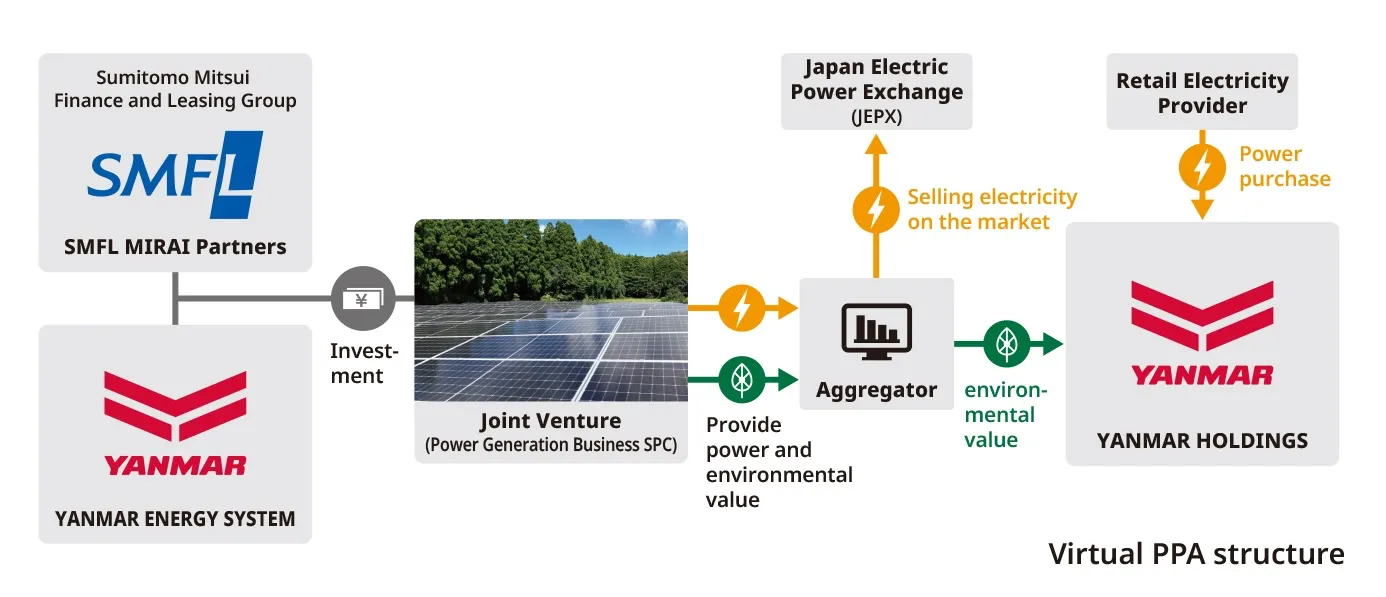
Virtual PPA structure
Building a Highly Transparent
Partnership While Addressing
Market Price Volatility and
Natural Disaster Risks
Bringing this advanced initiative to fruition required overcoming several challenges. One major hurdle was the market price volatility risk inherent to VPPAs. Under this structure, the price consumers pay for environmental value is designed to move in the opposite direction of electricity market prices. When market prices fall, payments for environmental value increase, and when prices rise, payments decrease. Because of this complex price linkage, future payment amounts could not be fixed in advance.
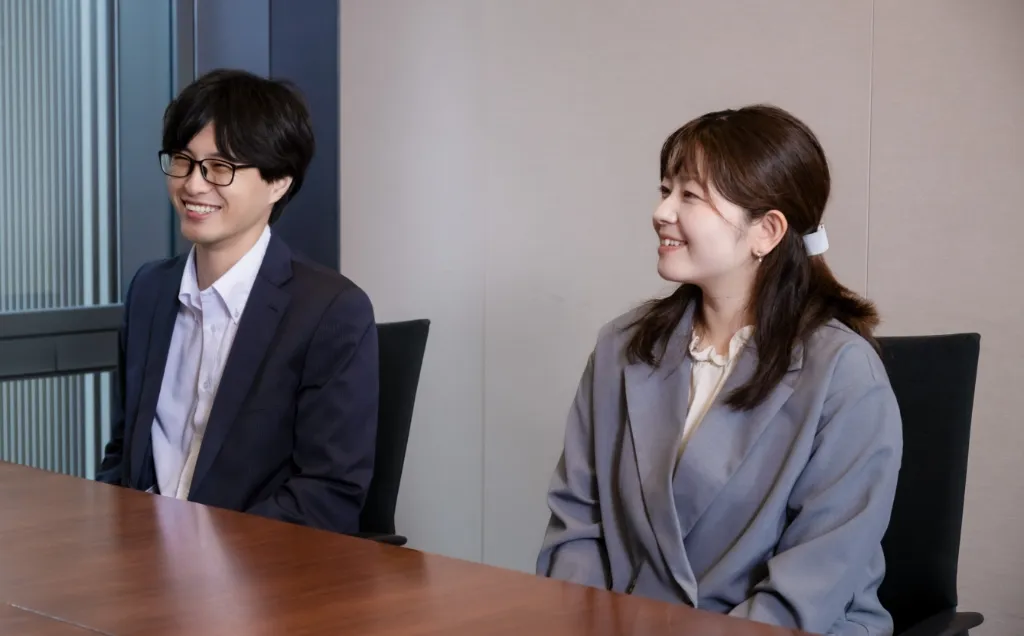
To address this, Shiraishi thoroughly analyzed price trends across electricity markets throughout Japan and simulated the impact of price swings. He then proposed measures to smooth overall costs, such as combining the PPA with a separate power supply contract under which rates decrease when market prices fall.
Because stable plant operation is directly tied to achieving YANMAR Group’s goals, transparency around site-related risks was essential. For sites along rivers with flood potential and locations in Hokkaido and the Tohoku region with heavy snowfall, those risks were clearly disclosed. Shiraishi carefully explained specific countermeasures, such as the status of flood control on relevant rivers and structural designs that can withstand snow loads, deepening understanding of the project’s stability. The team also returned to the original purpose of renewable energy and promoted plants that do not require large-scale land alteration or deforestation.
This process was supported by SMFL Group’s organizational backing. “The credit department did not simply reject the project because there was no precedent,
” Shiraishi explained. “Instead, they took a side-by-side, hands-on support approach, closely examining the inherent risks and working with us to consider concrete countermeasures so the initiative could move forward.
”
Through this dialogue and collaboration, the parties concluded a basic agreement for the supply of 150 MW, the largest PPA of its kind in Japan. This outcome corresponds to an annual CO₂ reduction of about 72,500 tons, equivalent to the amount absorbed by forests covering an area the size of 55 Tokyo Domes. The project was widely reported in newspapers and other media, which led to inquiries from other companies facing similar challenges, sparking moves toward new collaborations.
Deepening Partnerships to
Solve Larger Social Issues
SMFL MIRAI Partners aims to diversify its solutions beyond conventional solar power, looking to high value-added generation methods that make effective use of limited land, such as agrivoltaics, which combines agriculture and power generation.
These new initiatives are driven by the strong partnership that YANMAR HOLDINGS and SMFL have built.
Yuko Masaki of the Yanmar Green Challenge Division. at YANMAR HOLDINGS CO., LTD. reflected: “We were able to work as a single team with shared objectives and smooth communication.
” She added: “Collaboration that leverages each company’s strengths enables us to take on larger social issues that would be difficult to solve alone.
”
Inokuchi also places strong emphasis on collaboration with partner companies. Looking back on the project, he described its broader social significance:
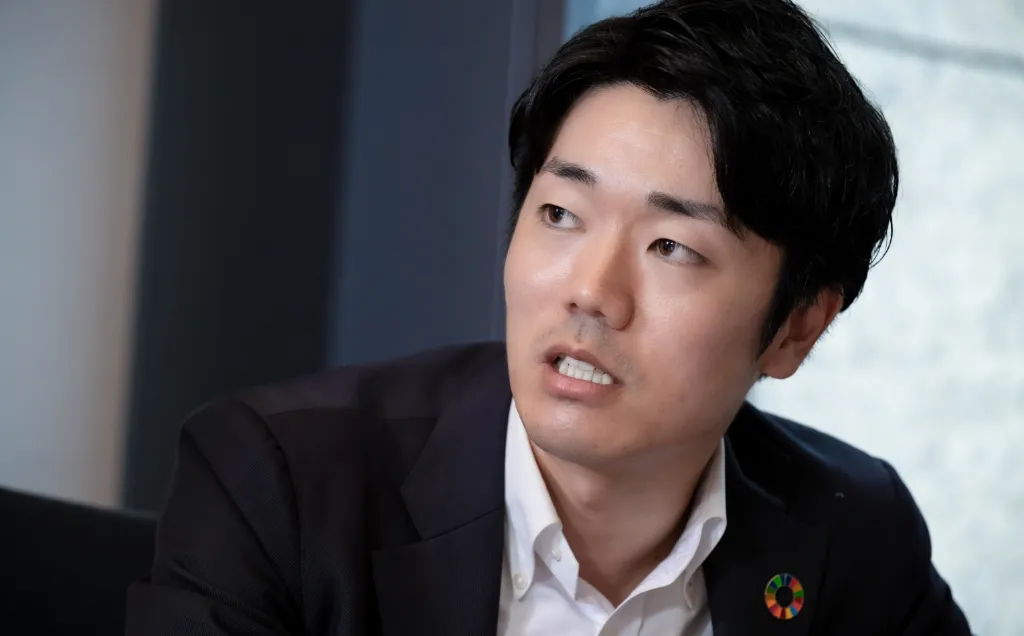
“I see the challenges faced by our partner companies as social issues in their own right. For the YANMAR Group, which operates globally, including in Europe where environmental regulations are strict, decarbonization initiatives like this project were an urgent management issue. The fact that we were able to help resolve this challenge can be applied to collaborations with other companies that have similar needs, leading to our own growth as well. I believe that deeper collaboration leads directly to Creating Social Value.
”