
In Japan, where the declining birthrate and aging population are accelerating, creating a society where people can raise children with confidence and achieving sustainable national growth have long been critical national priorities. From 2022 to 2023, the government highlighted “child-rearing support” and an “asset management nation” as two key policies, establishing the Children and Families Agency for child policy and expanding the new NISA program. Responding to this shift, Sumitomo Mitsui DS Asset Management Co., Ltd. decided to create Japan’s first investment trust linking these two initiatives.
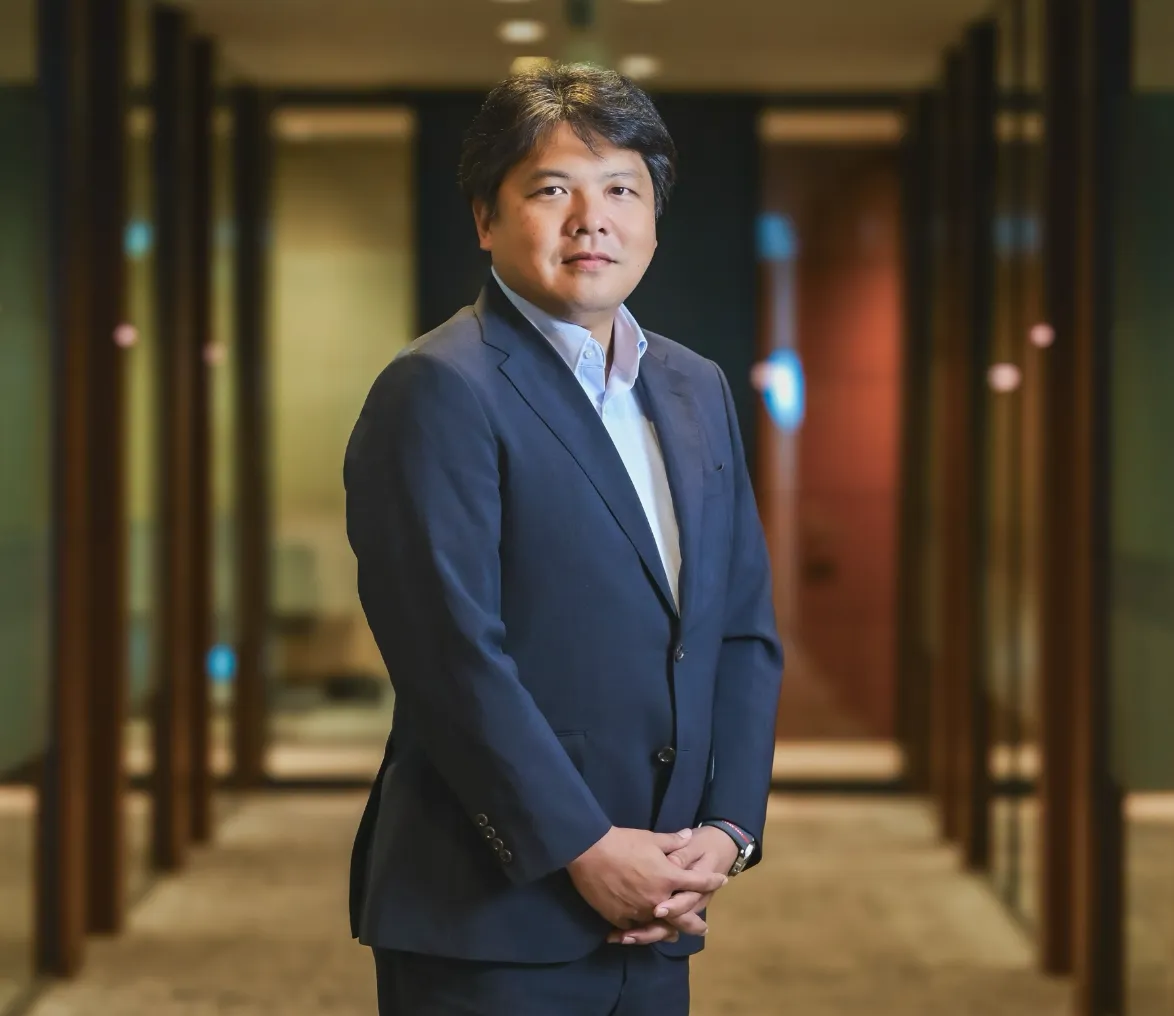
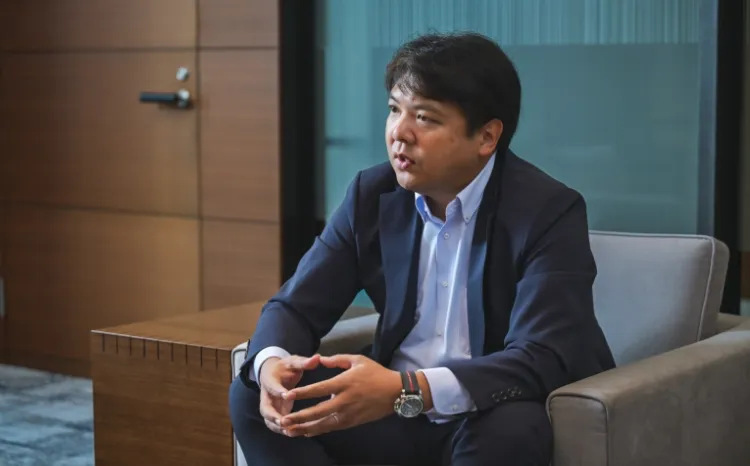
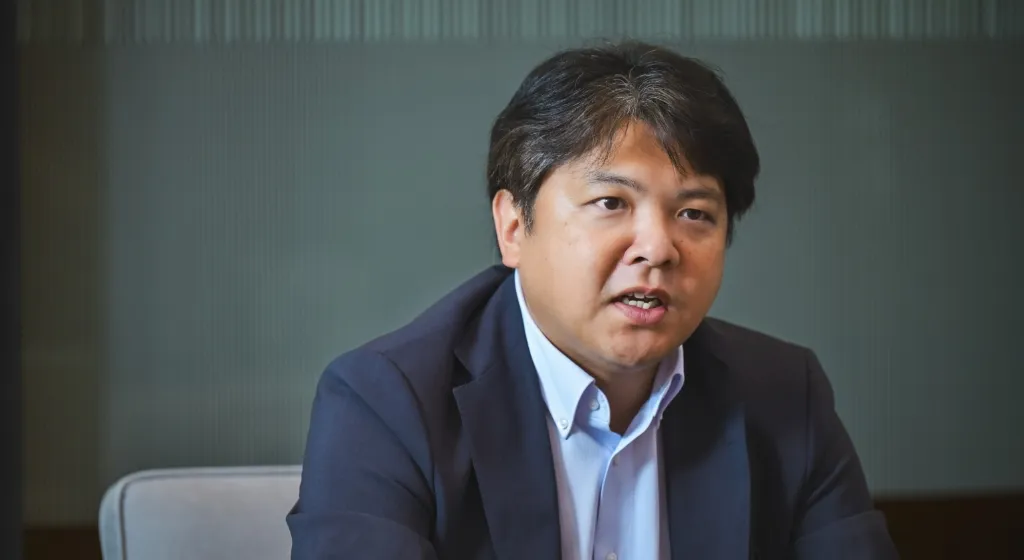
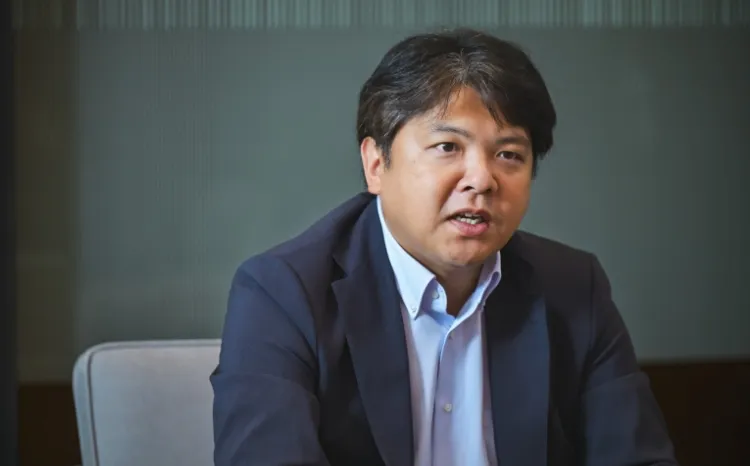
Executive Officer Kenji Umaoka, who led the project, began his career at Sumitomo Mitsui Banking Corp. as a new graduate. After working at several domestic financial institutions, he returned to SMBC Group in 2022 after roughly 20 years. Seeing the industry from both inside and outside convinced him that SMBC Group’s strength lies in “continuously providing new value.” On his return, he was determined to pursue a “first-in-Japan” initiative embodying this DNA. As a parent of a preschooler, he felt the need for child-rearing support. This view was shared by many team members at the same life stage, which became the project’s driving force.
The Hagukumi Project:
Donating a Portion of
Management
Fee to the
Children’s Future Support Fund
The team led by Umaoka first designed the Hagukumi Project*
, a program in which the company donates a portion of its management fee once a year to the Children’s Future Support Fund, operated by the Children and Families Agency. The donation is calculated as a percentage of the target fund’s net assets, and the fund is eligible for the new NISA. The Sumitomo Mitsui DS Income Balance NISA Fund
“nicknamed ‘Hagukumu NISA’”
, established by the company in January 2024, was designated as the fund for the Hagukumi Project
. Under this mechanism, as the fund’s assets grow, so does the amount donated to organizations that provide grassroots support to children, such as after school meal program (Kodomo Shokudo) and learning support.
*Hagukumi is a Japanese word that means to nurture, foster, and cultivate with care over time.
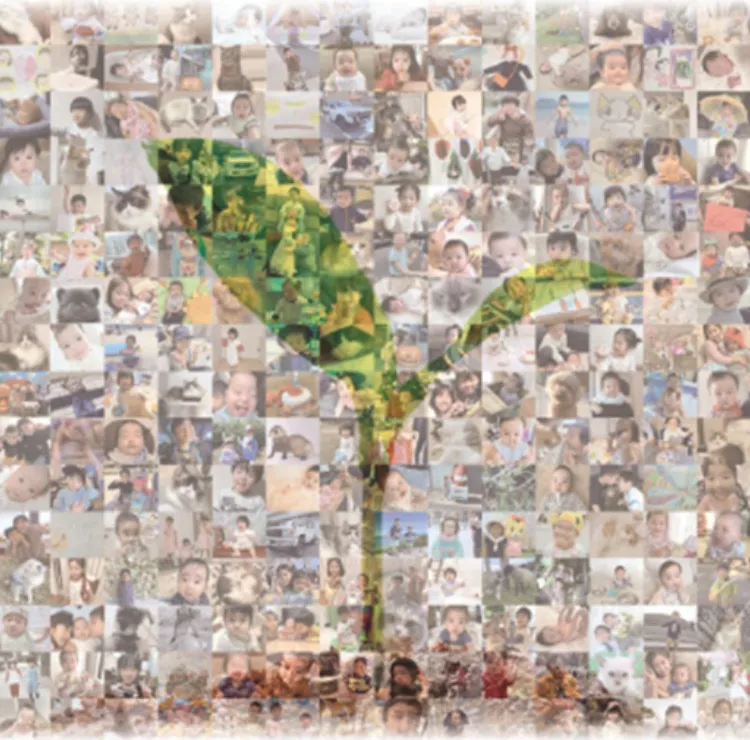
A mosaic made from photos of what employees want to nurture
The name “Hagukumi Project”
reflects the aspiration to “nurture what we hold dear,” a concept that extends beyond children. In fact, the back cover of the marketing materials features a mosaic of approximately 300 photos submitted by employees of “what they want to nurture,” featuring not only children but also pets and plants. Umaoka explains the rationale for the name.
“‘Child-rearing’ is a theme that resonates with many people on a personal level. At the same time, we felt it was important not to limit ourselves to that theme, so that we could also connect with people who do not have children. That is why we adopted the more universal slogan of ‘nurturing what we hold dear.’ Our aim with this concept was to evoke a wider sense of empathy and, in turn, expand the base of asset management.”
Designing the Donation
Program Through Dialogue
with
Government Agencies
and Launching the Fund via
Interdepartmental
Collaboration
Realizing this vision presented several challenges. One was engaging with government agencies. In 2022, before the Children and Families Agency was established, Umaoka reached out to the relevant bureau at the Ministry of Health, Labor and Welfare, its predecessor agency. The initial response to an unsolicited proposal from an asset management company was more tepid than he had imagined. Nevertheless, he persisted with the dialogue and, after the Children and Families Agency was launched in April 2023, paid a formal visit. When he explained the purpose of the Hagukumi Project
, he promptly gained their endorsement and established a cooperative relationship.
As for the recipient of the donations, it was necessary to choose a neutral standpoint to ensure the donations were not arbitrary. The team ensured this neutrality by donating to the Children’s Future Support Fund, with allocations administered by the Children and Families Agency.
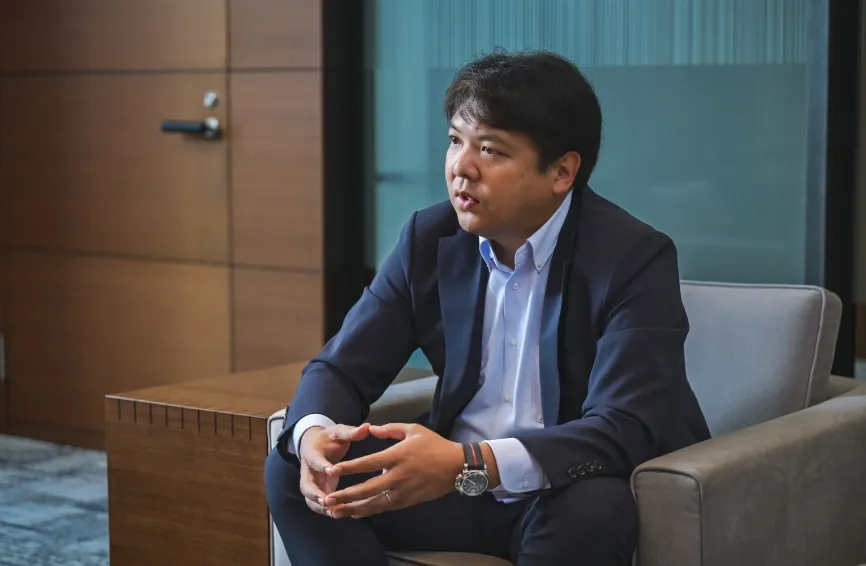
Building internal consensus for the fund’s design also posed hurdles. The investment management department questioned whether it was appropriate to create a product based on a concept first. Within the team, discussions ranged from “how much risk should we take?” to “there’s no point if it’s similar to existing products.” Reaching a consensus proved difficult. The team also spent considerable time searching for the optimal solution.
The catalyst that spurred progress was the team’s determination to create a fund that delivers added value to customers. They hypothesized that clues lay in what was driving the expansion of the asset management base and analyzed actual NISA purchase data. As a result, they focused on how U.S. and global equities are common entry points in asset management. This led them to design an attractive product that would offer stable returns with controlled risk through diversified asset allocation.
To make this a reality, the team prioritized keeping investor costs low. To that end, they chose to invest solely in in-house products. Rather than simply bundling products, they selected investment targets based on strict criteria suitable for NISA, such as expected stable income, high investment efficiency and a track record of at least three years. This is how the “Hagukumu NISA,”
a diversified investment product combining domestic and international equities, bonds and real estate, took shape.
In addition to the meticulous product design, the team leader, who was himself raising children, played a crucial role. His determination to make the project succeed, coupled with efforts to carefully explain to each person across the company, was pivotal in gaining consensus among stakeholders.
Through this process, the fund was successfully launched on January 4, 2024, the first business day of the new NISA program. Since launch, some financial institutions have adopted the fund, with its connection to child-rearing support being the deciding factor.
Doing What We Can as
Members of Society: Expanding
the
“Hagukumi” Circle Through
Investment and Education
The Hagukumi Project
plans to scale up by increasing the number of distribution partners, widening the circle of support and adding more eligible funds. As a next step, Umaoka envisions a program focused on Japanese equities, enabling investors to support the Japanese economy through their investments while also contributing to child-rearing support.
The project is also exploring ways to broaden its activities beyond donations to include child-rearing support, such as providing financial education for elementary and junior high school students in collaboration with regional financial institutions.
Finally, reflecting on the initiative, Umaoka offered a closing thought.
“I believe it is very important to see ourselves as individuals first, before corporate employees. To identify what is lacking in society as an individual and consider how we can address it through our work—that, I believe, is the very essence of Creating Social Value.”
* For more information on the funds mentioned in this document, please refer to the links below(only Japanese):
Sumitomo Mitsui DS Income Balance NISA Fund (Growth Investment Type) / (Estimated Dividend Type)
Fund Overview
▶https://www.smd-am.co.jp/extra/income-nisa/index.html
[Prospectus/Growth Investment Type]
▶https://www.smd-am.co.jp/fund/pdf/189109k.pdf
[Prospectus/Estimated Dividend Type]
▶https://www.smd-am.co.jp/fund/pdf/189209k.pdf