


In Japan, where the population is rapidly aging, inheritance cases continue to increase, yet a 2015 survey by the Trust Companies Association of Japan shows that although many people believe inheritance planning is necessary, only about 15 percent have taken concrete action.
This gap stems from high fees and complex procedures for existing succession products and from the psychological burden of confronting one’s own mortality. When procedures stall, the risk that personal assets will be frozen rises and the circulation of funds in the economy can slow. For financial institutions, this is a serious management issue, because relationships built with customers can end if transactions are not passed to the next generation. SMBC Trust Bank Ltd. saw an outflow of customers in their retirement years, and many regional financial institutions experienced asset outflows from their regions due to inheritance.
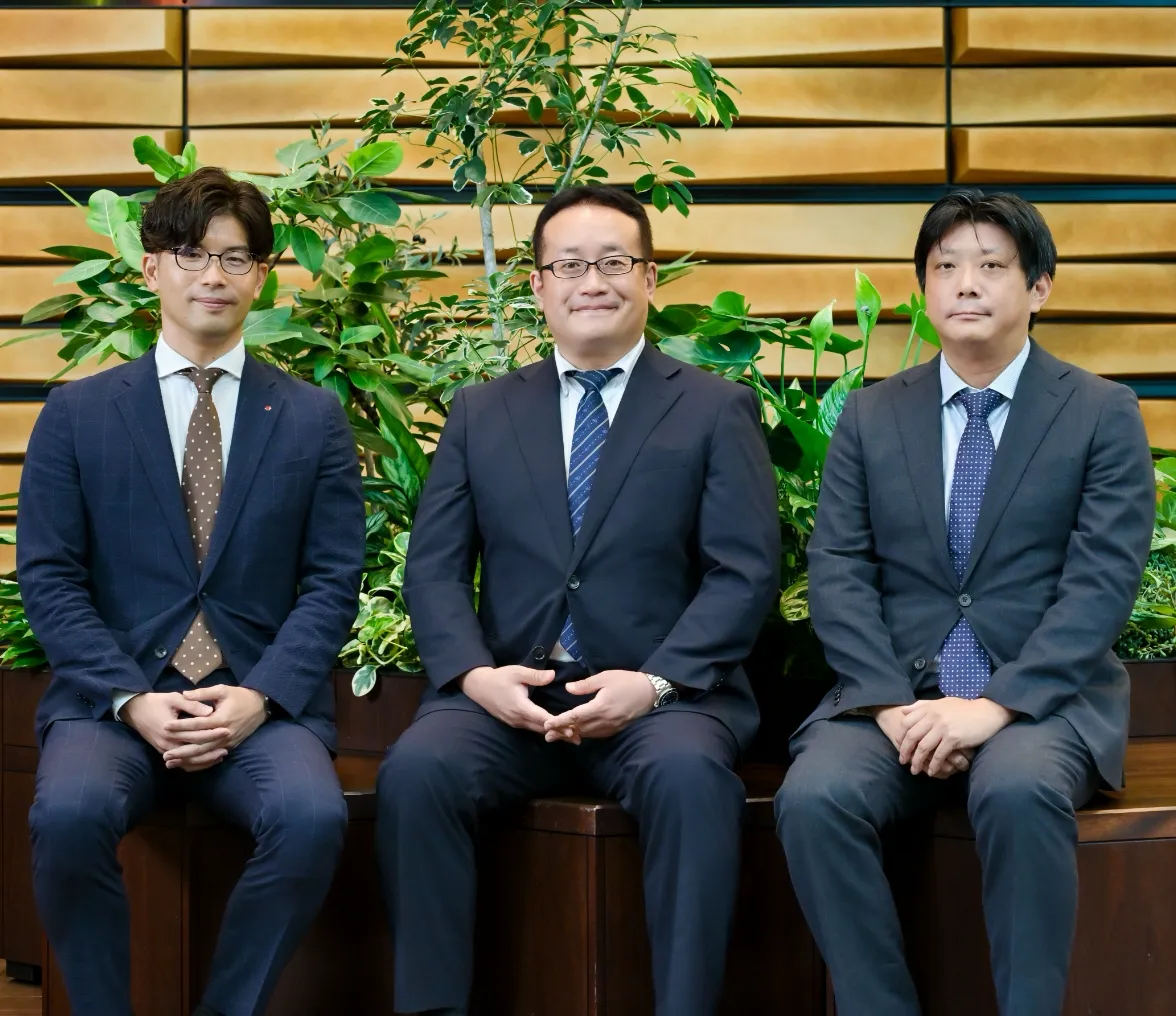
To tackle these issues, Yasuaki Inoue of the Trust Business Development Dept. at SMBC Trust Bank Ltd., and Kazuya Tachibana (now in the Compliance Planning Dept.) began developing the Smart Inheritance Account, a new succession product designed to ease customers’ inheritance planning concerns.
“Smart Inheritance Account” Features Three Key Characteristics:
Simple, Speedy and Flexible Asset Reallocation
Developed by Inoue and Tachibana, the Smart Inheritance Account is built on the philosophy of offering solutions to customers’ problems rather than simply selling a product that banks want to sell, and it reflects a deep understanding of the psychology of customers facing inheritance decisions. The team concluded that slow progress in inheritance procedures stems from an internal conflict between the desire not to burden family members and a reluctance to confront one’s own mortality, and they made easing this resistance the core of the product.
To realize this, they refined the design. Instead of a trust product regulated by the Trust Business Act, they used the posthumous gift mechanism under the Civil Code, eliminating the need for documents such as the family register and certificate of inheritance agreement that are usually required when establishing a trust or at inheritance and significantly simplifying procedures.
By incorporating SMBC CLOUDSIGN, an e-contract service provided by SMBC Group, they enabled speedy, fully online contract execution, even with family members who live far away. The account also remains convenient for everyday use because assets in it can be freely withdrawn or replaced after the contract is signed.
The design philosophy appears in the details as well: the product was named the Smart Inheritance Account to avoid the word “will”, which can evoke thoughts of death, and brochures and other materials deliberately avoid illustrations and wording that might remind customers of old age, easing their psychological burden.
Patent Acquisition and
4,000 Contracts
Pave the Way
for Wider Expansion
The development process for the Smart Inheritance Account faced several challenges. A predecessor product developed earlier failed to gain market acceptance because it did not match customer needs. To understand why, the team conducted extensive interviews with frontline staff and redefined the target needs. Resources were limited to a three-person team and a budget of a few million yen, but they treated this constraint as an opportunity to focus on the two most pressing customer needs: simple procedures and the freedom to use assets as usual after the contract, which sharpened the product concept. In pursuing procedural simplicity, they also identified the challenge of handling documents by mail with family members living far away and turned to SMBC Group’s e-contract service, SMBC CLOUDSIGN. This solution sped up the contracting process and later became a crucial factor in obtaining the patent.
Securing a patent to protect the product’s unique mechanism as intellectual property was another major challenge. Because the Smart Inheritance Account is not a trust product, it can be offered without a trust license, making it important to prevent imitation by other companies and legally protect the business’s uniqueness. Tachibana, who is also a lawyer, led the patent application, but the filing received two rejections from the Japan Patent Office. The team persisted and filed an appeal, strengthening their claims of novelty and inventive step by again highlighting the use of SMBC CLOUDSIGN, a point that had not been fully conveyed in earlier examinations. As a result, they obtained the patent in April 2025.
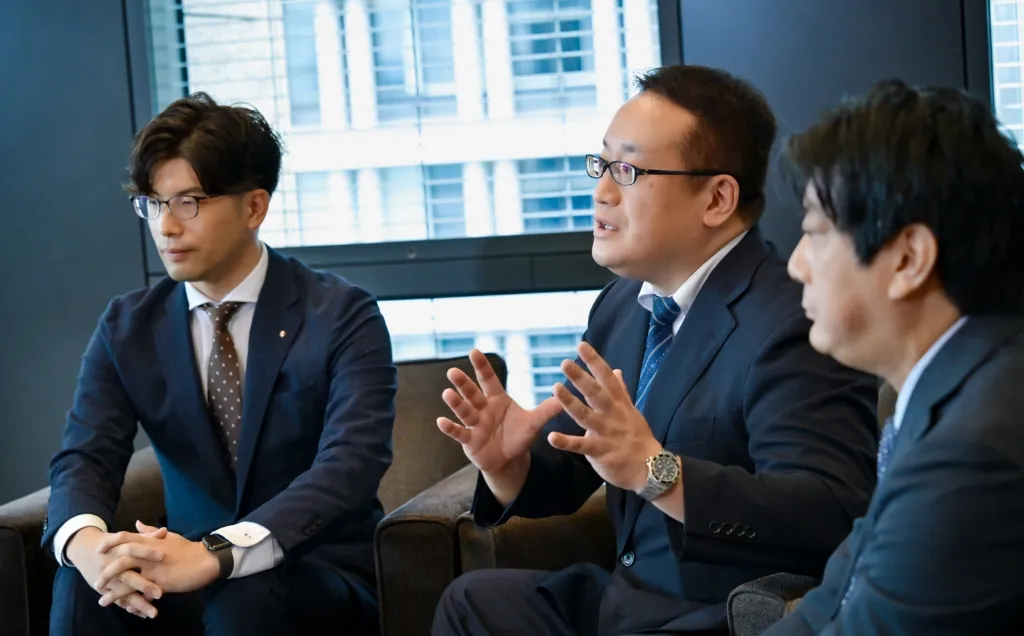
The white-labeling initiative, which aimed to offer the product as a proprietary service of partner financial institutions rather than as an SMBC Trust Bank product, did not always proceed as planned and negotiations with some regional financial institutions proved difficult. Even so, the team continued to build a track record. Since the Smart Inheritance Account was launched in 2020, Inoue has led efforts to steadily increase the number of contracts, achieving a cumulative total of roughly 4,000 over five years.
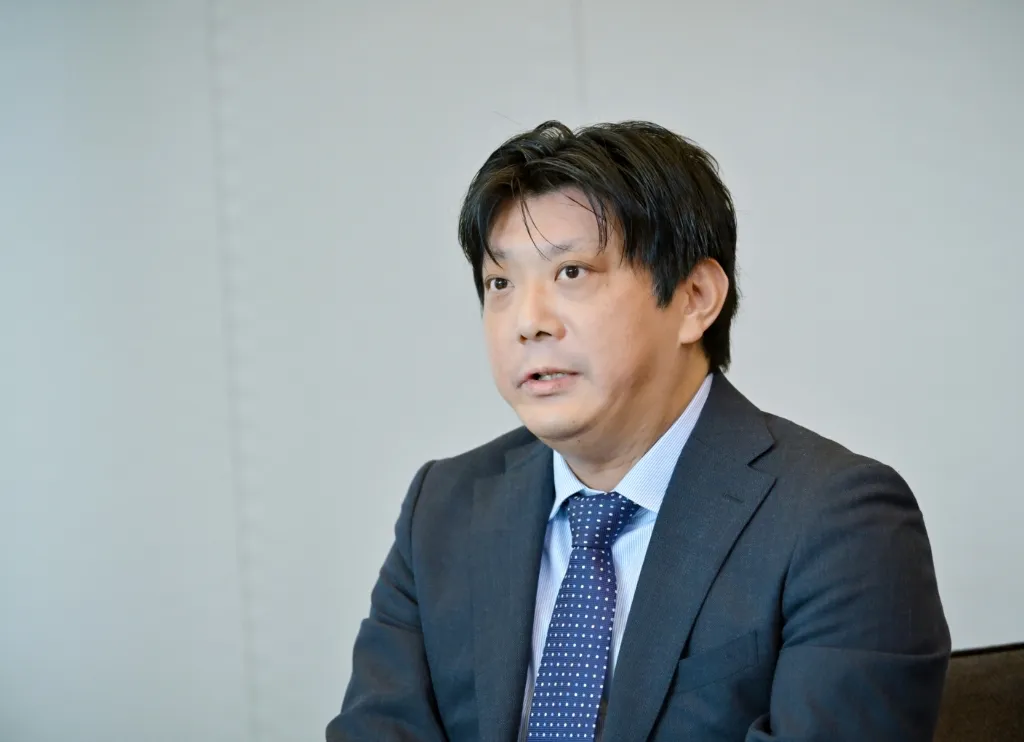
This performance won recognition from The Joyo Bank, Ltd. (Joyo Bank) and led to a partnership between the two banks. Looking back, Senior Researcher Masaoki Takahashi, New Business Development Team, Strategic Planning Group, Sales Planning Dept. at Joyo Bank, says, “I felt that the Smart Inheritance Account could address both the challenges our customers face and those we face as a financial institution. The know-how backed by 4,000 contracts was very attractive, and I decided that with this scheme we could achieve a speedy rollout.”
As a result, the first white-label agreement of its kind in Japan was concluded.
Deepening Partnerships to Enhance Functions and Expand to
Regional Communities, Aiming to Realize a Vibrant Japan
The partnership with Joyo Bank marked a new chapter for the Smart Inheritance Account. Inoue shares his vision: “We want to work with regional financial institutions as business partners to solve common social issues, rather than compete with them.”
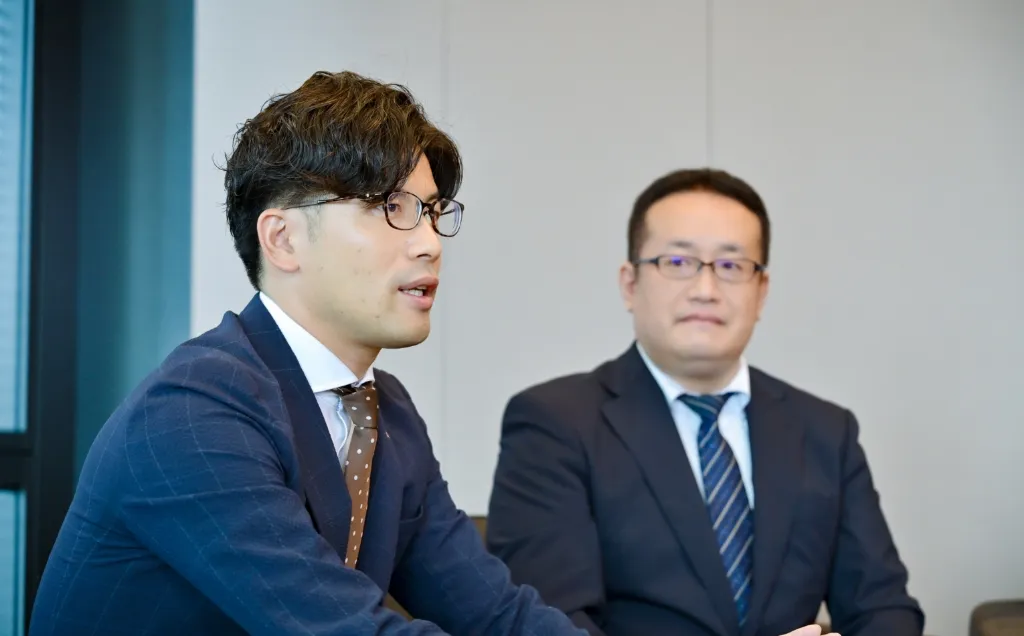
Takahashi also sets out his expectations: “By offering this service, we want customers to feel glad they bank with Joyo Bank. Looking ahead, I hope we can further enhance the Smart Inheritance Account by feeding back insights from our frontline staff.”
The team aims to expand the Smart Inheritance Account to regional financial institutions nationwide and establish it as an entry-level product that lets people start easily with a portion of their assets, such as savings, before they consider a full-fledged testamentary trust. Spreading smooth asset succession through local communities in this way supports people’s lives and helps revitalize the circulation of funds throughout the Japanese economy. As for the future, Inoue says, “I want to help realize a vibrant Japan where regions are revitalized and people, funds and vitality circulate throughout the country.”
The initiative was not originally launched to solve a major social issue. Reflecting on the journey, Tachibana, who co-led the development, concludes: “Rather than setting some grand goal, we first faced the problems of the customers right in front of us and delivered a solution. Through this initiative, I have come to realize that such steady, cumulative efforts are what ultimately lead to creating social value.”