


Japan’s agriculture sector faces a structural shortage of successors. According to the Ministry of Agriculture, Forestry and Fisheries (MAFF), the number of core agricultural workers has fallen from 2.4 million in 2000 to 1.114 million in 2024, and their average age has reached 69.2 years. This threatens Japan’s domestic food production base and food security. To keep agriculture viable for the next generation, Japan must build efficient, high-earning farming models that attract younger people.
In response, a project began after a meeting between Toru Wakui of the Ogata Village Akitakomachi Producers Association, who aims to make agriculture a more viable and attractive business, and a representative from Sumitomo Mitsui Banking Corp. (SMBC). In 2016, the association, SMBC, Sumitomo Mitsui Finance and Leasing Co., Ltd. (SMFL), and The Akita Bank, Ltd. jointly established Mirai Kyousou Farm Akita Co., Ltd. (MKFA), the first agricultural production corporation founded by a Japanese bank. Led by SMBC secondees, MKFA is implementing practical initiatives in Ogata Village, Akita Prefecture, to tackle the challenges facing Japanese agriculture.
A Perspective Gained on the Front Lines of Production,
Forged Through the Challenge of Onion Cultivation and
Hub Creation in Ogata Village, Akita
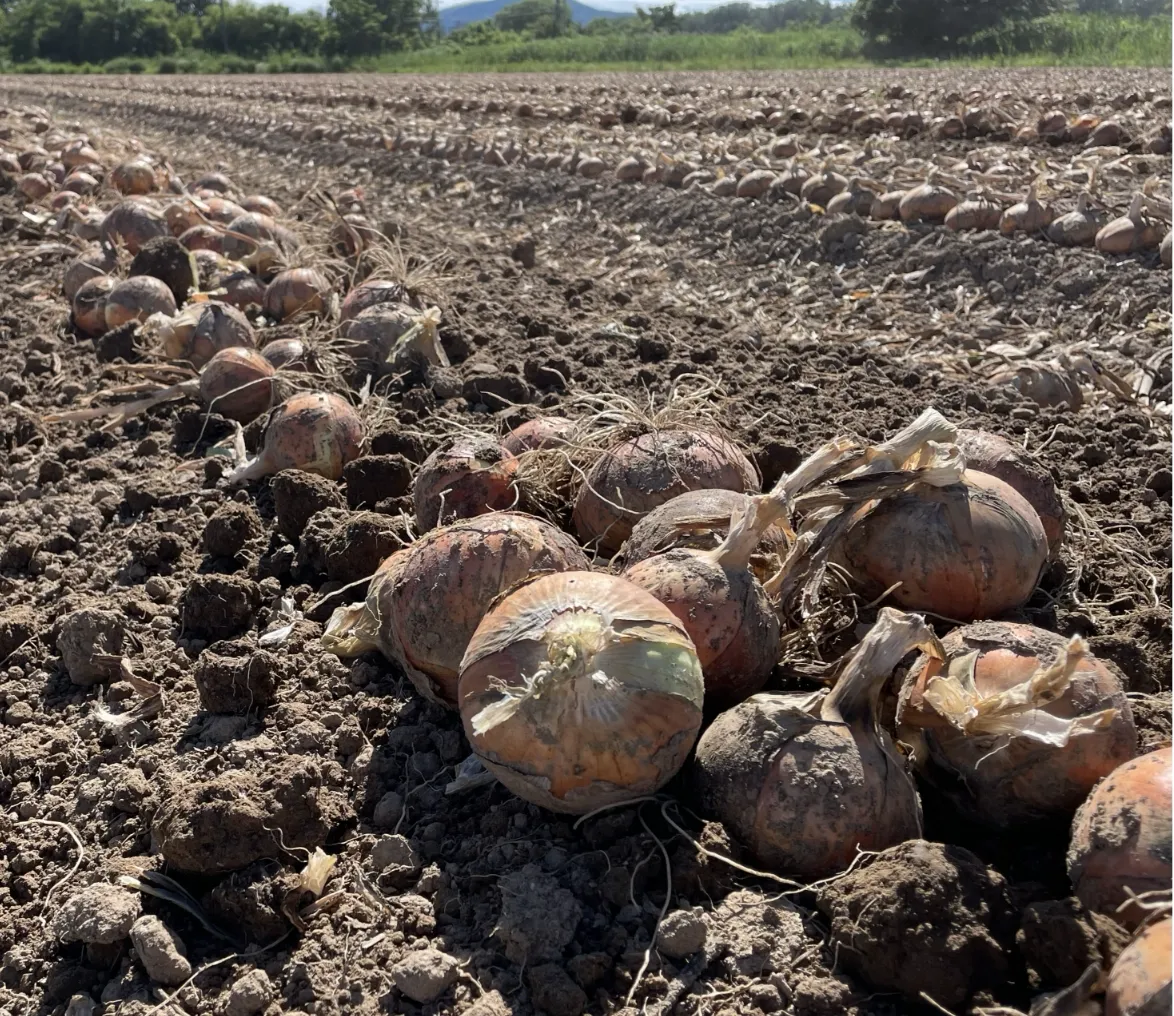
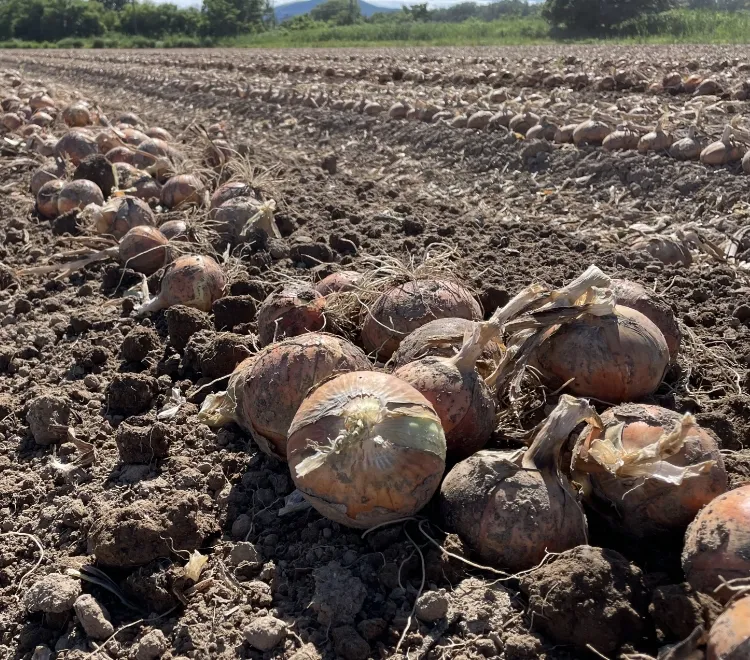
MKFA initially focused on rice, leveraging Ogata Village’s strength as a major rice-producing region in Akita Prefecture. However, the rice market was oversupplied, so a new path was needed to secure sustainable profits. The company turned to onions, a staple vegetable with year-round demand whose summer supply depends on imports. Because the Tohoku region’s climate allows summer harvesting of onions, MKFA expanded into this higher-margin crop, aiming to make the region a new production hub and help strengthen Japan’s food security.
This pioneering effort meant starting with no production expertise or sales channels. MKFA addressed issues step by step. To manage weather and disease risks during the nearly year-long onion cultivation period, the company optimized planting times with guidance from the Tohoku Agricultural Research Center. To prevent spoilage from humidity during the rainy season after harvest, it standardized and documented the drying process and developed sales channels with support from its shareholders. Through these efforts, MKFA now accounts for roughly half of the onion production area in the village and has become a driving force in Ogata Village’s onion industry. Jin Kikuchi of MKFA, who is on secondment from SMBC and oversees overall business operations, shares:


“Being directly involved in agriculture has convinced me that production sites and producers are crucial. This was hard to fully grasp in my banking work, but I am reminded daily that the economy is built on the efforts of people doing the hard work on the ground. Agriculture is not only about producing food; it also conserves land and functions like social infrastructure. We must support its essential value as a society, rather than focus only on economic efficiency.”
Bridging On-the-Ground
Challenges in Smart
Agriculture
with a Diverse
Range of Industry Players
MKFA has begun piloting smart agriculture to save labor and improve efficiency. In 2021, the project was selected for MAFF’s Smart Agriculture Acceleration Demonstration Project and has since been exploring new farming models. However, various challenges have emerged in practice. Kikuchi explains:
“Take the example of an autonomous robotic tractor. To maximize its performance, detailed settings such as work speed and tilling depth must be configured on a tablet. Many experienced farmers are unfamiliar with IT devices, while younger staff who are comfortable with IT lack sufficient agricultural knowledge. As a result, the technology is not being fully utilized.”
Responding to these on-the-ground challenges, Takuya Shinchi of SMFL’s Business Promotion Dept. shares this feedback with a wide range of industry players, including agricultural machinery manufacturers and startups. He has begun dialogue on how to make these tools more user-friendly.
Turning the Knowledge from
Failures into a Shared Asset
for Society, Rethinking
Agricultural Support and
Encouraging New Entrants
In recent years, MKFA has faced serious continuous cropping issues, where soil pathogens from repeated onion planting have cut yields to less than one-third of the previous year’s level. In response, the company secured an additional 40 hectares of adjacent unused land. With more than 60 hectares of farmland in total, MKFA is now working to establish a crop rotation system that reduces stress on the soil by cultivating different crops in a planned order every few years.
MKFA’s immediate goal is to complete this crop rotation system and build a stable, profitable farming model. The value of the initiative, however, goes beyond a single company. The knowledge gained through nearly a decade of trial and error, especially detailed records of failures, is becoming a shared asset for society.
The investor companies plan to use this experience to strengthen their agricultural support. They aim to drive structural reform by providing financial capital and on-the-ground knowledge to companies looking to enter the sector. Chief Masayuki Hatazawa of The Akita Bank, Ltd. describes MKFA’s unique value and the evolving role of a regional financial institution.
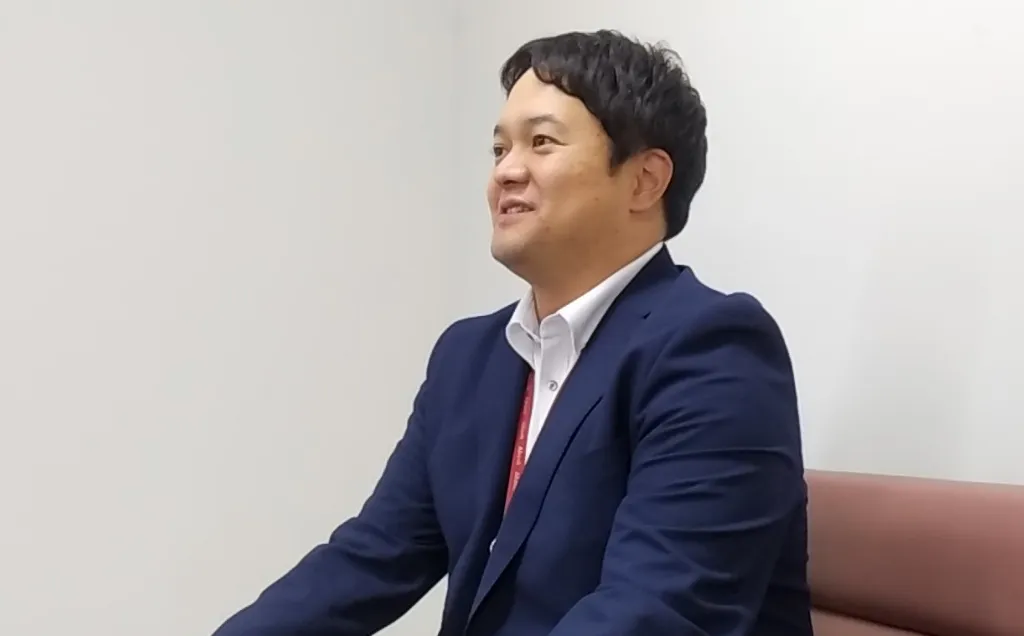
“Because MKFA brings together diverse talent, it can find solutions that are unlikely to emerge from local perspectives alone. We want to connect its initiatives to local businesses in the prefecture and pass this experience on to future generations of farmers. We aim to provide multifaceted support that goes beyond the purely financial, so that those wishing to start farming are not discouraged by a single failure.”
This view is shared by SMFL. Shinchi aims to build a more sophisticated support model based on the lessons learned at MKFA.
“Through our efforts over the past decade, we have gained a deep understanding of the difficulties and financial pressures of agricultural management. This practical knowledge allows us to support businesses considering entering agriculture not only with production planning, but also with building businesses that take the entire supply chain into account. Through these efforts, we want to encourage new entrants into agriculture and revitalize the industry as a whole.”
Underlying these activities is a shared desire to make Japanese agriculture sustainable. It reflects a philosophy that seeks outcomes benefiting all stakeholders, rather than one where a single party profits. Shinchi compares the future this project seeks to “Sampo-Yoshi (three-way satisfaction for the seller, the buyer, and the community),” the business philosophy of the Omi Merchants.
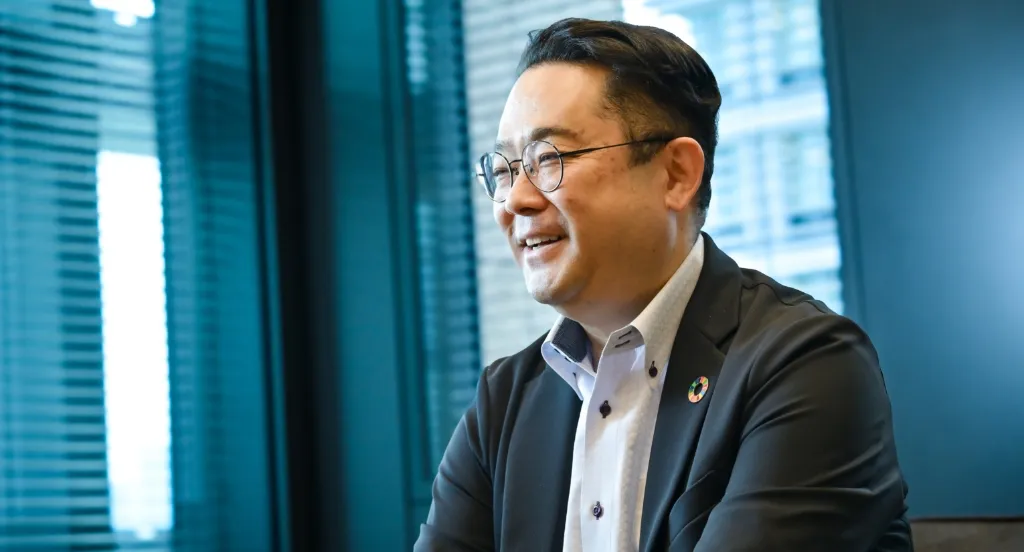
“I believe this initiative embodies the idea of ‘Sampo Yoshi,’ where producers, consumers and society as a whole prosper together. This helps achieve a stable food supply and allows everyone to live with peace of mind. That, I believe, leads to a more sustainable society.”