
Digital subsidiary advisory board makes full use of outside knowhow to accelerate growth of inhouse startups


SMBC Group is creating new business and launching inhouse ventures with its eyes on becoming a global solutions provider beyond financial services, and already has 10 digital subsidiaries to show for its efforts. But while its subsidiaries certainly benefit from access to Group assets, the Group’s lack of practical knowhow on startup management has positioned it poorly to provide them with the right advice and support at the right time.
To address this shortfall, the Digital Strategy Department—which is in charge of subsidiary management—has set up an advisory board of external startup experts to get practical advice on management and growth strategy.

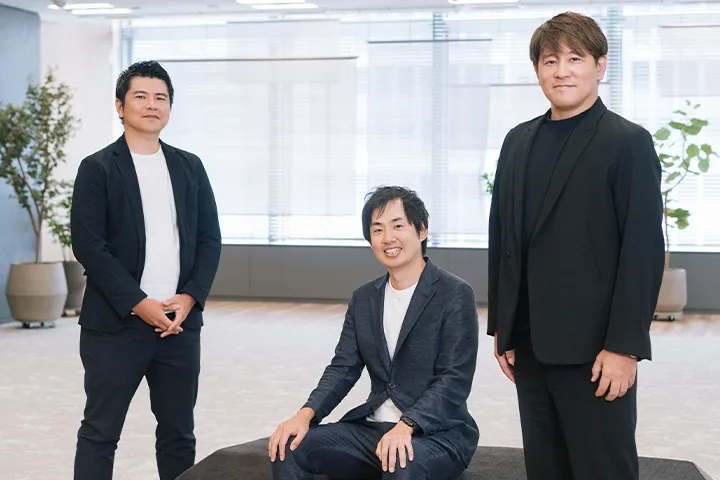
We discussed the significance and potential of this initiative with two advisory board members—for Startups Representative Director and President Yuichiro Shimizu and enechain Board Director and CFO Yuki Yabuuchi—along with the Digital Strategy Department’s Sadaoh Inoue, who was involved in setting up the board.
Advisory board brings in external knowhow to break the growth barrier
How did the advisory board come about?
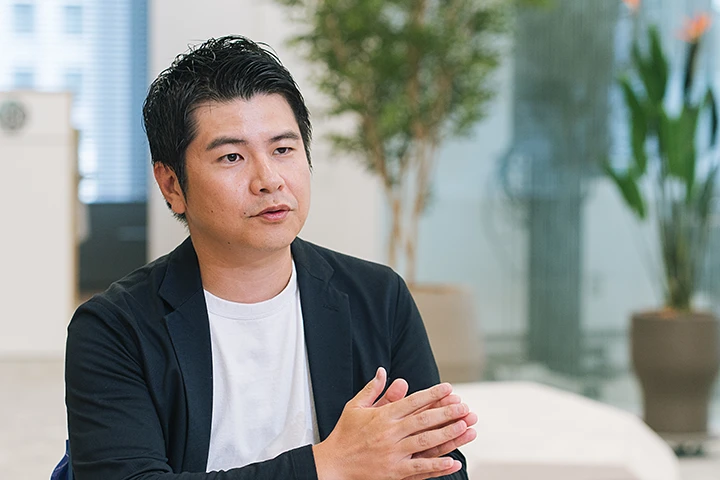
SMBC has launched a string of digital subsidiaries out of the “Producing new CEOs” initiative started by our late CEO Jun Ohta. Some of these are growing exponentially with an IPO within sight—but others are not going according to plan. While partnering with Group companies makes it easy for our digital subsidiaries to achieve a good growth curve in their first two or three years, they can also hit a ceiling after that because of the difficulty of developing their own sales channels and so on.
On top of that, as the parent company and shareholder, the Group should be able to advise these digital subsidiaries at critical junctures, but the fact is that we have few personnel with practical experience in startup management. We addressed this gap by setting up an advisory board of external startup experts to give us practical advice.
What specific themes does the advisory board discuss?
There are two broad categories. One is getting advice for the Digital Strategy Department, which handles digital subsidiary management, so as to upgrade inhouse startup management. The other is seeking board members’ views on daily business and management problems that our subsidiaries are struggling with.
What made you decide to join the advisory board?
I already had the sense that SMBC Group is really proactive on change and serious about its inhouse startups, and the idea of using an advisory board to actively absorb external knowhow to help those startups grow feels very fresh and interesting.
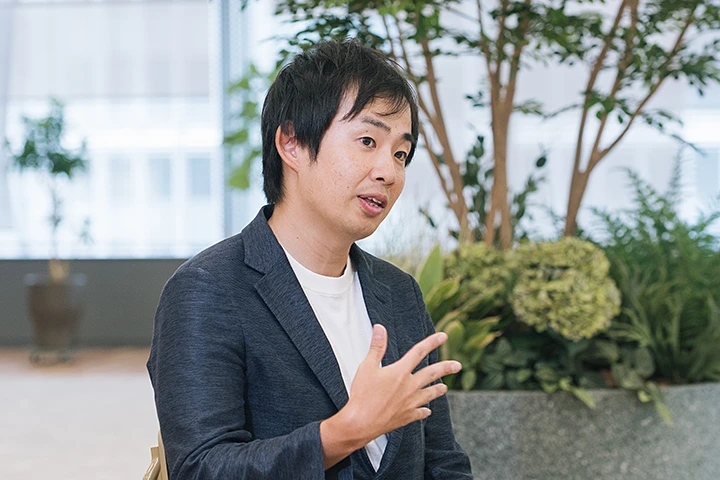
When I was handling the management buyout (MBO) for part of the business of a listed company, I borrowed the funds from SMBC. Although an unsecured bank loan was the only option at the time, I was still very grateful to have had that opportunity. Our company for Startups also has multiple points of connection with SMBC Group, including providing the Group with access to our startup database, having SMBC Group become the anchor investor for a for Startups fund, and also entering into a business alliance in 2020 to accelerate startup growth.
There’s no one within SMBC Group—even the executive officers—who has built a listed company from scratch. We learned a lot from our experience of carving out a new business via a company split and conducting an MBO to go public in the shortest possible time, so I thought it would be helpful to talk about that experience and give advice. I also believe that getting involved in this initiative will benefit the whole startup ecosystem.
Success hinges on the CEO’s commitment and capital strategy
What are the key points in growing an inhouse startup?
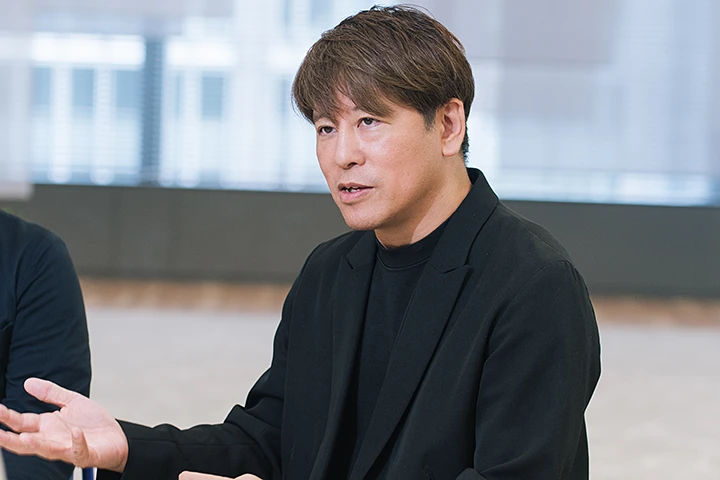
Being a Group startup imposes a certain amount of control, so the key issues become how much independence the subsidiary can secure within that and how quickly it can address not only growth but also the establishment of its own internal governance system. The company president has a huge role in realizing this.
When I was at the Carlyle Group (a multinational private equity company), I would get carve-outs from investment to exit in five years. Growing a subsidiary as an independent company requires providing it with the necessary capital of people, goods, and money and building the necessary mechanisms to do so. To ensure that the company can focus on the actual business, I think it’s important to effectively utilize SMBC Group capital, appoint a CEO with a mindset geared for success, and work out how to build both expectations and the mutual trust that encourages the effort to live up to them between the subsidiary and the Group as shareholder.
What role do you think the advisory board can play?
Japan still has a strong tendency to lionize big companies, but globally these days, innovation is king. Startups launched by big companies might run counter to that trend, but conversely they could be regarded as a challenge to which Japan is uniquely suited and could even end up having a global impact. A bold approach to strategic support and incentive design will be critical in optimizing the use of SMBC Group assets and creating high-growth companies.
Recently too, the conversation is shifting from creating spaces to setting a high bar for growth. I think that the advisory board could set the stage for newly-created companies to become even stronger at the point of exit by focusing on how high we can get them to fly.
The risk and return for a startup is entirely different from the kind of business bankers normally handle. When cases of people leaving their comfort zone to take up the startup challenge begin to emerge, we’ll see a more interesting level of commitment and evolution.
That’s true. Once people see someone else’s success at first hand and think that they want to be that person or follow them, the game should also change.
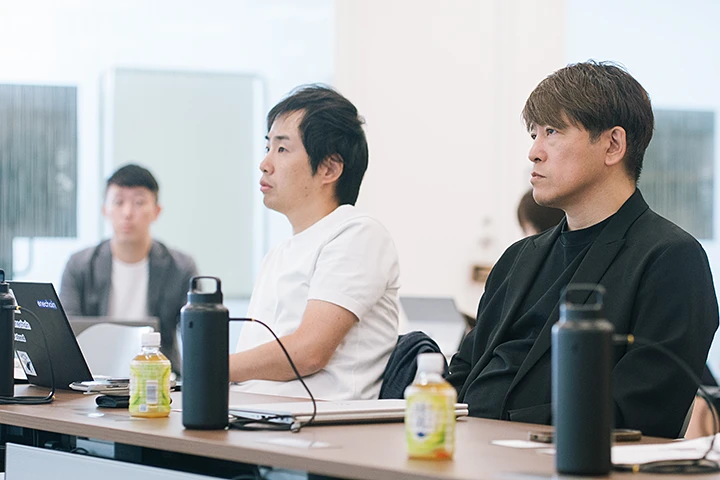
Until now, there was no one inhouse like SMBC Legal X CEO Hideki Mishima who has planted his flag on taking his company public. It’s inspiring working with strong leaders like Mishima and SMBC Wevox CEO Hidekazu Sugimoto, and you feel like you want to be part of their growth story.
Building a big company startup success model to support the ambition to change society
From your standpoint of startup management and support, what are you mindful of in your work on the advisory board?
I have a lot of experience negotiating with shareholders and other stakeholders as a business owner, so I want to use that in the advisory board context to think as though I was the SMBC Group CSO.
The various subsidiary CEOs will have their own views as to whether their company should remain part of SMBC Group or go public, but in both cases, I stress the importance of clarifying their strategy and position. I also make a point of asking them about their vision for their companies.
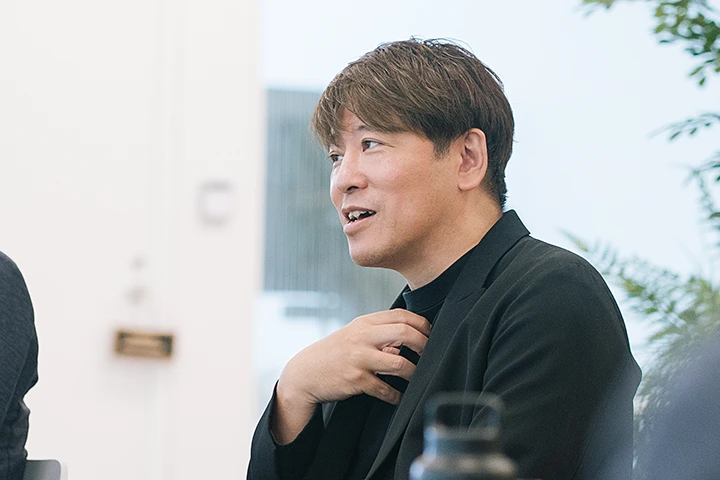
In the end, it comes down to the commitment of the person at the top. It’s probably hard to suddenly steel yourself for the task, but most startup leaders have already done that before they set up their businesses. How quickly a leader makes up their mind to take ownership has the greatest impact on the company’s expansion and sense of speed, because people only follow committed leaders.
It’s something that should happen naturally when you find yourself directly involved with employees, partners, and customers, but if you don’t take ownership at the point, it’s better that you aren’t put in charge of a startup business. Businesses just don’t scale without that mindset and that resolve.
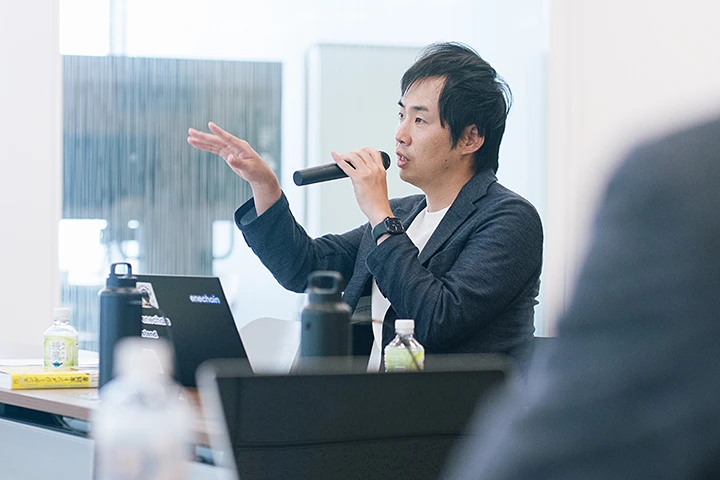
Internationally, half the graduates from top universities set up companies. The SMBC Group digital subsidiaries are headed not so much by entrepreneurs as intrepreneurs, but that’s not a bad thing. Management means making the right choice from among the various options—whether to launch your own business, for example, or whether to maintain and enhance your current infrastructure and partners.
When someone looks at their current customers, partners, market, and timing and decides to develop their company into the best team in Japan, a new management story will emerge. Given that this is all tied to the “Producing new CEOs” initiative, I’d like to focus less on what to do with the subsidiaries and more on how to produce CEOs.
There’s no doubt that the kind of opinions that you and Mr. Yabuuchi put forward would never have come out of SMBC Group alone—which is why they provide so many insights. Receiving hard feedback also gives us the confidence that we really can increase these subsidiaries’ growth potential. In fact, Kazuki Tanaka, president of the subsidiary BPORTUS, has said that he found enormous value in the views of the very experienced and knowledgeable advisory board members, making him eager to soak up everything he could.
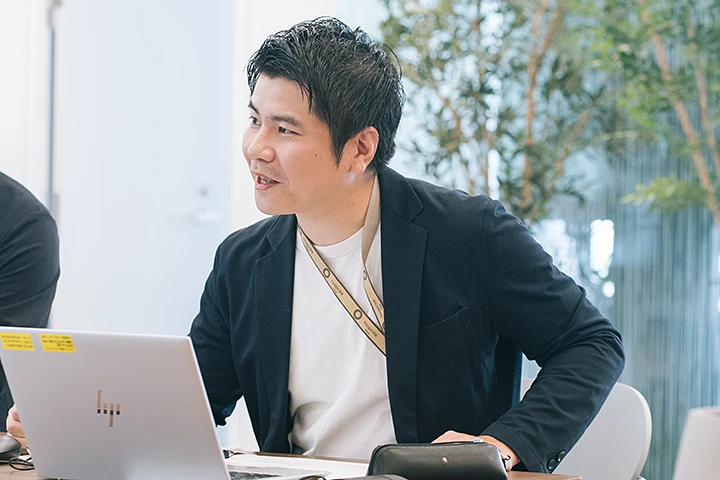
What’s your vision for the advisory board?
The Digital Strategy Department has led the transformation of SMBC Group’s corporate culture to date, but I want to go a step further and become the best possible partner in realizing our digital subsidiary CEOs’ dreams of changing Japan and changing society. There are still not many cases of startups within big companies achieving success. I want to create a model for success within SMBC Group so that we become a standout presence in Japan and the world, enabling us to provide immense value to our customers.
-
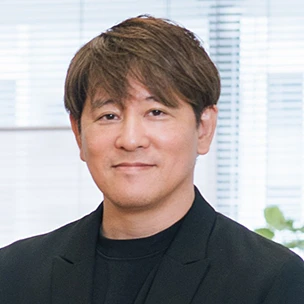
Representative President and CEOfor Startups, Inc.
Yuichiro Shimizu
After launching new businesses at two companies—Intelligence Ltd. (now Persol Career Co., Ltd.) and Saint Media, Inc. (now Will of Work, Co., Ltd.)—he founded Net Jinzai Bank Co., Ltd. (now for Startups, Inc.) in 2016, assuming the role of Representative Director and President. He was named “Headhunter of The Year” for two consecutive years (2014 and 2015) at the Japan Headhunter Awards hosted by BizReach. In 2016, he became the first headhunter in Japan to be inducted into the Hall of Fame. He has also held several key appointments, including Executive Officer of the Japan Association of New Economy (JANE); Vice-Chairman of the Kansai Association of Corporate Executives; and a committee member at Keidanren (Japan Business Federation), Keizai Doyukai (Japan Association of Corporate Executives), and the Japan Venture Capital Association (JVCA). He is the author of the book Working at a Startup (published by Discover 21, Inc.).
-
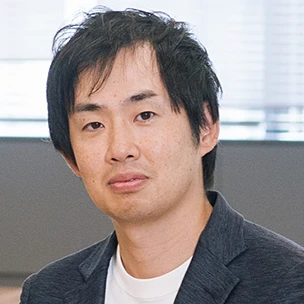
Board Director and CFO, enechain, Inc.
Yuki Yabuuchi
Yabuuchi joined enechain as CFO in August 2022 and oversees the Corporate division including finance & accounting, legal & Compliance, and Digital Strategy. Before joining enechain, Yabuuchi was Board Director and CFO at Paidy and oversaw significant growth, expanding the company’s balance sheet to a billion dollars through multiple debt and equity financing. His accomplishments at Paidy led to the Company joining PayPal Group, which is one of the largest tradesale in Japanese startups. Prior to Paidy, Yabuuchi worked at The Carlyle Group, where he was involved in evaluating potential investments, executing deals, and driving value creation initiatives across the portfolio companies to successful exits including IPOs. Earlier in his career, Yabuuchi served in M&A and finance advisory for clients across various industries at JP Morgan Securities.
-
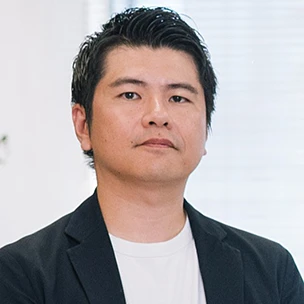
Senior Vice President, Digital Strategy Department, Sumitomo Mitsui Banking Corporation (SMBC)
Sadaoh Inoue
Joined SMBC in 2010, working in middle-market corporate sales before spending around a decade in general affairs and compliance, including risk management, maintaining discipline, business law, and information management, etc. In April 2022, he joined the Digital Strategy Department, and in April 2025, he set up a governance team within the department to take on the role of parent company and shareholder in relation to the digital subsidiaries under the department’s jurisdiction, as well as serving a control function, strengthening and supporting the management structures of the various subsidiaries.