
An AI-Driven Societal Inflection Point: Technology, Organizations, and Human Responsibility


It has only been a few years since generative AI burst onto the scene, but already our perception of its role is shifting dramatically from a useful tool to foundational infrastructure capable of reshaping society.
As of 2026, where does the world stand? And where should Japanese companies be heading?
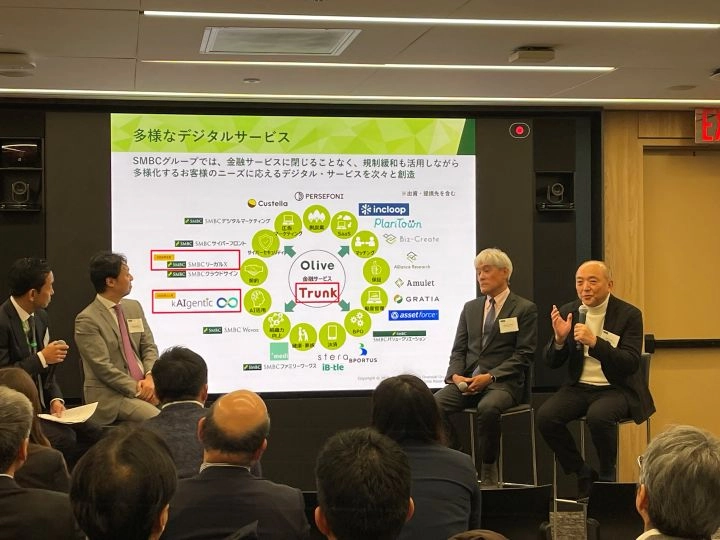
SMBC Group recently hosted a seminar in New York that brought to the stage AI research frontrunner Professor Yutaka Matsuo from the University of Tokyo, NTT Research President Kazuhiro Gomi, who leads a cutting-edge Silicon Valley R&D team, and Sumitomo Mitsui Financial Group CDIO Akio Isowa. Moderated by Hiroyuki Suzuki, Executive Officer and General Manager of the Japanese Corporate Banking Department, Americas Division at SMBC, the discussion explored the current state of AI and the societal landscape unfolding ahead.
Reasoning capabilities soar, AI agents take center stage
What is your assessment of the evolution of AI over the past year?
Compared to a year ago, it’s literally a different world. We’ve seen a quantum leap in reasoning capabilities in models from GPT-5 and Gemini to China’s DeepSeek.
By “reasoning,” I mean not just producing answers but the ability to improve accuracy by thinking through a problem step by step. So where AI circa 2020 could take over 15-second tasks, today it can handle tasks on the scale of an hour. That’s a profound shift.
Then, with the emergence of AI agents, systems are beginning to work much more like humans, understanding and redoing entire workflows. It’s no big deal now for AI agents to autonomously execute long-horizon tasks spanning a day or even a week.
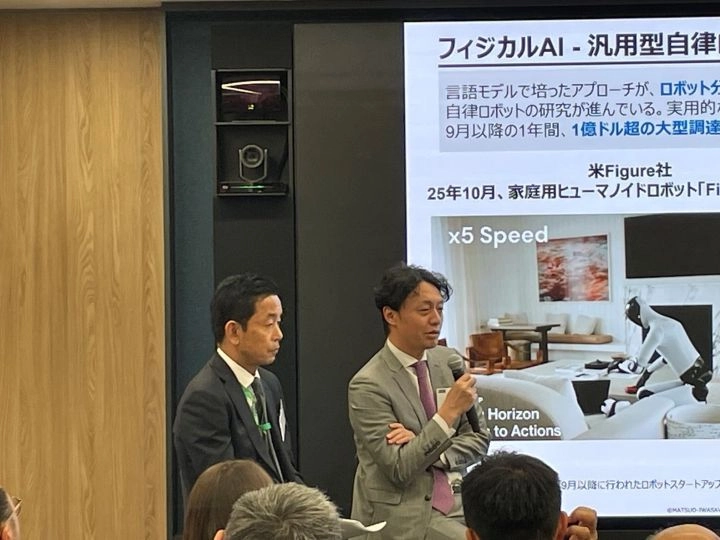
Right: Yutaka Matsuo, Professor, The University of Tokyo
Mr. Gomi, what kind of changes are you seeing in Silicon Valley?
The pace of change is so much greater than what’s imagined in Japan. AI used to be just a developer support tool, but it’s now well on its way to becoming an actual development team member. For example, Cisco Systems over here in the US announced that AI wrote around 70 percent of the code for one of its new security products. Cisco’s head of development has even stated publicly that they’re aiming to take that to 100 percent with the next update. That’s how much the quality of AI coding has improved.
What’s also expanding rapidly is the rollout of AI agents. In the US, companies are routinely talking about building agents in place of hiring more staff. AI agents are now tracing the same path trodden by new employees, gaining experience and learning and reaching the point where they can autonomously operate. We’re heading very quickly toward a world where AI agents are designed to replace humans.
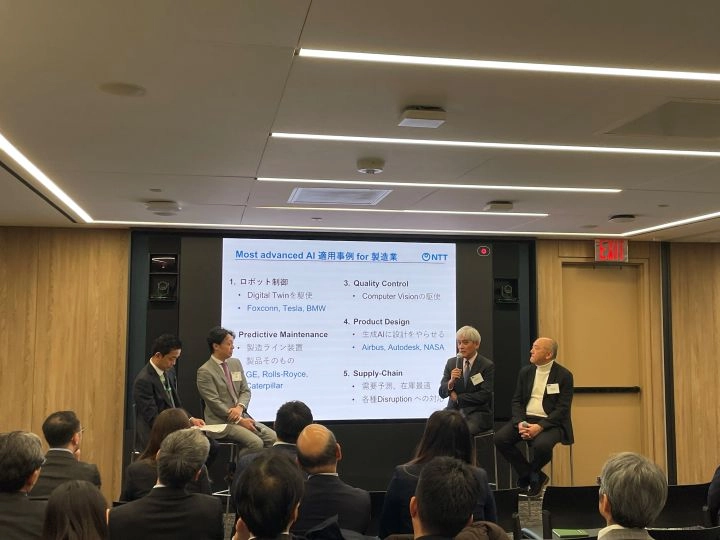
In manufacturing as well, AI is seeping in everywhere, from robot control and predictive maintenance to demand forecasting—to the point where the possibility of factories in which entire production lines are supervised by AI is now looking very real. In particular, with the effectiveness of robotics foundation models beginning to be demonstrated, I think we’ll see full-scale rollout in actual factories over the coming year or so. The transition is happening much faster than expected.
A lot of managers admit quite frankly that they’re not sure yet about the ROI from all this—but that’s not stopping Silicon Valley from continuing to invest ahead of the curve in anticipation of the moment when the technology takes off.
AI deployment in finance and organizational transformation
Mr. Isowa, what is happening with AI on the frontlines of finance?
The banking industry has traditionally dragged its feet on AI, flagging concerns around hallucinations, accountability, and security—but not SMBC Group. We stepped hard on the gas as of around 2024, announcing a plan to invest 50 billion yen in AI by 2029 and aiming for rapid rollout.
That includes holding a CDIO meeting almost every month where the Group CEO, the SMBC CEO, and I make instant decisions on new businesses and initiatives. Cutting through the red tape with this top-down leadership approach saw 100 AI proposals submitted this past year.
One great example of a project realized through this process is our AI CEO. Trained on the Group CEO’s spoken and written remarks along with personality data, it can replicate not only what the CEO himself would say but how he would say it, including adjusting its tone depending on whether it’s talking to junior staff or management.
Then there’s Trunk, a new service for corporate and SME customers that builds on the expertise gained through Olive, our integrated financial service for retail customers. Using AI to automate complex administrative processes like subsidy applications resulted in 30,000 corporate accounts being opened in just six months.
A third example is LegalXross, an AI-based due diligence service. Due diligence is notoriously time-consuming and expensive, but the massive leap in efficiency produced by AI is eliminating a major M&A bottleneck.
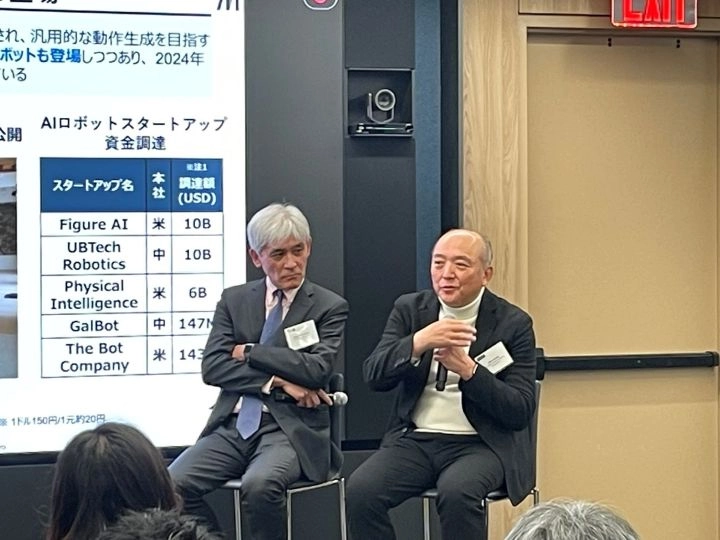
Right: Akio Isowa, Group CDIO and Senior Managing Corporate Executive Officer, Sumitomo Mitsui Financial Group
How will organizational structures change as AI advances?
The traditional three-layer structure of Japanese companies—planning, integration, and frontline operations—will inevitably shift. That middle integration layer in particular will become much thinner in the AI era.
Nearly all of the 100 agent proposals we’ve received this year came from the front lines. New product planning has traditionally been driven by headquarters, often creating a disconnect from frontline needs. However, when we framed our call for proposals as an agent development contest, we received around 100 submissions—all from frontline teams. Those closest to the front line understand the challenges most deeply, and that’s where untapped opportunities for AI lie.
Energy constraints and the role of humans
At the intersection of AI and society, there also seems to be a lot of discussion about power consumption and infrastructure constraints.
Yes, the AI boom has caused a power shortage worldwide. In the United States, data center locations are now chosen first and foremost on the basis of whether they can provide enough electricity, and there’s also been an uptick in local opposition against new datacenter build. It’s pretty typical these days for datacenter projects to be delayed due to concerns over excessive power consumption.
You may have heard of our Innovative Optical and Wireless Network (IOWN) project, which NTT is working on to reduce power consumption using optical technology (photonics) for the hardware used for AI platforms. Using photonics to shift data transmission both between and within chips from electrical to optical enables power usage to be reduced to less than 10 percent, with the potential for even greater efficiencies. Our ultimate goal is optical computing. As a global top-three datacenter provider, NTT is facing overwhelming demand. New datacenter capacity is effectively sold out at the moment new plans are announced, and we expect that supply-demand imbalance to persist for some time.
What is the key to human-AI coexistence?
In a word, responsibility. Because AI can’t take responsibility, humans have to make the final decisions. That line will always remain, and that’s where human value lies.
We’re already seeing the emergence of social network-like systems where AI agents talk to each other. Going forward, the granularity of data access control—what we allow AI to see and what we don’t—will become increasingly important.
I would highlight negative capability. AI provides instant answers. Humans, however, can sustain thought, resisting the urge to jump to a conclusion. The capacity to sit with questions is a critical strength in this AI age, and it’s one that aligns particularly well with Japanese diligence and perseverance.
Finally, do you have a message for the audience (readers)?
AI is a tool that will fundamentally transform productivity. We need to build mechanisms that enable best practices to be shared and horizontally deployed across Japan. Embedding a culture of mutual learning—sharing rather than hiding high-performing use cases—will be key to raising the level of AI utilization nationwide.
These days, the greater your ability to leverage AI, the more valuable you are at workplace. The notion that using AI is unfair is outdated. We are entering a world where those who can make effective use of AI will have a major edge.
I’m convinced that the Japanese qualities of meticulousness and diligence and the ability to think things through will become real assets. Let’s combine them with AI to shape the next era together.
-
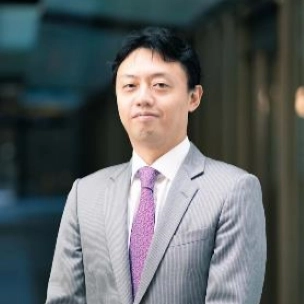
Professor, The University of Tokyo
Yutaka Matsuo
Graduated from the University of Tokyo (UTokyo) in 2002 with a PhD in engineering. Served as a research fellow at the National Institute of Advanced Industrial Science and Technology and a visiting researcher at Stanford University before becoming a UTokyo professor in 2019. Specializing in AI, deep learning, and industrial applications, he leads AI-related research, HRD, and industry partnerships in Japan. He has been Japan Deep Learning Association Chairman since 2017 and has guided Japan’s AI policy since 2023 as Chair of the AI Strategy Council within the Cabinet Office.
-
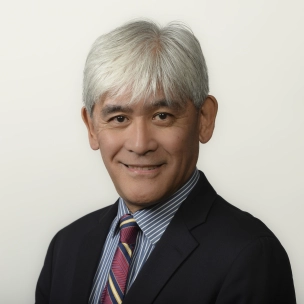
President and CEO, NTT Research, Inc.
Kazuhiro Gomi
Since joining NTT in 1985, he has spent more than 40 years working in product management and product development. He became Vice President (VP) in charge of Global IP Network Business Department of NTT Communications Corporation in 2001 and CEO of NTT America in 2010. Since taking up his current post in 2019, he has been overseeing cutting-edge basic research in Silicon Valley while also driving NTT Group’s global research strategy.
-
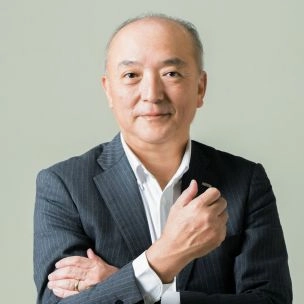
Group CDIO and Senior Managing Corporate Executive Officer, Sumitomo Mitsui Financial Group
Akio Isowa
Joined Sumitomo Mitsui Banking Corporation in 1990 and worked in corporate affairs, legal affairs, management planning, and human resources before setting up the Retail Marketing Department and the Retail IT Strategy Department as general manager. Later, as general manager of the Transaction Business Division, he spearheaded product and sales planning for corporate settlements. In 2022, he became director of the Digital Solution Division. He took up his current post in 2023, in which capacity he is driving digital strategy promotion for SMBC Group.
-
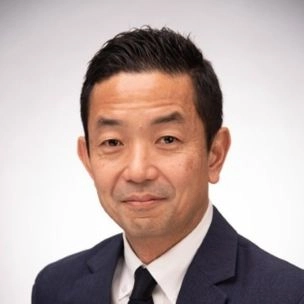
Executive Officer and General Manager, Japanese Corporate Banking Department, Americas Division
Sumitomo Mitsui Banking CorporationHiroyuki Suzuki
After joining SMBC in 1996, he worked in corporate sales and planning in Japan and the United States, handling overseas business primarily in the Americas, as well as SMBC Group’s digital strategy for corporate clients. Appointed General Manager of the Japanese Corporate Banking Department, Americas Division in 2023 and Executive Officer in 2025, overseeing sales strategy and execution for Japanese corporates across mainly North America.