Linking Japan and the US to Fast-Track AI-Era Financial Innovation: SMBC Group Teams with Fin Capital to Build Its US CVC Strategy


As the US venture investment landscape shifts, AI and software are driving rapid business transformation particularly for companies in the finance space. Moving early to capture this momentum, SMBC Group has partnered with Fin Capital, widely regarded as one of the world’s most active fintech investors, to launch a corporate venture capital (CVC) initiative—the SMBC Fin Atlas Beyond Fund, which will invest specifically in US fintech startups.
This foray into the highly challenging VC market reflects SMBC Group’s resolve to break new ground globally at the intersection of finance and technology.
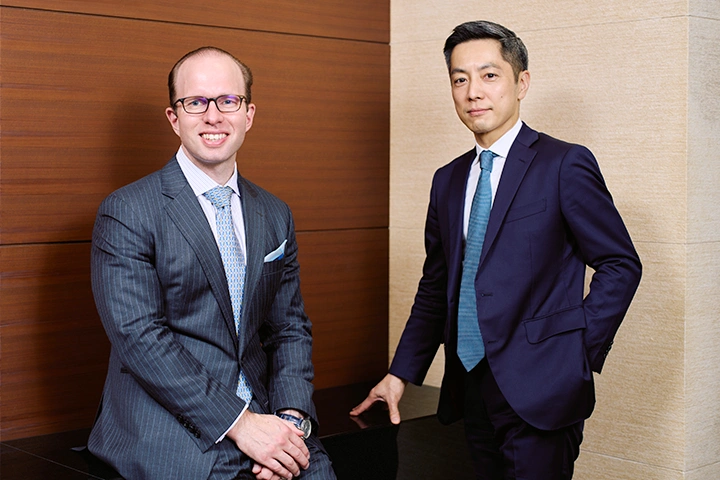
What do the two partners have in their sights, and what future are they working to build? We spoke with Logan Allin, Fin Capital Founder and Managing Partner, and Eiko Ooka, currently seconded to Fin Capital from SMBC.
US VC market shifts from overheating to recalibration
What changes are you seeing in the US venture investment market?
Rising interest rates since 2022 have compressed asset values and pushed down multiples. Fundraising is harder now—capital is no longer free, meaning that there’s now a real cost to deploying money. As a result, VC competition has cooled.
Far from being a negative, though, this shift has actually been healthy for the market as a whole, returning an overheated investment environment to normality. Valuations have also gone back to more appropriate levels, giving investors a better shot at finding good companies at realistic prices.

Around 2021, elevated valuations were giving the US market a bubble-like feel, in reaction to which the market now seems to be calming down and approaching a healthy level. Given this macro backdrop, it feels like the perfect moment for SMBC to launch CVC investment in the US.
Of course, some startups and investors are finding it harder to raise funds, but that’s exactly why discipline is returning to the market. The new environment is forcing startups to think more carefully than ever about how they use capital and how they build growth strategies so that they can achieve sustained business growth. I see that as a positive development.
Fin Capital has been called one of the world’s most active fintech investors. Where do its strengths lie, and why the focus on fintech and banktech?
Our biggest strength is that most of our team members have real business experience. They’ve worked at startups or founded their own companies, so they have a deep understanding of what founders are thinking and the challenges they face. Many also have backgrounds in banking or asset management. That enables us to act as a bridge between investors and startups, building relationships that go well beyond simply providing capital.
Our fund’s investors include institutional players like banks, asset managers, and insurance companies, and we’re working with them to build a system that delivers added value to both our portfolio companies and our investors.
Our value creation rests on three pillars.
The first is improving ROI—maximizing investor returns and strengthening the fund’s overall performance.
The second is digital innovation. We use digital tools to cut OPEX and help open up new revenue channels.
The third is commercial engagement. We support our portfolio startups every step of the way so that they can work with the actual business units at financial institutions and corporates to carry their ideas through to pilot programs and full service deployment.
How would you describe Fin Capital’s investment philosophy?
We focus on enterprise software firms serving financial institutions. These companies are often led by serial entrepreneurs and seasoned founders, so we’re backing people with a strong track record of execution. B2B enterprise businesses also tend to offer more attractive returns than D2C (consumer-facing) and SME-focused businesses.
That said, we’re not “passive capital”—we don’t just write checks. We act as “active capital,” getting hands-on with business and corporate development to help these companies grow.
What originally motivated you to join this industry?
More than anything, the scale of impact. The enterprise software companies we invest in supply their technology to banks, asset managers, and insurers. When financial institutions put that technology to work, their services reach a huge swathe of consumers and SMEs, enabling us to have a much greater social impact, albeit indirectly.
For me personally, I joined a company called SoFi right back in its early days. SoFi’s D2C business had around five million customers—but that’s a mere fraction of the tens of millions SMBC Group’s megabank can reach. Working in venture capital enables me to have an impact on a much bigger stage. That's what keeps me in this line of work.
The SMBC Group-Fin Capital co-creation model
Why did you decide to partner with SMBC Group?
The biggest reason was impact, but I was also interested in the way that the Japanese market is starting to open up to third-party software, thanks in no small part to the evolution of AI.
Until recently, most banks around the world believed they could build everything in-house. But with the rise of AI, banks are realizing that this isn’t realistic, and now they’re beginning to recognize the need to partner with companies that have world-class engineers and technology. That talent and technology is concentrated right where we’re based: Silicon Valley and New York.
We chose SMBC Group for its entrepreneurial spirit and its business collaboration model for working with startups—qualities that we felt made it the ideal partner for a long-term relationship that can create impact beyond our respective national borders.
SMBC Group has also been doing business in the US for over a century, and its commitment to achieving real growth in the US market comes across strongly. Its US division has grown to a scale where it can drive significant impact across the Group as a whole—and by partnering with us, we see real potential for SMBC Group to create new value through fintech and digital channels.
Tell us about the kinds of startups you're focusing on as investment targets.
Generating strong returns requires the courage to make choices that are contrarian but right. That means resisting hype and seeking out companies that haven’t yet caught market attention—that’s where excess returns come from.
Right now, AI-related companies command high valuations and are also very capital-intensive. We’re looking behind that hype for companies with really solid fundamentals. It might look contrarian, but we believe that investing based on a clear-eyed read of intrinsic value is the right course.
With rising interest rates pushing up funding costs and competition cooling off, this is a good moment to back strong companies at fair prices. In this market environment, we're convinced that the Fin Capital-SMBC Group combination can be a winning partnership.
Most generative AI today—ChatGPT, for example—is basically consumer-facing. In that sense, our focus on the B2B space—in other words, investment in enterprise-grade AI—might look contrarian.
But that's exactly the appeal. Fintech has historically skewed toward consumer services, with most effort going into improving UI/UX and the broader user experience. Now, thanks to the leap forward in generative AI and computer processing power, AI can also be leveraged in enterprise domains like banking operations.
In particular, technological advance will open up areas where it has traditionally been difficult to use AI, like security and banks’ core systems. Going forward, we expect AI adoption to spread across various enterprise use cases, from SMEs to large corporates.
Given that trajectory, we believe that our focus on B2B fintech will actually be riding the trend in the medium-to-long term, rather than bucking it. Of course, investing in the right company at the right time still matters—but directionally, this is unmistakably a growth axis.
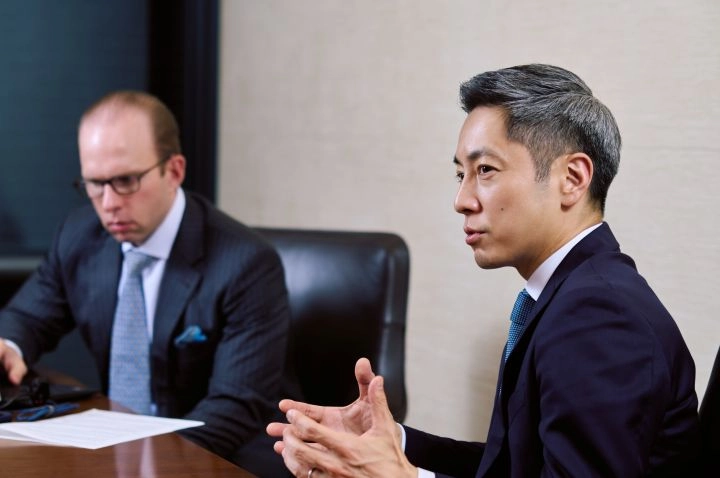
What do you see as the key factors in CVC success or failure?
I’ll say again that it ultimately comes down to three factors: first, reliably delivering ROI; second, using digital innovation to boost productivity and create new revenue opportunities; and third, building revenue drivers within the core business.
Achieve all three at once, and the result is improved ROE for the investing financial institution. It’s very clear and simple.
Exactly right. I’ve supported many CVCs, and that first point—ROI—is absolutely non-negotiable. We certainly kept coming back to it when we designed this framework too.
CVCs tend to focus on business synergies with startups, but the scale gap between large corporations and startups means that it’s hard to generate results that translate directly into revenue or profit in the short term. You can adopt pieces of a startup’s technology, but full-scale collaboration only starts contributing meaningfully to business profit and growth once the startup has grown to a certain scale.
So solid returns first have to be generated from the investment itself. You identify and invest in promising companies, finding the ones that will be winners. That in turn lifts the CVC’s financial returns, and ultimately feeds through to improving the bank’s ROE. I think that getting that sequence right is the key to CVC success.
Beyond the investment: Japan-US link fast-tracks AI-era financial innovation
What are you hoping to achieve through the SMBC Fin Atlas Beyond Fund, and what future do you want to build?
I want to grow this relationship with SMBC Group into a long-term partnership. SMBC Group is a core partner for us both in Japan and globally, and I see this fund as the first step in what will be a series of funds and products that we develop going forward.
Through this collaboration, we should be able to generate even bigger results. Our goal is to be the best possible partner so that SMBC Group can achieve even more on both the digital and business fronts.
Three years from now, I expect even more corporate AI uptake, with cybersecurity measures against AI-related risks also becoming far more sophisticated. Interest rates should also have come down from the current level and the investment market itself will have evolved into a healthier, more attractive ecosystem.
Software adoption in Japan has been expanding over the past few years, and as it becomes clearer that AI is reshaping every industry’s underlying structure, that momentum and interest will only accelerate further. The most cutting-edge AI is being built in the US right now, and how we connect Japan with that technology is going to be the key going forward.
Looking three years ahead as a CVC/VC, not every investment will deliver quick results, but we want to build a solid presence in the US VC market.
Generative AI adoption will kick up yet another gear in the years ahead. SMBC Group itself is setting up project teams and working to embed AI in all its business functions and processes. And I do think the US is still where AI’s next move gets made. Through this initiative, we want our US CVC work to be seen as the starting point for AI adoption across the whole Group.
We’re putting systems in place not just in investment but also in business and talent development. Being an SMBC Group CVC is itself a unique strength: by connecting our three bases in Japan, Asia, and the US, we want to nurture startups in each region and create a virtuous global cycle.
With commercial banking as the Group’s core business, we have touchpoints with a huge range of stakeholders—corporates, individuals, research institutions, and more. We’re drawing on that network to support our portfolio companies’ growth with the full resources of a banking group: not just equity investment, but help with fundraising, management and strategic advice, and talent and governance support.
At the same time, there’s growing momentum in Japan right now toward aiming to become globally minded entrepreneurs and unicorns. We want our US CVC activities to serve as a US platform for that movement, channeling information and insights back to Japan. Through that role, we want the SMBC Group CVC to become recognized as serving as a bridge between Japan and the US.
-

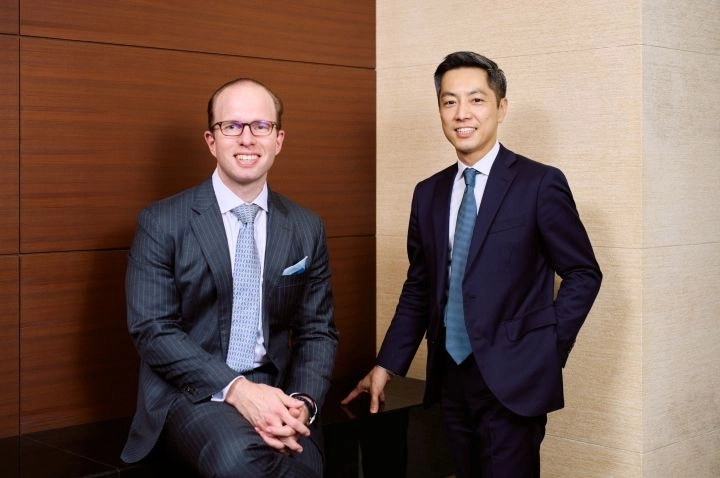
Founder & Managing Partner, Fin Capital
Logan Allin
As Managing Partner & Founder of Fin Capital, Allin oversees the development of fintech and B2B software investment strategies, investment sourcing and execution, and growth support for portfolio companies. He was previously the Vice President of SoFi Ventures, where he was tasked with fintech investment, running SoFi’s accelerator, and corporate development, and before that he was involved in startup support and business operation at Light Street Capital and Formation 8/Formation Group, etc.
In addition, Allin pursued enterprise and fintech strategy as strategy officer at Atlantic Trust (now CIBC), while also serving as a member of the Operating Committee, and he led technology strategy as Senior Vice President in City National Bank’s wealth management division (now part of RBC). He spent his earlier career in management consulting at PwC, EMC, and Capgemini, focused on the intersection of financial services and technology. Allin earned Bachelor of Arts degrees in public policy and political science from Duke University and an MBA from Stanford University’s Graduate School of Business. -
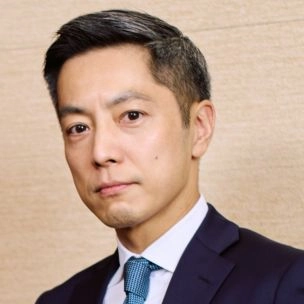
Fin Capital (on secondment from SMBC)
Eiko Ooka
Ooka leads SMBC Group CVC initiatives in the United States, promoting venture capital investment as well as partnerships with startup firms in fintech, security, B2B software, and generative AI. He previously served as General Manager of the Corporate Advisory Department in Tokyo, where he provided strategic and financial advisory services to leading Japanese companies in the basic materials and infrastructure sectors. He has an abundance of hands-on experience in capital markets, cross-border M&A, and innovation strategy and has spent more than a decade in the US building relationships with startups, venture capital and private equity firms, and the broader technology community. Ooka played a founding role in establishing SMBC’s Corporate Advisory platform in the US, growing it into a two-hub presence in New York and San Francisco. He has been instrumental in multiple leading-edge projects, including launching the SMBC Group Innovation Lab in Silicon Valley and driving LP investments into US venture capital funds. Ooka holds a BA in Law from Waseda University and an MBA in Finance from the Wharton School of the University of Pennsylvania.