
Silicon Valley AI Tool Helps Six Municipalities Tackle Local Challenges Through “Building While Thinking”


SMBC Group leverages its Silicon Valley Digital Innovation Lab to identify emerging technology trends and innovative solutions, helping drive digital transformation and new business creation across Japan. One such innovation is Replit, an AI-powered development platform that enables users to build applications simply by describing what they want in Japanese. Following its adoption by Sumitomo Mitsui Finance and Leasing, JSOL has also begun collaborating with Replit to explore new applications of AI-driven development.
In a recent regional DX workshop organized by JSOL and Sumitomo Corporation, six municipalities, Utsunomiya, Sakai, Sagamihara, Shizuoka, Toyota, and Yokohama, joined private-sector participants to tackle local challenges through rapid prototyping. Around 60 participants, most of whom were non-engineers, worked in mixed teams and used Replit to transform ideas into working solutions.
Shotaro Yasukochi of the Silicon Valley Digital Innovation Lab, who helped bridge the collaboration between JSOL and Replit, spoke with Koji Mio of JSOL and Megan Ruan of Replit about the initiative and its future potential.
Why Focus on Challenges Facing Local Communities?
This workshop went beyond simply giving participants hands-on experience with an AI development tool. Representatives from six municipalities brought real challenges facing their local communities. What are the distinctive characteristics of these challenges, and how did JSOL design and support the workshop to address them?
Municipalities have a deep understanding of local regulations, local circumstances, and residents’ needs. Private-sector companies, on the other hand, bring expertise in technology, commercialization, and long-term operations. The challenge is that it can be difficult to align their expectations before an idea takes visible form. Even when both sides use the same words, they may be imagining different users, features, or ways of operating the service. A solution that appears promising from a company’s perspective may not fit the regulations, needs, or day-to-day practices of a particular community.
Even when a community has identified a clear need, the solution and the organizations needed to address it may not yet be clear. Although each challenge may appear small in scale, it can have a significant impact on the people affected. Bringing together municipalities and companies with different perspectives, and giving them an opportunity to test ideas together, can therefore be an important first step toward developing a practical solution.
To put this idea into practice, JSOL worked with Sumitomo Corporation to organize a workshop where municipal officials and private-sector participants could bring local challenges and develop prototypes together in cross-sector teams. The workshop was divided into two parts. In the first half, representatives from each of the six municipalities presented a challenge facing their community. In the second half, participants formed teams to develop potential solutions based on those presentations. They described their ideas to Replit in Japanese and refined them through multiple iterations until they had working prototypes.
The goal was to give municipalities and companies a concrete way to work through their ideas together. Municipalities brought firsthand knowledge of local challenges, while companies contributed expertise through technology and commercialization. By building and reviewing prototypes together, the teams could develop shared visions for their proposed services, including who would use them and which features they would need.
Thinking Through the Screen: How Six Municipalities Experienced the “Build While Thinking” Process
The participants did not begin with a clear vision of what they wanted to build or a detailed set of requirements. How did they use Replit to develop and refine their ideas?
The participants began by describing their ideas to Replit in their own words. Replit then generated a working interface that they could review and modify. At first, some participants were unsure what kind of instructions to give. But once they had a screen in front of them, they could see more clearly what needed to change: “This is not quite what I had in mind,” “We do not need this field,” or “This order would make more sense.”
They did not expect to get everything right on the first attempt. Instead, they reviewed what Replit had generated, revised anything that did not reflect what they had in mind, adjusted their instructions, and tried again. Through this repeated cycle of building, reviewing, and rebuilding, their ideas gradually became clearer.
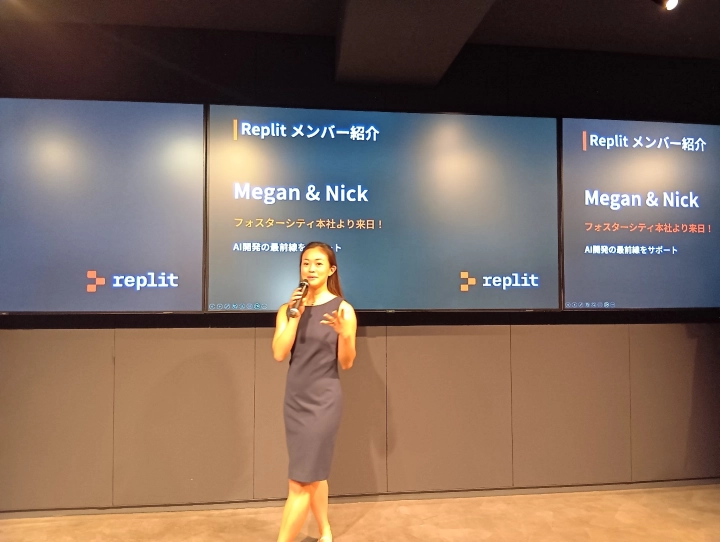
What was particularly interesting was that the participants did not begin with fully formed ideas. Instead, their ideas took shape as they built and refined their prototypes.
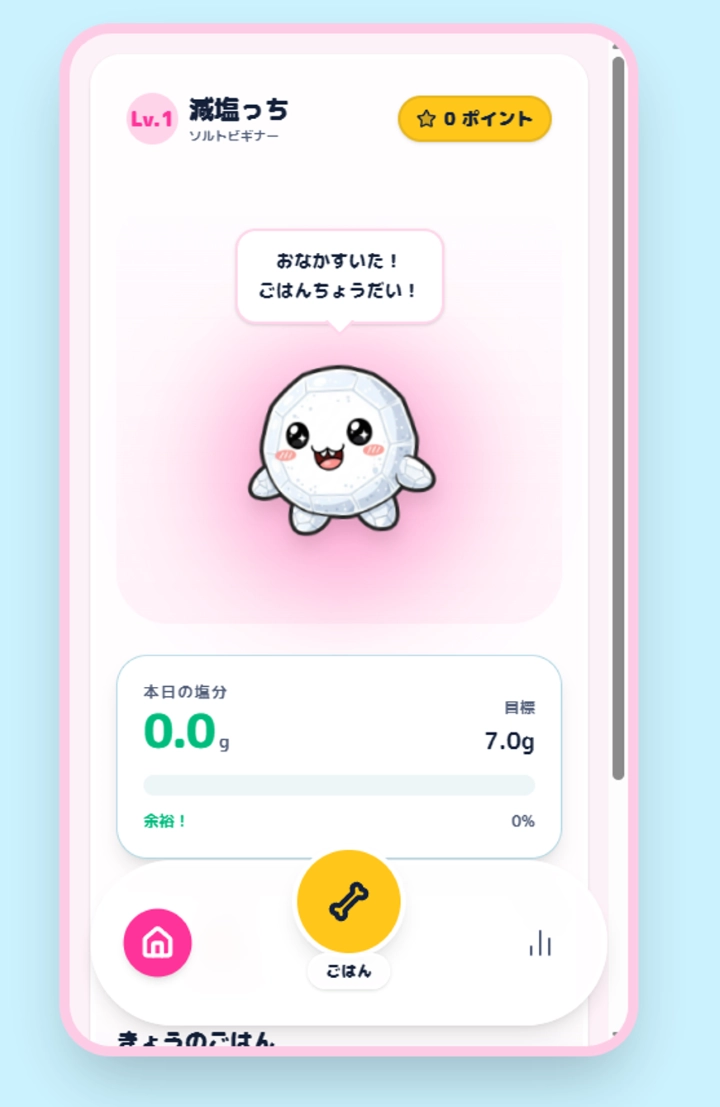
For example, the Sakai team began with a local health challenge: the city’s high mortality rate from cardiovascular disease linked to excessive salt intake. The team initially asked Replit to create an app that could estimate the salt content of a meal from a photo and offer advice.
As team members reviewed the generated interface, they realized that they needed a way to keep younger users engaged over time. They added reminder notifications and a character that grows as the app is used. By turning the idea into a working prototype, the team moved beyond simply providing information and began to consider what would motivate people to keep using the app.
Makoto Hada, Head of the Sakai City Tokyo Office and a participant in the workshop, remarked: “We use Copilot at Sakai City Hall, but this was the first AI tool I had seen that could create videos and applications at such a high level in such a short period of time. I was genuinely impressed by the speed and quality of the output.”
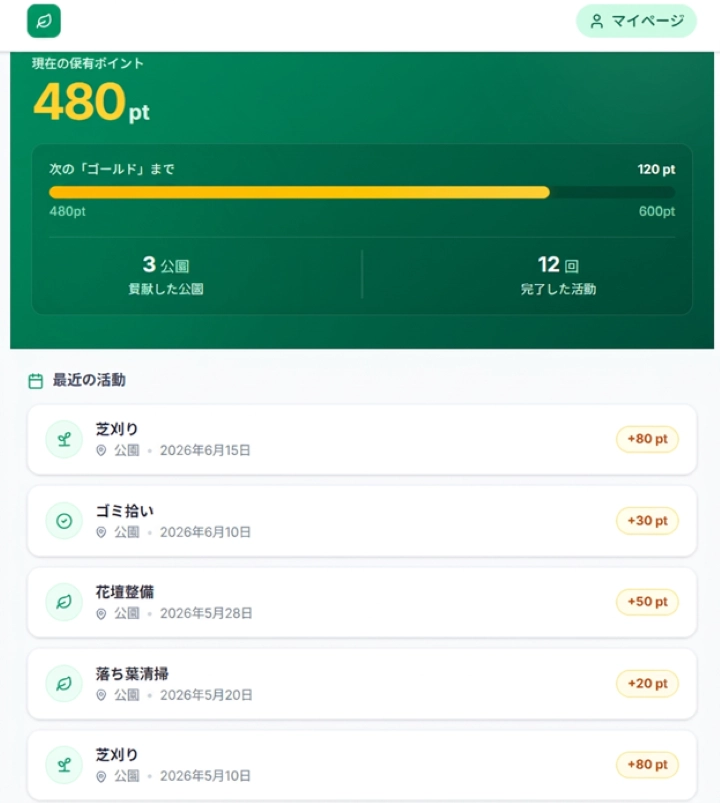
The other municipalities took a similar approach. For example, one team addressed the challenge of a decline in the number of people involved in maintaining local parks. Its initial idea was to create a website for managing information about parks across the city on a map.
As the team reviewed the generated interface and discussed the idea, the participants added a feature that allowed residents to earn points for volunteering. The concept evolved from a tool for visualizing park maintenance activities into a service that encouraged residents to take part in maintaining their local parks.
By turning an idea into a working prototype, participants could begin to answer more concrete questions: What is actually needed? Who will use it? What information should it provide? If the prototype differed from what they had imagined, that was not a failure. In fact, the moment something felt wrong, previously unspoken assumptions became easier to identify and discuss.
In a post-workshop survey, many participants expressed surprise at how quickly they were able to move from defining requirements to building working prototypes.
Applying the Build-First Approach to Enterprise Digital Transformation
So far, we have focused on challenges facing local communities. But the same issue can arise in enterprise digital transformation and new business development: those closest to a problem and those responsible for developing a solution may have different ideas about what to build. Do you see a similar challenge within companies?
I believe it does. Within companies, some processes remain undigitized because they are used by only a handful of people, while other tasks still rely on Excel and manual work. Employees may find these processes inconvenient, but they are often too limited in scope to justify a conventional development project. As a result, they may never be brought to an IT department or development partner for consideration.
The same applies to new business development. A company may have an idea, but the target users and the value the idea would deliver may still be unclear, making it difficult to translate the idea into a defined set of requirements. At that stage, creating something people can actually interact with allows stakeholders to consider more concrete questions: Who will use it? What do they really need? How would it fit into their day-to-day work?
At this stage, the aim is not to move every prototype into full-scale development. Instead, it is important to start small and determine whether to continue, revise the idea, or take it in a different direction. Prototypes that demonstrate value can then be developed further with the support of specialists.
In this workshop, JSOL supported participants as they defined their challenges in their own words, reviewed the prototypes, and identified what to change next. The workshop was the first opportunity to apply this approach to local challenges and explore how ideas could be refined through hands-on experimentation.
AI development tools are not just for producing a finished product from the outset. They can also give those who understand the problem and those who can build the solution something concrete to review as they work together toward an answer. This approach can also be applied to business process improvement and new business development.
-

Head of International Growth, Replit, Inc
Megan Ruan
As Head of International Growth at Replit, Megan Ruan is responsible for the company’s growth across international markets. Before joining Replit, Ruan worked at Morgan Stanley, where she advised institutional investors and family offices. She later worked in venture investing for the Johnson & Johnson family office. Ruan also co-founded Gold House Ventures and, as General Partner, led investments in startups and supported entrepreneurs. She was selected as a member of Kauffman Fellows Class 29.
-

JSOL Corporation
Koji Mio
At JSOL, Koji Mio is responsible for new business development and marketing, leading a wide range of initiatives in areas including AI business development, regional revitalization, and agriculture. He is also involved in JSOL’s partnership with Replit. Mio helped establish the Social Design Business Lab, which aims to address social challenges and create new business opportunities, and currently serves as its Secretary-General.
-

Sumitomo Mitsui Financial Group, Inc. / JRI America, Inc.
Silicon Valley Digital Innovation Lab, secondment from JSOL CorporationShotaro Yasukochi
Shotaro Yasukochi joined JSOL Corporation in 2020. After gaining experience in developing and maintaining infrastructure systems for the financial services and insurance sectors, he joined the Silicon Valley Digital Innovation Lab, where he currently conducts research and development. He has been seconded to JRI America since 2024.
