

Corporate Governance
Basic Approach
We position “Our Mission” as the universal philosophy underpinning the management of SMBC Group and as the foundation for all of our corporate activities.
To achieve the approach outlined in “Our Mission,” we consider the strengthening and enhancement of corporate governance a top-priority issue as we pursue effective corporate governance.
Sumitomo Mitsui Financial Group’s Corporate Governance System
SMFG Group employs the Company with Three Committees structure. This structure was adopted in order to build a corporate governance system that is globally recognized and is aligned with international banking regulations and supervision requirements, as well as to achieve enhanced oversight of the exercise of duties by the Board of Directors and to expedite the exercise of duties. Core subsidiaries SMBC and SMBC Nikko Securities employ the Company with Audit and Supervisory Committee system described in the Companies Act.
Through the implementation of effective corporate governance systems, we aim to prevent corporate misconduct while also achieving ongoing growth and medium- to long-term improvements in corporate value. We realize that there is no perfect form for corporate governance structures. Accordingly, we will continue working toward the strengthening and enhancement of corporate governance in order to realize higher levels of effectiveness.
Corporate Governance System
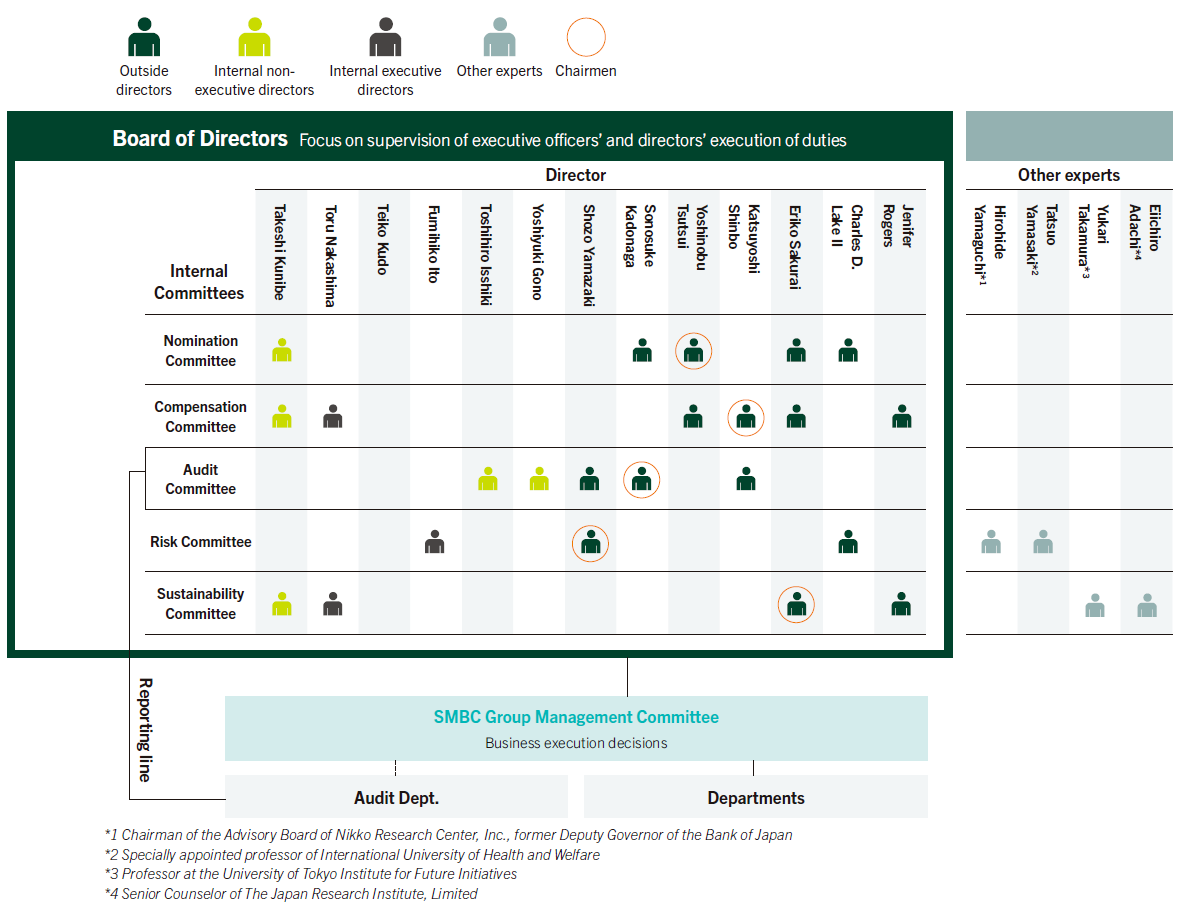
- *1:Hirohide Yamaguchi (Chairman of the Advisory Board of Nikko Research Center, former Deputy Governor of the Bank of Japan) and Tatsuo Yamasaki (Specially appointed professor of International University of Health and Welfare) serve as members of the Risk Committee in the capacity of external experts.
- *2:Yukari Takamura (Professor, the University of Tokyo Institute for Future Initiatives), Tetsuyuki Kagaya (Professor, Graduate School of Business Administration, Hitotsubashi University), and Eiichiro Adachi (Fellow, Japan Research Institute) serve as members of the Sustainability Committee in the capacity of experts.
As of June 30, 2026
Role of the Board of Directors
The Board of Directors of the Company is primarily responsible for making decisions on basic management policies and other matters that are within its legally mandated scope of authority, as well as overseeing the exercise of duties of executive officers and directors. Authority for decisions on execution of work other than decisions legally required of the Board of Directors will, in principle, be delegated to executive officers. The purpose of this delegation is to enhance the oversight function of the Board of Directors and to expedite the exercise of duties.
The Board of Directors works toward the realization of “Our Mission” and the long-term growth of corporate value and the common interests of the shareholders. Any action that may impede those objectives will be addressed with impartial decisions and response measures.
The Board of Directors is also responsible for establishing an environment that supports appropriate risk taking by executive officers. It is developing systems for ensuring the appropriateness of SMBC Group’s business operations pursuant to the Companies Act and other relevant legislation in order to maintain sound management. Another responsibility of the Board of Directors is exercising highly effective oversight of executive officers from an independent and objective standpoint. Accordingly, the Board of Directors endeavors to appropriately evaluate company performance and to reflect these evaluations in its assessment of executive officers.
Examples of matters discussed by the Board of Directors
- ●Formulation of the next Medium-Term Management Plan
- ●Progress of the Medium-Term Management Plan and business plans
- ●Global strategy / Inorganic strategy
- ●Group-based global governance
- ●Human resources initiatives (Human capital investment)
- ●Digital transformation and innovation promotion
- ●System strategy policy
- ●Cybersecurity
- ●Data governance
- ●AI utilization and governance
- ●Global compliance
- ●Policy for equity holdings
- ●Initiatives to create social value
- ●Capital policy
- ●Response to geopolitical risks/Response to trends in the financial markets
- ●Business status of Group companies
Initiatives for Improving Corporate Governance
| 2002 |
|
|---|---|
| 2005 |
|
| 2006 |
|
| 2010 |
|
| 2015 |
|
| 2016 |
|
| 2017 |
|
| 2019 |
|
| 2020 |
|
| 2021 |
|
| 2023 |
|
| 2024 |
|
Composition of the Board of Directors
The Board of Directors is composed of directors of varied backgrounds and diverse expertise, experience, genders, and nationalities.
As of June 26, 2026, the Board of Directors is composed of 13 members. A majority of these, 7 directors, are outside directors. The chairman of the Board of Sumitomo Mitsui Financial Group, who does not have business execution responsibilities, serves as the chairman of the Board of Directors. This membership ensures an objective stance toward supervision of the exercise of duties by executive officers and directors.
Outside directors serve as chairmen and members of the Company’s legally mandated and voluntarily established committees. When necessary, outside directors request reports on compliance, risk management, and other matters from relevant departments to promote appropriate coordination and supervision.
Skills Matrix of Directors
Directors have been selected for their knowledge and experience in corporate management, finance, global business, legal affairs/risk management, financial accounting, IT/DX, sustainability, and other areas, so that the Board of Directors can exercise sufficient supervisory functions as the board of a global financial group. They are also expected to contribute to the further development of SMBC Group.
- *1:◎indicates the chair
- *2:The items listed in “Skills Matrix of Directors” are areas particularly expected of the relevant directors and do not represent the entirety of the knowledge and experience possessed by the directors.
Evaluation of the Effectiveness of the Board of Directors
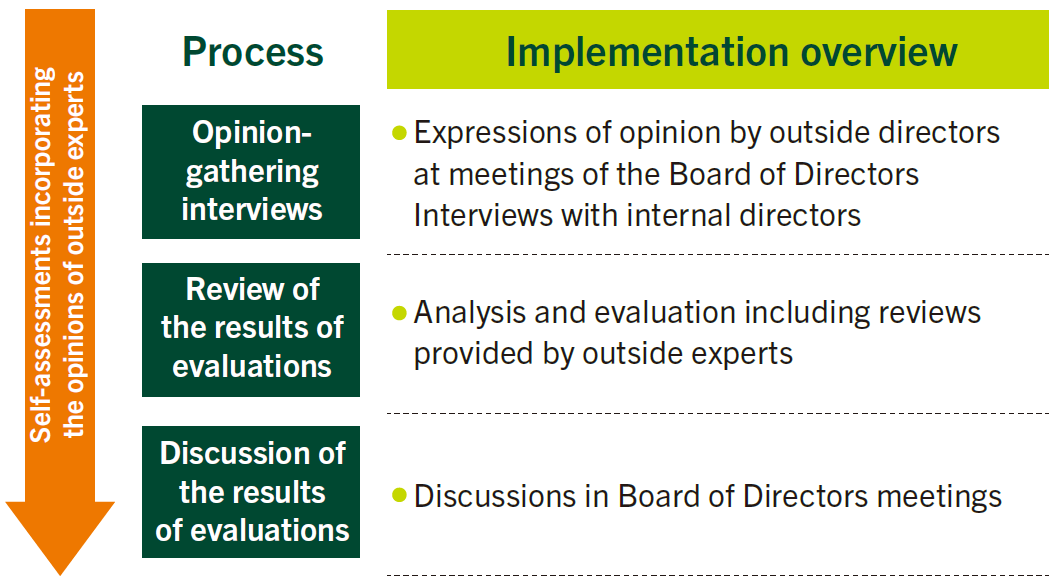
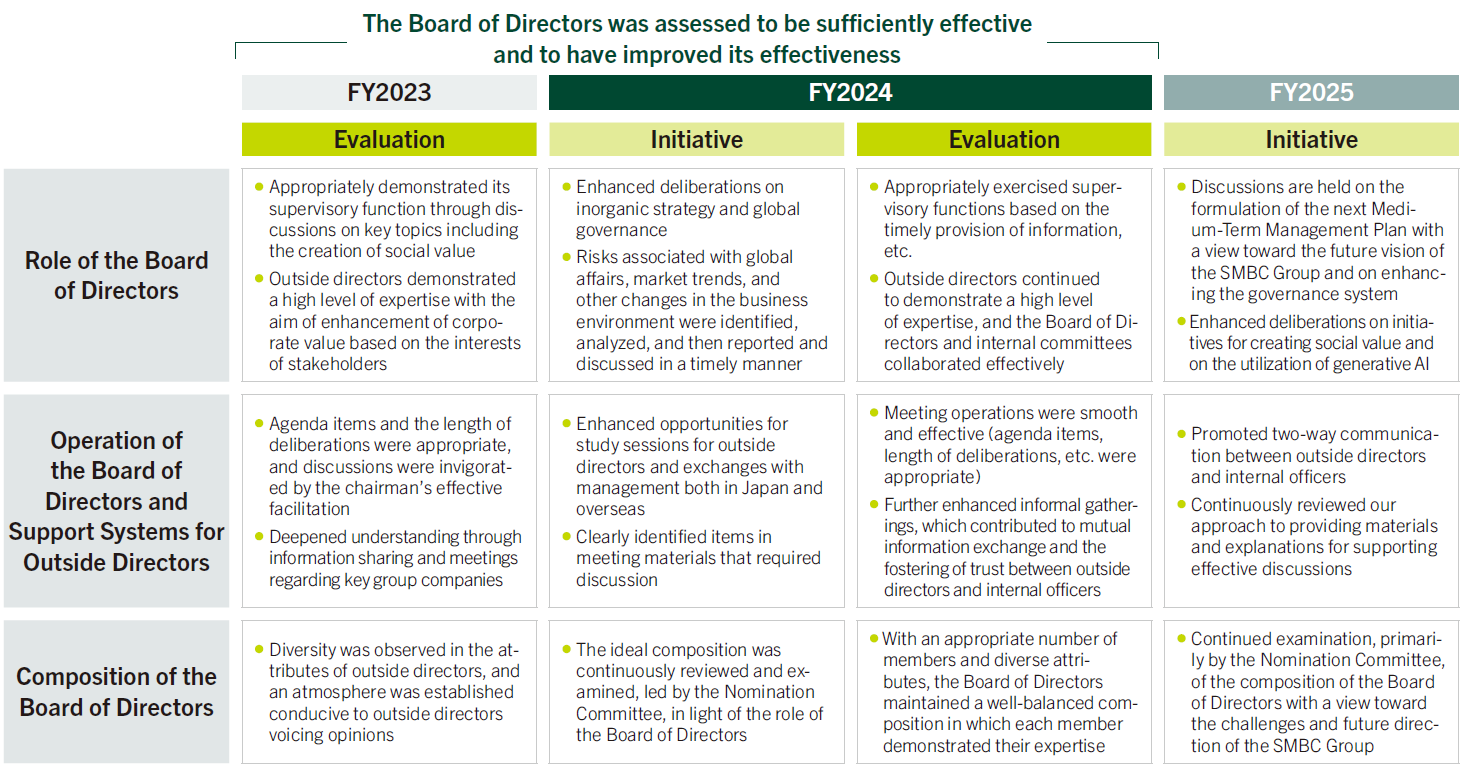
The “SMFG Corporate Governance Guideline” contains provisions on evaluating the effectiveness of the Board of Directors. In accordance with these provisions, the Board of Directors conducts annual analysis and evaluation to determine whether it is executing its duties in line with the guideline, and discloses the findings of these. For FY2025, a questionnaire survey was conducted for all directors focusing on the “Role of the Board of Directors,” “Operation of the Board of Directors and Support Systems for Outside Directors,” and “Composition of the Board of Directors,” as described in the “Corporate Governance Code” and “SMFG Corporate Governance Guidelines.” Opinions were subsequently heard from all seven Outside Directors at the Board of Directors meetings held in April and May 2026. Discussions were held at Board of Directors’ meetings in June based on the findings of these interviews with internal directors, after which analyses and evaluations were carried out to determine whether the Board of Directors is executing its duties in line with the “SMFG Corporate Governance Guideline.” Reviews by knowledgeable experts from developed nations are received at each stage of the evaluation process.
Overview of Results of Evaluation of the Effectiveness of the Board of Directors
In FY2025, the Board of Directors was assessed to be sufficiently effective and to have improved its effectiveness, as a result of efforts to raise the level and effectiveness of deliberations at Board of Directors meetings following appropriate actions taken in response to the findings of the previous effectiveness evaluation. Based on the results of the latest effectiveness evaluation, along with diverse opinions by directors and recommendations by external experts gathered through the series of processes, the Board of Directors is working to further enhance its effectiveness by promoting mutual understanding between outside directors and internal officers and employees and by discussing fundamental issues aimed at enhancing corporate value.
FY2025 Initiatives and Evaluation of the Board of Directors; Priority Issues and Initiatives for FY2026
Activities of Internal Committees (FY2025)
| Main role | Number of meetings (average attendance rate) |
Activities | |
|---|---|---|---|
| Nomination Committee | The Nomination Committee is responsible for determining the contents of proposals regarding the election and dismissal of directors to be submitted to the general meeting of shareholders. It deliberates on matters including top management succession and personnel matters concerning officers of major subsidiaries. |
5 meetings (100%) |
|
| Compensation Committee | The Compensation Committee is responsible for setting policies for determining the compensation of directors, corporate executive officers and executive officers of the Company as well as individual remuneration for directors and corporate executive officers of the Company. It deliberates on policies for setting the compensation of the executive officers of major subsidiaries. |
7 meetings (100%) |
|
| Audit Committee | The Audit Committee is responsible for auditing the execution of duties by directors and executive officers of the Company, preparing audit reports, and determining the content of proposals related to the accounting auditor to be submitted to the general meeting of shareholders |
15 meetings (100%) |
|
| Risk Committee | The Risk Committee is responsible for deliberation on important matters relating to risk management, including environmental and risk awareness, operation of the Risk Appetite Framework, and implementation of risk management systems, and provides counsel to the Board of Directors on these matters |
4 meetings (100%) |
|
| Sustainability Committee | The Sustainability Committee is responsible for deliberating on the progress of measures to create social value, domestic and overseas conditions surrounding sustainability, and other important matters. It reports to and advises the Board of Directors |
2 meetings (100%) |
|
Support Systems for Outside Directors
The Company recognizes that outside directors require an in-depth understanding of the Group’s business operations and business activities. Accordingly, we continually endeavor to supply outside directors with the business activity information and insights that are necessary to supervise management while also providing them with the opportunities needed to fulfill their roles. In FY2025, the following initiatives were implemented.
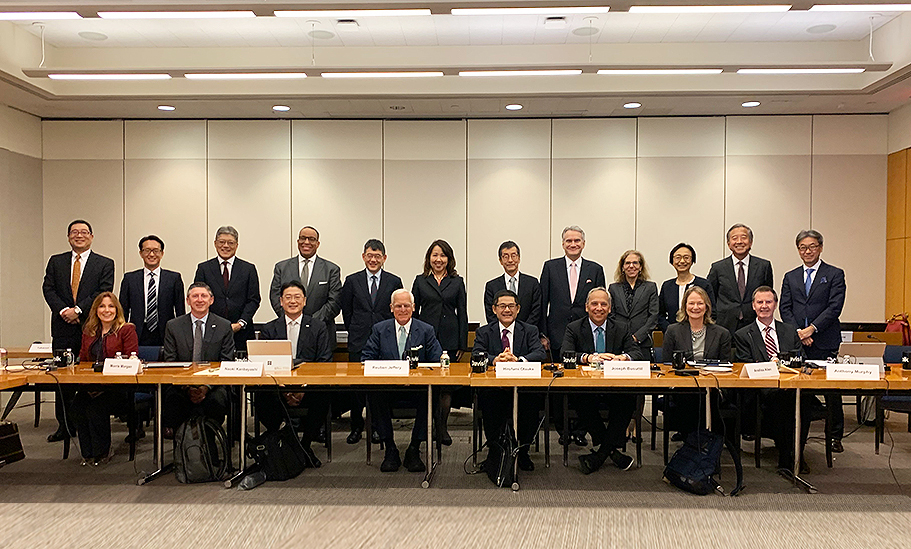
Outside Directors Visit Kyoto and Osaka Locations
- ●Participation in various executive-side meetings, such as branch manager meetings of core subsidiaries, to promote understanding of business operations and activities. Also conducted site visits to Group companies in Japan. In addition, they exchanged opinions with officers at overseas bases and presidents of Group companies.
- ●Held informal gatherings between outside directors and relevant departments on specific themes, such as “Formulation of the Next Medium-Term Management Plan” and “Businesses of Group Companies”
- ●Explanatory sessions on Board of Directors’ meeting agenda items prior to board meetings to assist in the understanding of items
- ●Conducted study sessions on “Capital Policy” and “Generative AI,” inviting external experts as lecturers
- ●Timely and effective provision of information on the proceedings of internal meetings, etc. to outside directors
- ●Outside directors-only meetings
Outside Director Independence Standards
In order to be classified as independent, an outside director of the Company must not fall under, or have recently fallen under, any of the following categories:
| 1. Major business partner |
|
|---|---|
| 2. Specialist |
|
| 3. Donations |
A person who has received donations or other payments from the Company or SMBC averaging more than ¥10 million per year or 2% of the recipient’s annual revenue, whichever is greater, over the last three years, or an executive director, officer, or other person engaged in the execution of business of an entity which has received the same |
| 4. Major shareholder |
A major shareholder of the Company or an executive director, officer, or other person engaged in the execution of business of a major shareholder (including anyone who has been a major shareholder, or an executive director, officer, or other person engaged in the execution of business of a major shareholder, within the last three years) |
| 5. Close relative |
A close relative of any person (excluding non-material personnel) who falls under any of the following:
|
See Reference 6 in “SMFG Corporate Governance Guideline” for details.
Compensation Program
To facilitate the fulfillment of Our Group Mission and the realization of Our Group Vision, we established an executive compensation program for Directors, Corporate Executive Officers and Executive Officers (the “Executives”) and introduced Stock Compensation Plans as a part of the Program, for the purpose of:
- ●Strengthening the linkage between SMBC Group’s short-, medium- and long-term performance and executive compensation, thereby providing Executives with appropriate incentives to improve performance; and
- ●Further aligning the interests of Executives with those of shareholders by increasing the proportion of stock-based compensation and encouraging share ownership by Executives.
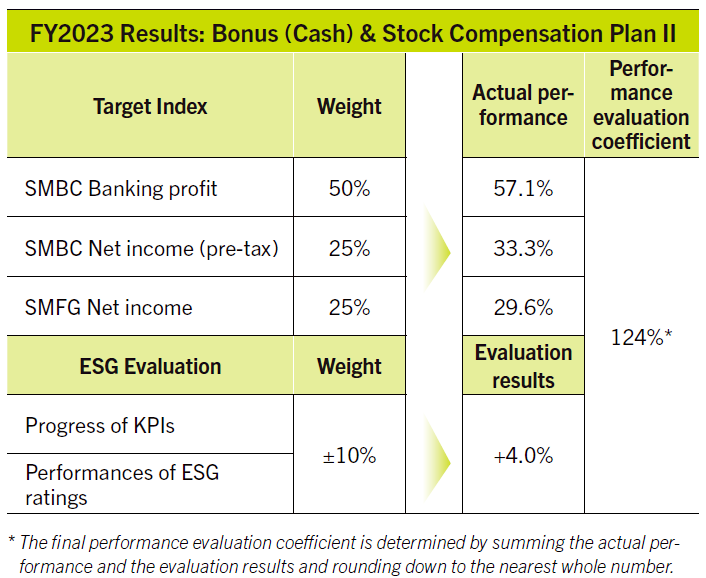
Executive Compensation Structure (FY2026)
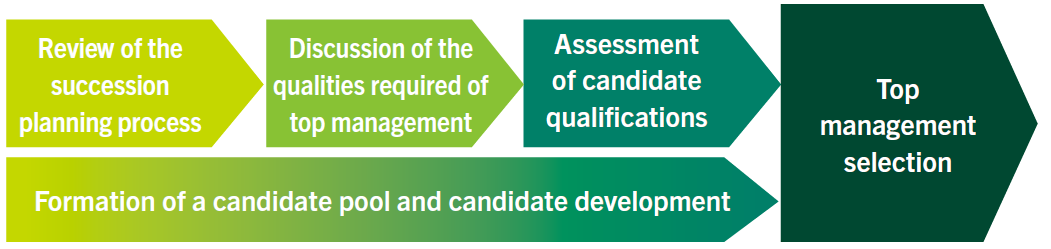
Executive Compensation Structure
In principle, executive compensation consists of base salary, bonuses and stock compensation. The performance-linked portion, which fluctuates with the business environment and performance, accounts for approximately 40% to 60% of total compensation, depending on corporate title. The structure and levels of executive compensation are determined by the Compensation Committee based on third-party executive compensation surveys, economic and social trends, and the operating environment.
Ensuring Sound Business Operations
To curb excessive risk-taking and ensure prudence as a financial institution (initiatives for maintaining soundness), we have introduced mechanisms allowing for malus (reduction/ forfeiture during the restriction period) and clawback (return after the restriction is lifted) for certain stock compensation programs and bonuses subject to deferred payment, should events such as material amendments to the financial statements or material damage to the reputation of SMBC Group.
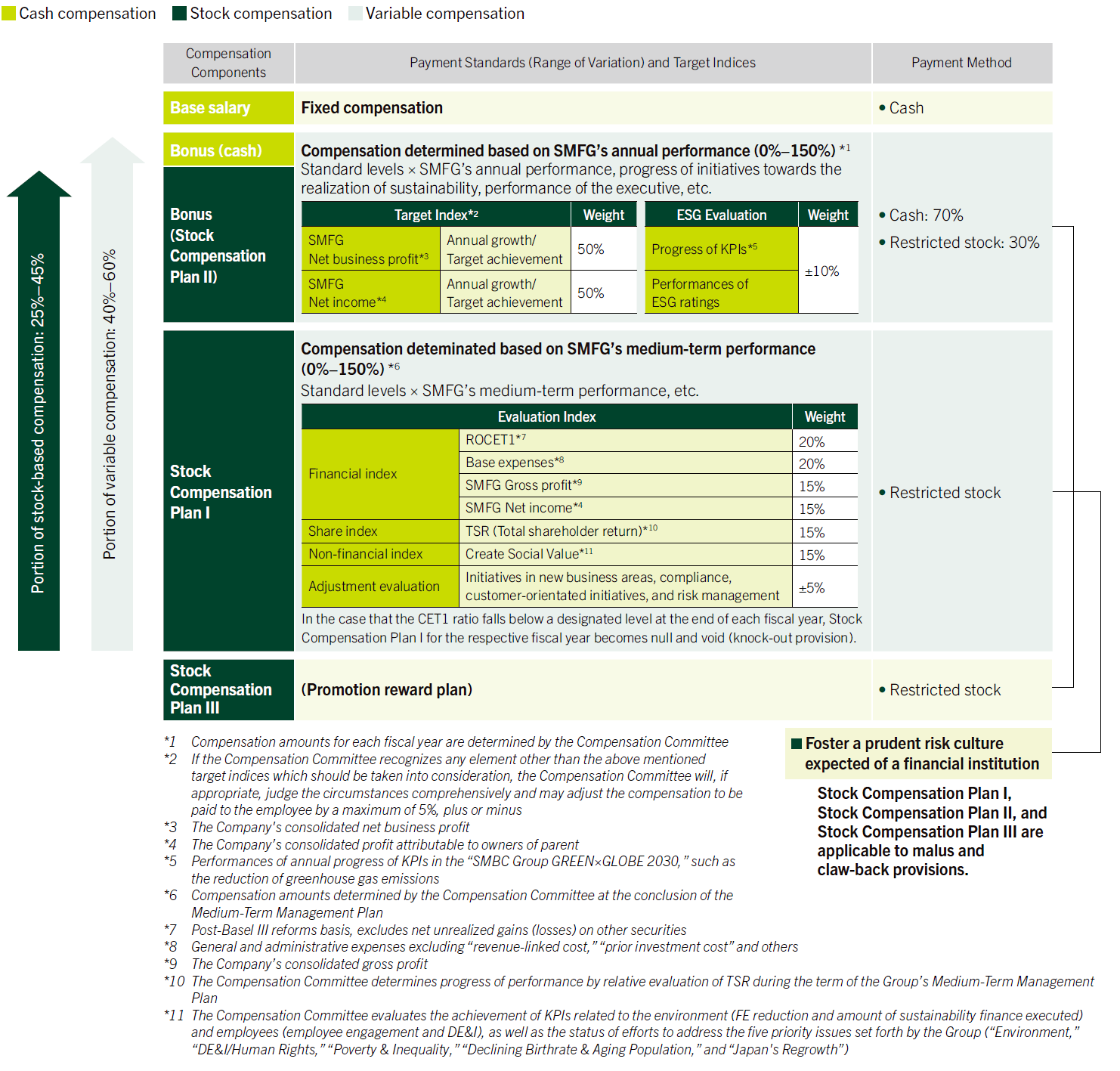
Reference:FY2025 Results for Performance-Linked Compensation Indicators
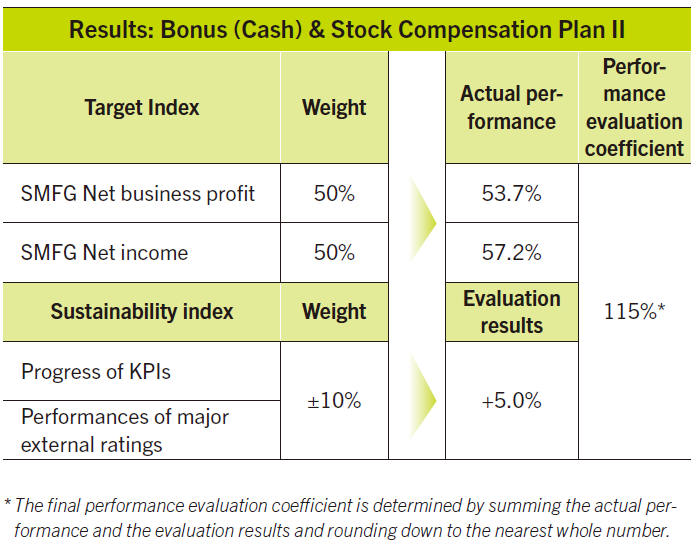
Annual Performance-Linked Compensation
In FY2025, cash and stock compensation were paid as annual performance-linked compensation. Two performance indicators were adopted: “SMFG net income attributable to owners of parent,” representing the final outcome of SMBC Group management, and “SMFG consolidated net business profit,” indicating SMBC Group’s profitability. These served to enhance the linkage between performance and executive compensation, ensuring that the compensation program functioned as an appropriate performance incentive. In addition, the Compensation Committee determined the evaluation of sustainability indicators based on the results of major external sustainability ratings, among other factors.
Medium-Term Performance-Linked Compensation
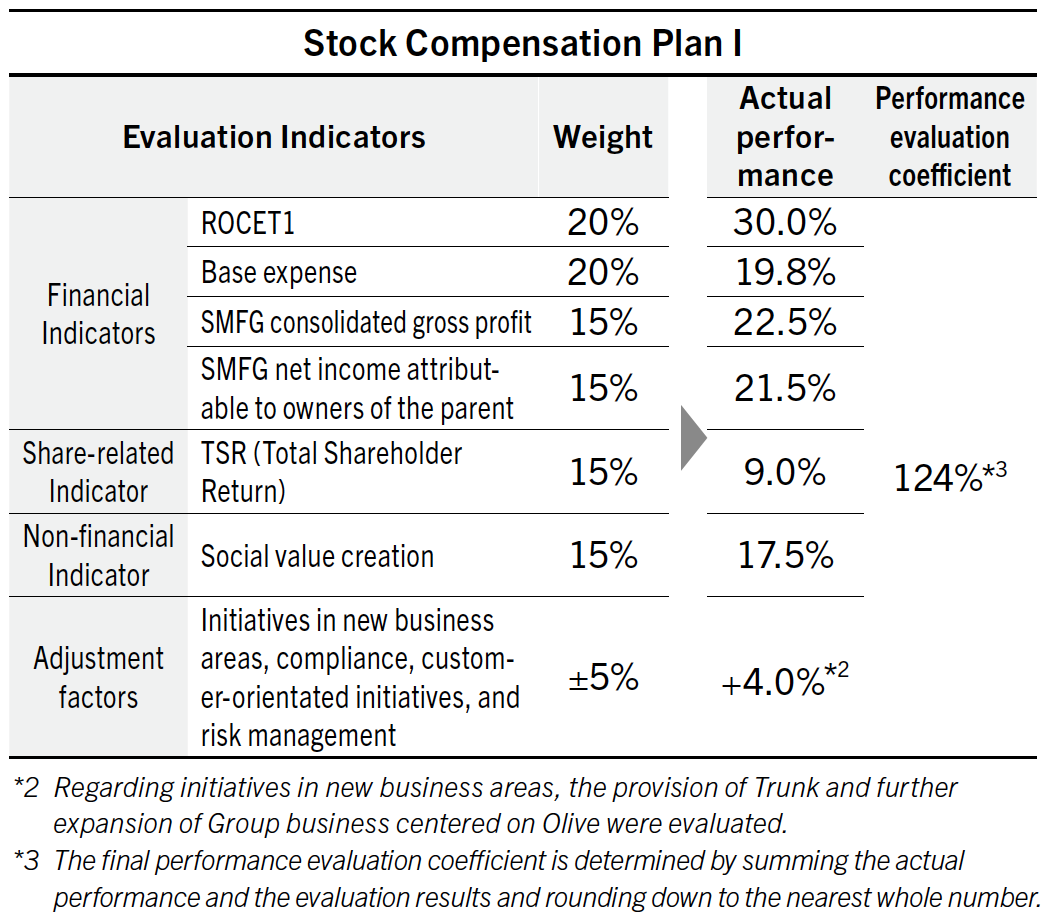
Compensation under Stock Compensation Plan I is paid as medium-term performance-linked compensation. As evaluation indicators linked to the Medium-Term Management Plan covering the period from FY2023 to FY2025, in addition to financial indicators such as ROCET1 and Base expense, we have adopted TSR as a share indicator and Social value creation as a non-financial indicator. Adjustment factors, including initiatives in new business areas, compliance, customer-oriented initiatives, and risk management, are also considered in determining medium-term performance-linked compensation.

For further details on our corporate governance and our Policy regarding equity holdings, please refer to the following link.
- Corporate Governance: SMBC Group Annual Report 2026
- Securities Report"Yuka Shoken Hokokusho":Status of Corporate Governance P115-P168(Japanese only)
- Corporate Governance Guideline
- Corporate Governance Report (Japanese only)
For details about SMFG's organization management structure, please see the following link.
For details about Equity Holdings, please see the following link.