

Human Resource Strategies to Support Value Creation
Read SMBC Group’s “HUMAN CAPITAL STORY” here
Chief Human Resources Officer
Connect. Support. Co-create.
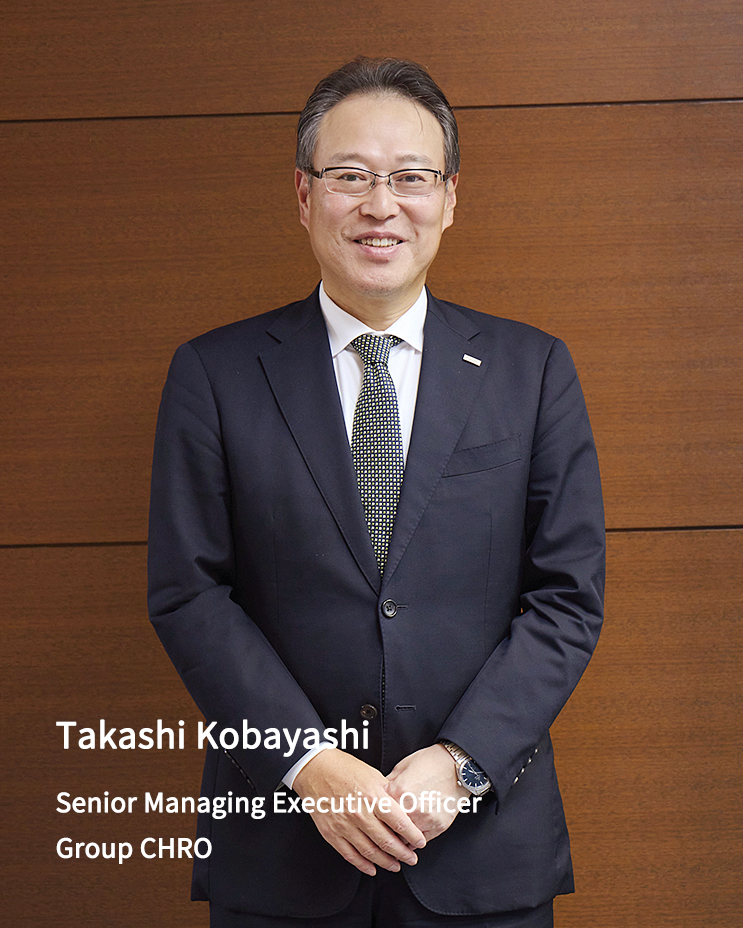
In an environment where the business landscape is changing rapidly and the variety of backgrounds and perspectives among our employees accelerating, SMBC Group will realize the new Medium-Term Management Plan by strengthening the human capital that supports our growth strategy and maximizing onthe- ground capabilities and strategy execution power.
At SMBC Group, over 130,000 employees are currently active. To create an environment where employees with a variety of backgrounds and perspectives can maximize their individual abilities and maintain their motivation for growth, we established the SMBC Group Talent Policy in FY2023.
The Talent Policy clearly states that we ask employees to embody “Professional,” “Collaborative,” and “Agile,” and in return, the Company provides them with “Be Yourself,” “Make a difference,” and “Build Your Career.”
The establishment of the Talent Policy represents SMBC Group’s determination to evolve the relationship between the Company and its employees from a traditional master-servant dynamic to a relationship where both “Mutual Choice,” aiming for relentless value creation through mutual growth. I believe that creating this virtuous cycle between what we “ask of employees” and the “value we provide” is our long-term, unchanging mission.
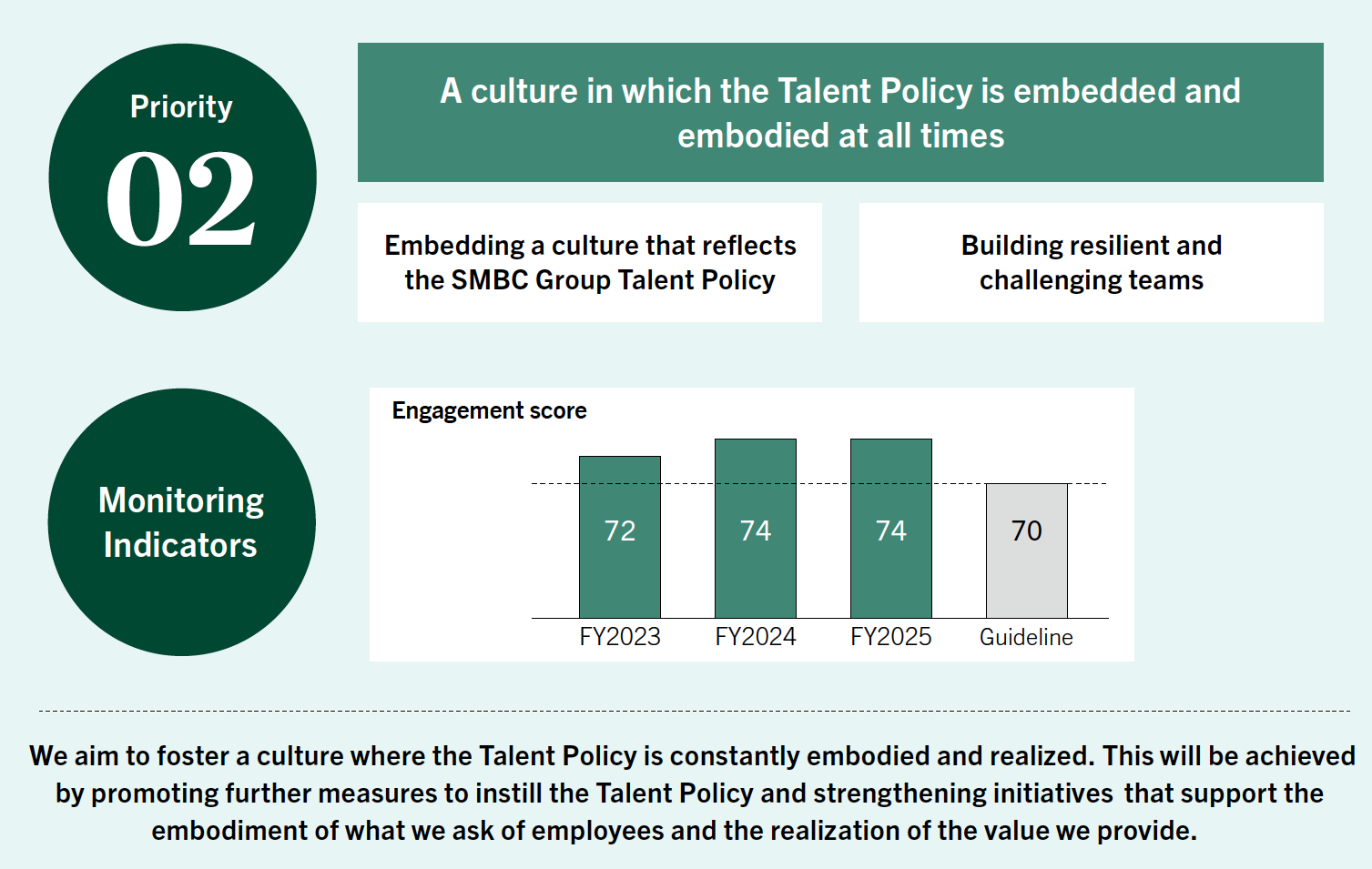
To realize the Talent Policy, we believe the three areas on which we must focus are “Talent,” “Culture,” and “Platform.” In the new Medium-Term Management Plan, considering these three perspectives along with the business environment and the variety of backgrounds and perspectives among our employees, we have established three key HR strategies: (1) A sufficient pool of professional talent, both in terms of quality and quantity, is in place across all areas; (2) A culture in which the Talent Policy is embedded and embodied at all times; and (3) An organizational and management foundation that combines high reproducibility and productivity is in place.
Furthermore, from FY2026, to strengthen quantitative effectiveness measurement for the realization of our HR strategy, we have set the Human Capital ROI and Talent Policy scores as KGIs, and we have also renewed our human capital management model to clarify the linkage between HR strategy and business strategy.
Even amidst global regime changes and dramatic technological advancements, SMBC Group’s greatest asset is its “people.” The strength of each and every employee is the source of SMBC Group’s competitiveness.
Even amidst a rapidly changing era, we will provide unsparing support from all angles to employees who ambitiously and boldly tackle the challenges of customers and society, ensuring their capabilities can be maximized.
Connecting employees with the Company, supporting and nurturing their growth, and co-creating business. As Group CHRO, I am determined to vigorously drive the HR strategy and tackle the realization of our business strategy.
SMBC Group Talent Policy and New Human Capital Management Model
SMBC Group Talent Policy
The importance of the SMBC Group Talent Policy, formulated in FY2023, remains unchanged in the new Medium-Term Management Plan. The Talent Policy clearly codifies the unchanging “expectations” for employees and the “value we provide,” regardless of changes in the business environment and the employees with a variety of backgrounds and professional expertise. By creating a virtuous cycle between the two, we aim to build a relationship where the Company and employees Mutual Choice by each other. By permeating and constantly embodying the Talent Policy, we will Creating workplaces and teams where employees with varied backgrounds and expertise aim high and feel rewarded.
Redesign of Our Human Capital Management Model
To further clarify the linkage between business strategy and HR strategy, we have fundamentally revised our existing human capital management model starting from FY2026. The new human capital management model positions the SMBC Group Talent Policy as the engine of value creation. By executing strategic investments in human capital, we aim to achieve the desired state in the three focus areas of “Talent,” “Culture,” and “Platform.” The model demonstrates the concept that reaching “Teams that can consistently maximize output are in place in all areas” directly leads to an improvement in corporate value.
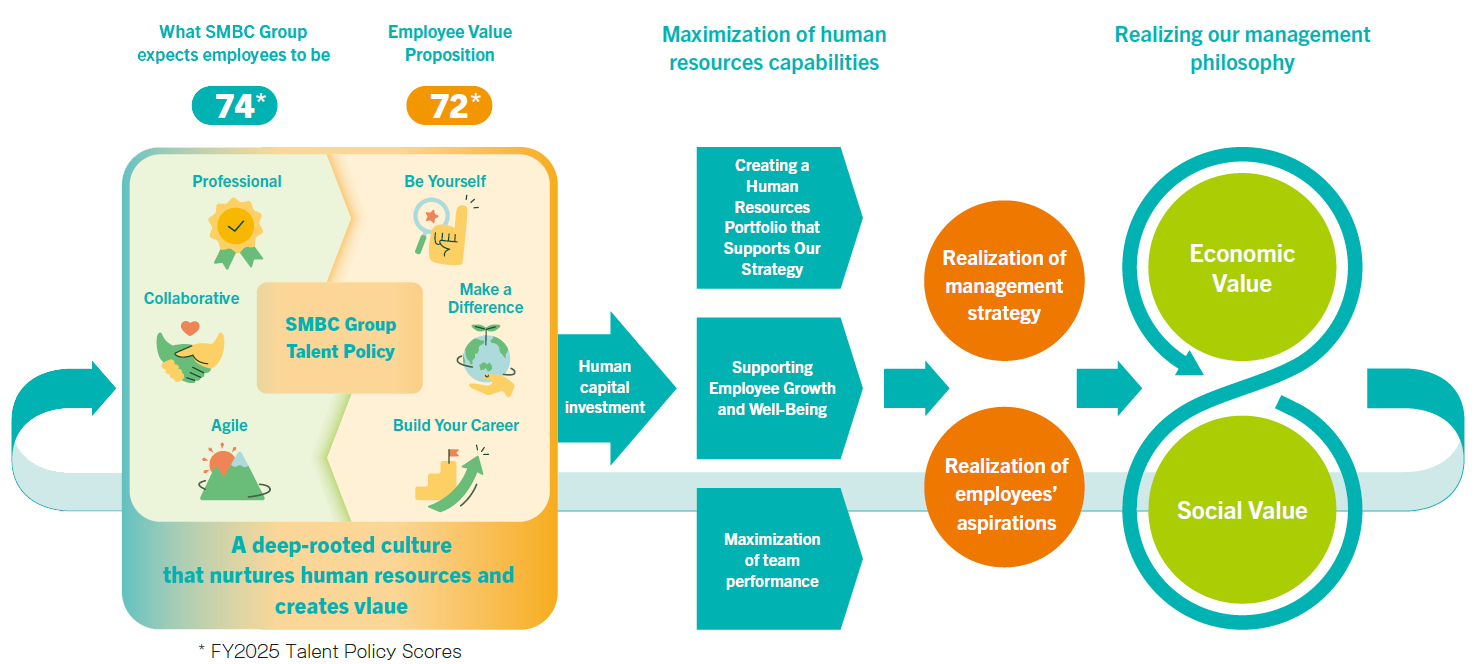
Overview of the HR Strategy
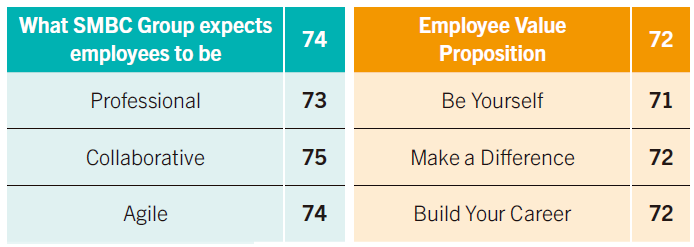
Key HR Strategies
Talent
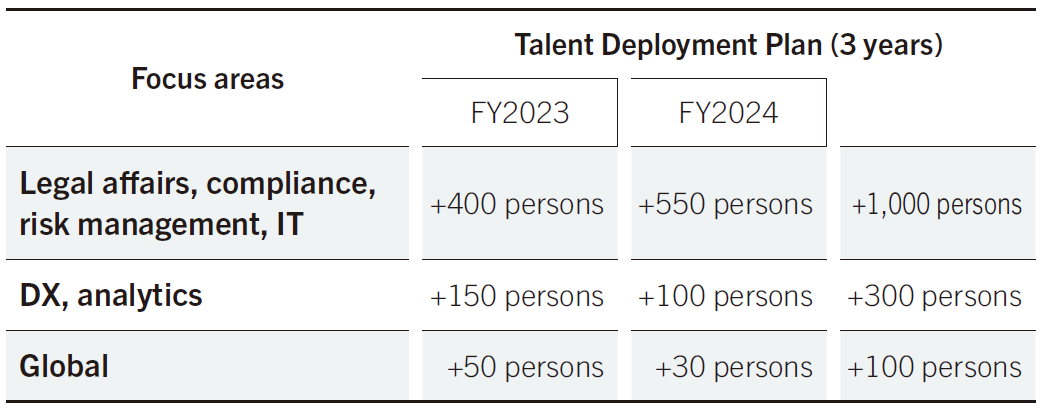
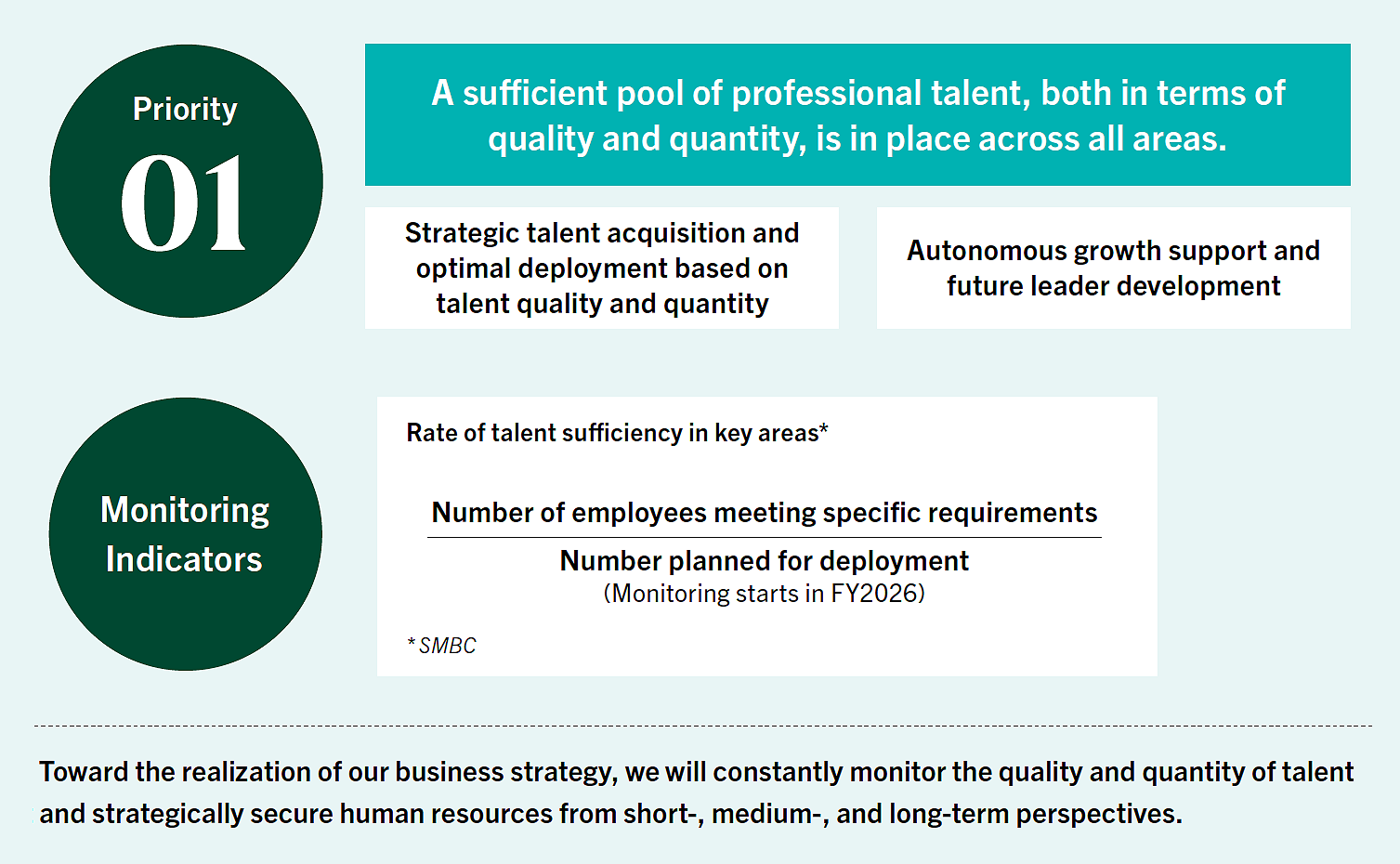
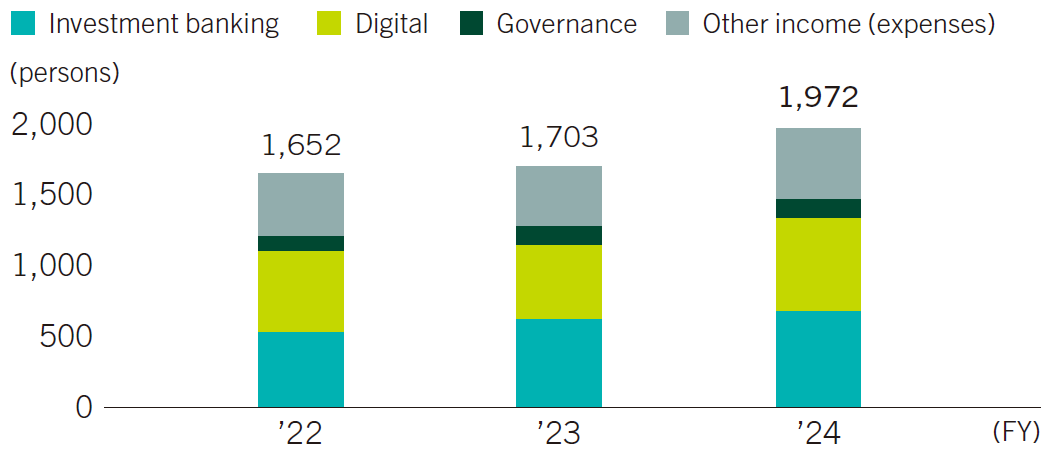
Visualizing Required Talent and Understanding the Fill Status
For Key strategic area, we will enhance recruitment, development, and placement by visualizing not only the “quantity” of necessary talent but also the “quality,” such as skills and experience. Furthermore, we will strategically allocate resources generated through streamlining headquarters functions and improving the efficiency of domestic and international middle and back office operations to growth areas. We will promote optimal placement across Group and global boundaries, further strengthening the linkage with our business strategy.
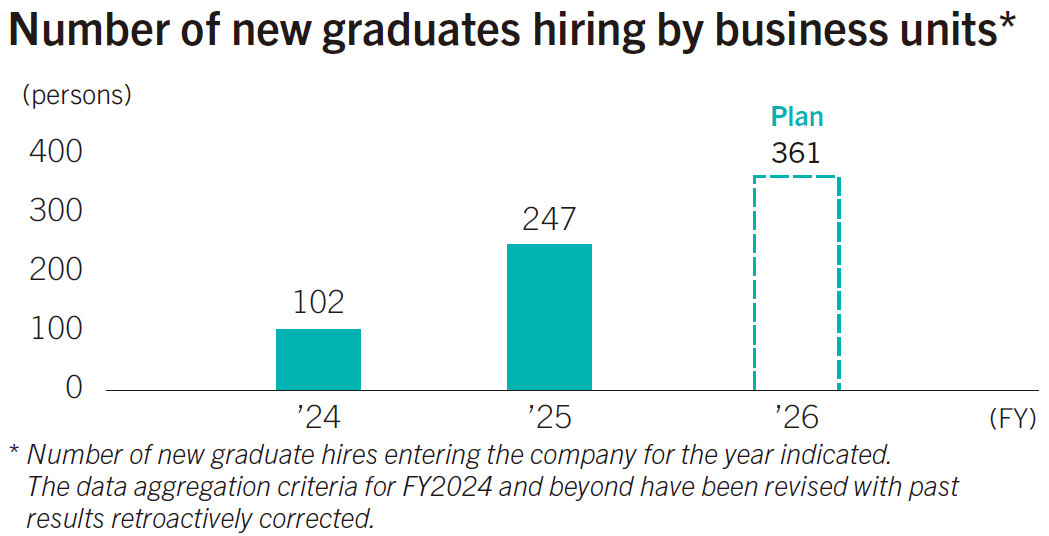
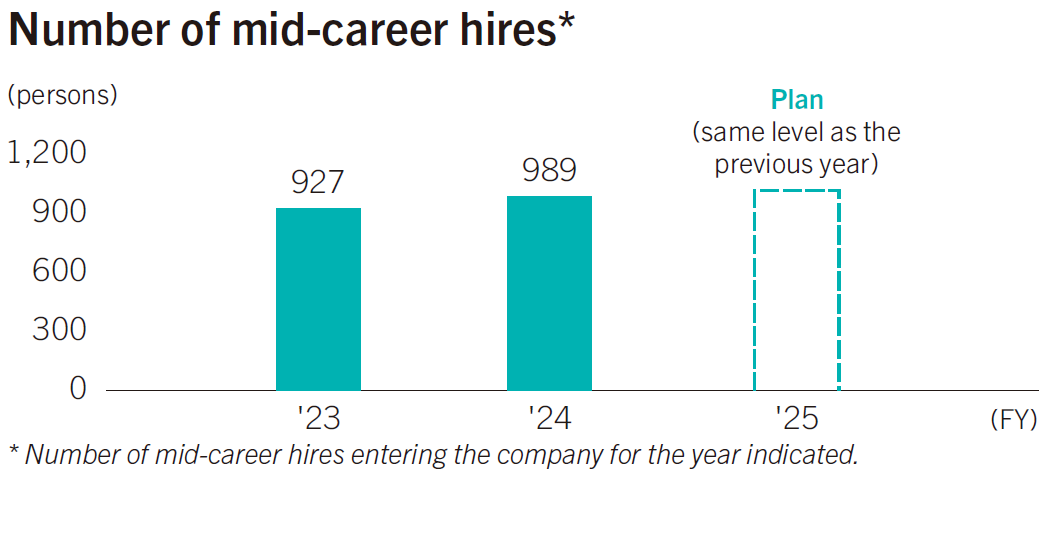
Building Recruitment Strategy and Infrastructure
We are strengthening and diversifying our talent acquisition efforts in alignment with our business strategy. We have expanded open-track recruitment of new graduates, providing access to a broad range of career opportunities; recruitment of new graduates by business units, enabling candidates to build careers in their chosen fields; and mid-career recruitment opportunities that capitalize on advanced expertise as well as diverse experiences and perspectives. We will continue to attract and recruit talent capable of making a significant impact beyond the traditional boundaries of financial services. To this end, we will strengthen collaboration among Group companies and enhance our talent development and onboarding frameworks.
Systematizing Management Talent Development
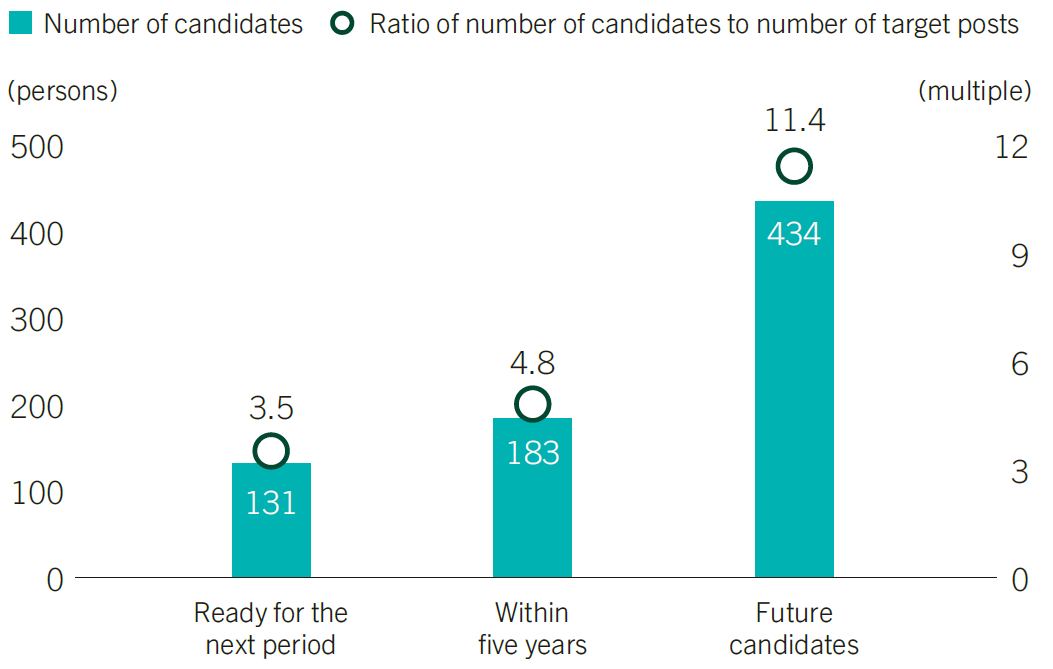
We are also focusing on developing the talent that will lead our management in the future. We have formulated succession plans for key positions globally, including CxOs and Head of Business Units.
For future management candidates, we are building a system for planned development over a medium- to long-term span. This includes providing tough assignments involving cross-boundary learning unbounded by business domains, diverse training opportunities, and opportunities for dialogue with management.
Supporting Employees’ Self-directed Career Development
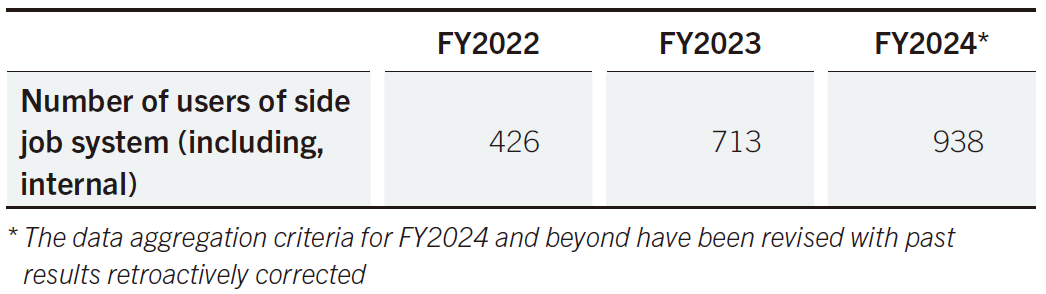
We are expanding a Group-wide self-study platform, creating an environment where each employee can proactively acquire the necessary knowledge and skills according to their challenges and goals. We will support employees in their pursuit of diverse career paths and contribute to employees’ long-term growth and development.
Culture
Strengthening Internal and External Communication
In FY2026, SMBC Group published its first report dedicated to human capital. The report details our HR strategy and introduces employees who embody the Talent Policy.
Furthermore, we will enhance communication by
utilizing internal social networking services and increasing
proactive interviews and speaking engagements, thereby
working to instill a culture that embodies the Talent Policy
both internally and externally.
SMBC Group Diversity Management
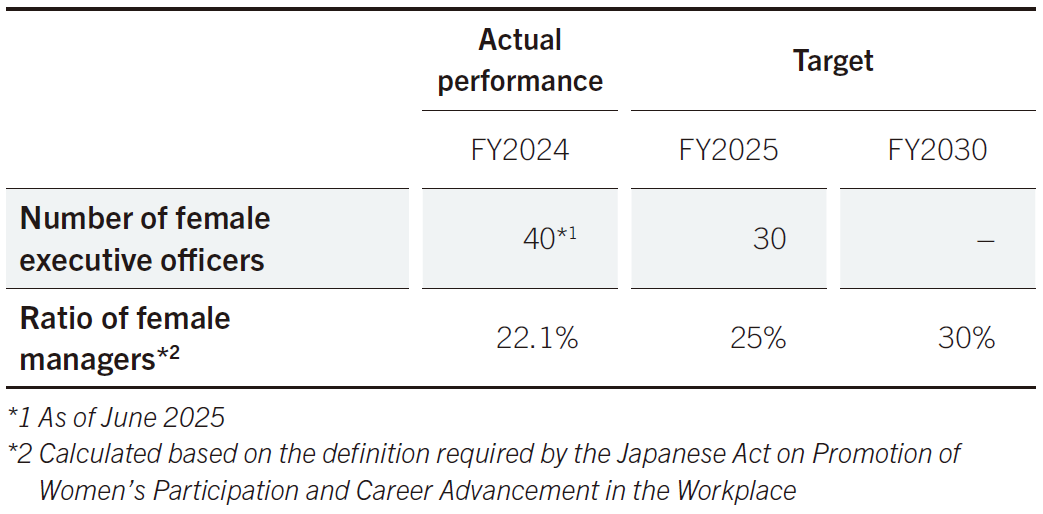
We position diversity management as a growth strategy itself, aiming to transform diversity into organizational strength, leading to new value creation and improved corporate value. For example, in Japan, we provide development programs for female executive candidates to promote greater diversity at the decision-making level, in response to the country’s persistent gender gap. Additionally, some Group companies have implemented a “sponsorship system” where management committee executives provide comprehensive support for career advancement to female executive candidates.
We are also expanding support programs that enable employees to balance their work and personal lives while realizing their full potential. At SMBC and SMBC Nikko Securities, we are advancing initiatives to strengthen team resilience* so that teams can cope with vacancies arising from various reasons, including childcare. As part of this effort, we established a new incentive system for teams that took the opportunity of childcare leave to strengthen their team resilience.
- *:The ability of a team, when facing difficult situations, to adapt quickly and flexibly and overcome them.

Health and Productivity Management
We consider the physical and mental health of each employee, which is the driving force for providing value to customers, as a management issue, and are promoting health and productivity management. To support physical and mental condition management as professionals, we offer various seminars and training programs, as well as subsidies for medical examinations and treatments, and flexible work arrangements. These efforts have been recognized, and our Company was certified as a Health and Productivity Management Outstanding Organization 2026 (Large Enterprise Category (White 500)).
Platform
Strengthening the Group HR Structure
As our businesses expand across the Group, differences in HR systems and operations among companies, along with the decentralization of structures and foundations, have become constraints on the agile promotion of our HR strategy. Therefore, we will promote Group integration in four areas—HR systems, talent deployment, HR IT infrastructure, and HR organizational structures—to enhance our HR platform and work on improving the agility of operations that support strategy execution.
Strengthening the Global HR Structure
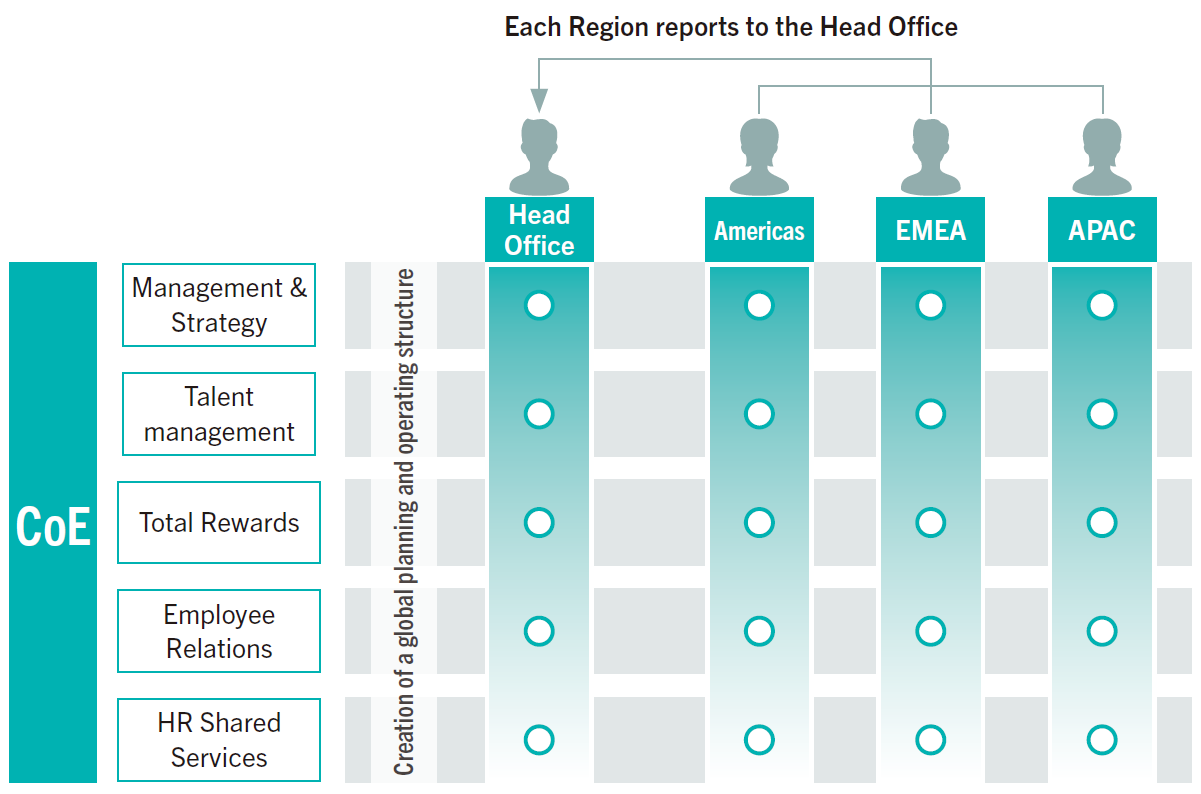
We view the issues as strengthening alignment between headquarters and regions and moving away from region- optimized HR operations. We are addressing these by strengthening global response capabilities at our Japan-based headquarters and integrating HR systems, operations, and IT infrastructure at overseas locations.
We are also working on formulating a consistent talent management policy for employees hired in Japan and those hired locally overseas, aiming for a shift toward consistent talent management across the entire Company and all regions, regardless of hired location.
Productivity Improvement Through Effective Operation of the New HR System (SMBC)
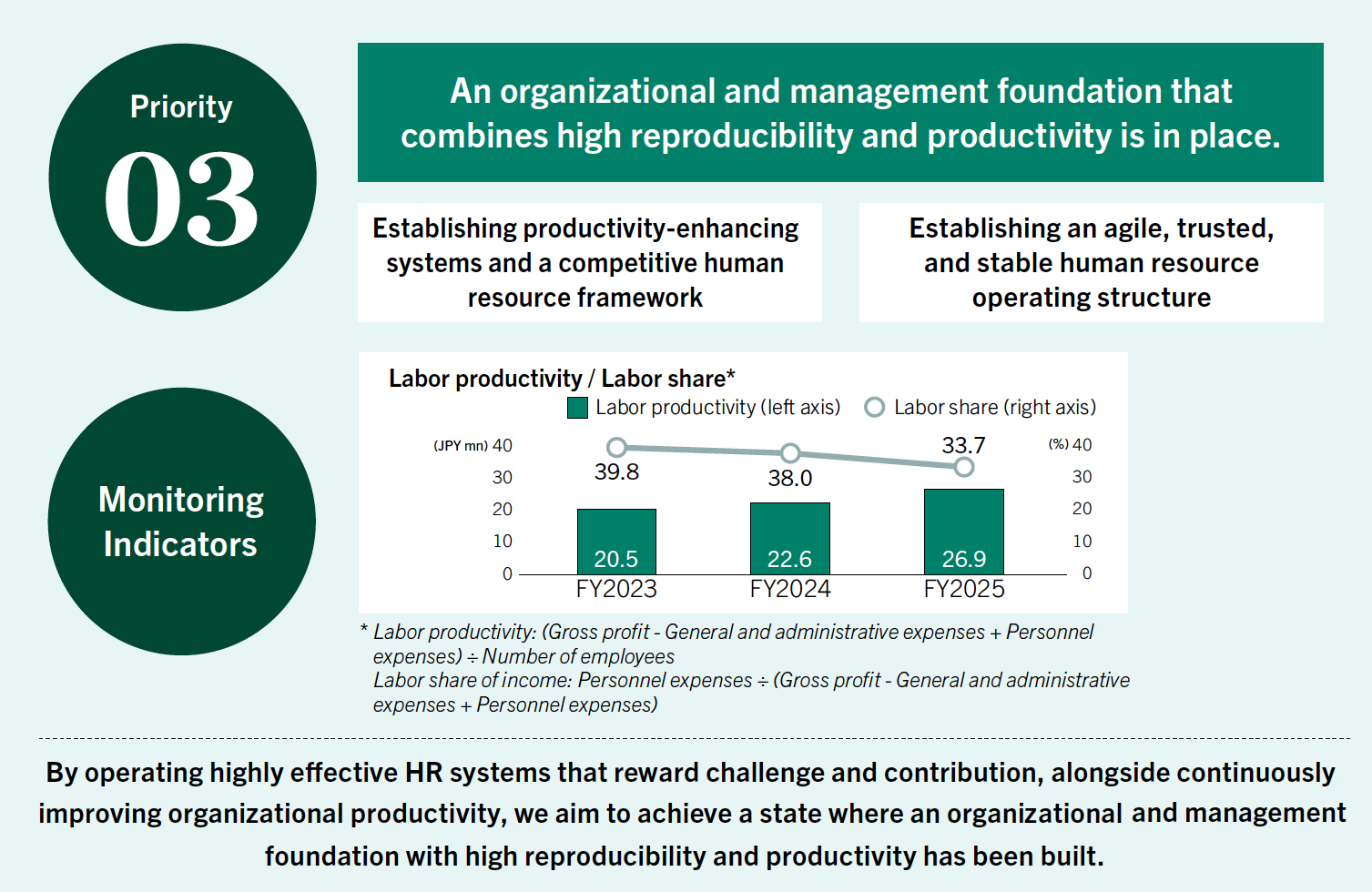
SMBC introduced a new HR system in January 2026. The system is guided by the basic principles of “Professional,” “Merit-based,” and “Inclusion,” this is the first fundamental system reform since its establishment, featuring appointments and promotions not constrained by seniority and compensation based on roles. To enhance effectiveness, while monitoring labor productivity and the labor share ratio, we will link the added value created through employees’ expertise to the sharing of the resulting gains. Through this, we aim for sustainable productivity improvement and strengthening of recruitment competitiveness and retention.
Maximizing Human Potential through AI Utilization
Considering the progress in AI utilization, we aim to maximize the value that only humans can provide, such as sophisticated judgment and the ability to build trust. In preparation for business transformation, we will integrally advance reskilling, talent redeployment, and review of evaluation and compensation. By building an HR foundation suited to the AI era, we aim to achieve both productivity gains and enhanced value creation.
Talent
- ●Optimizing talent deployment through AI utilization and developing actionable reskilling programs
Culture
- ●Fostering a Group-wide culture in which employees proactively use AI
Structure
- ●Introducing incentives to accelerate AI talent development
SMBC's Human Resource Development Policies
Sumitomo Mitsui Banking Corporation has formulated a "Human Resources Vision" in its Medium-term Management Plan to serve as a long-term strategy for every aspect of personnel development. Guided by this vision, we are transitioning from Human Resources Department-driven development models to more business-oriented, self-driven development models to better support the ambitions of all employees. Also, we are increasing the transparency of human resource evaluations to cultivate an atmosphere in which employees are evaluated based on their contributions.
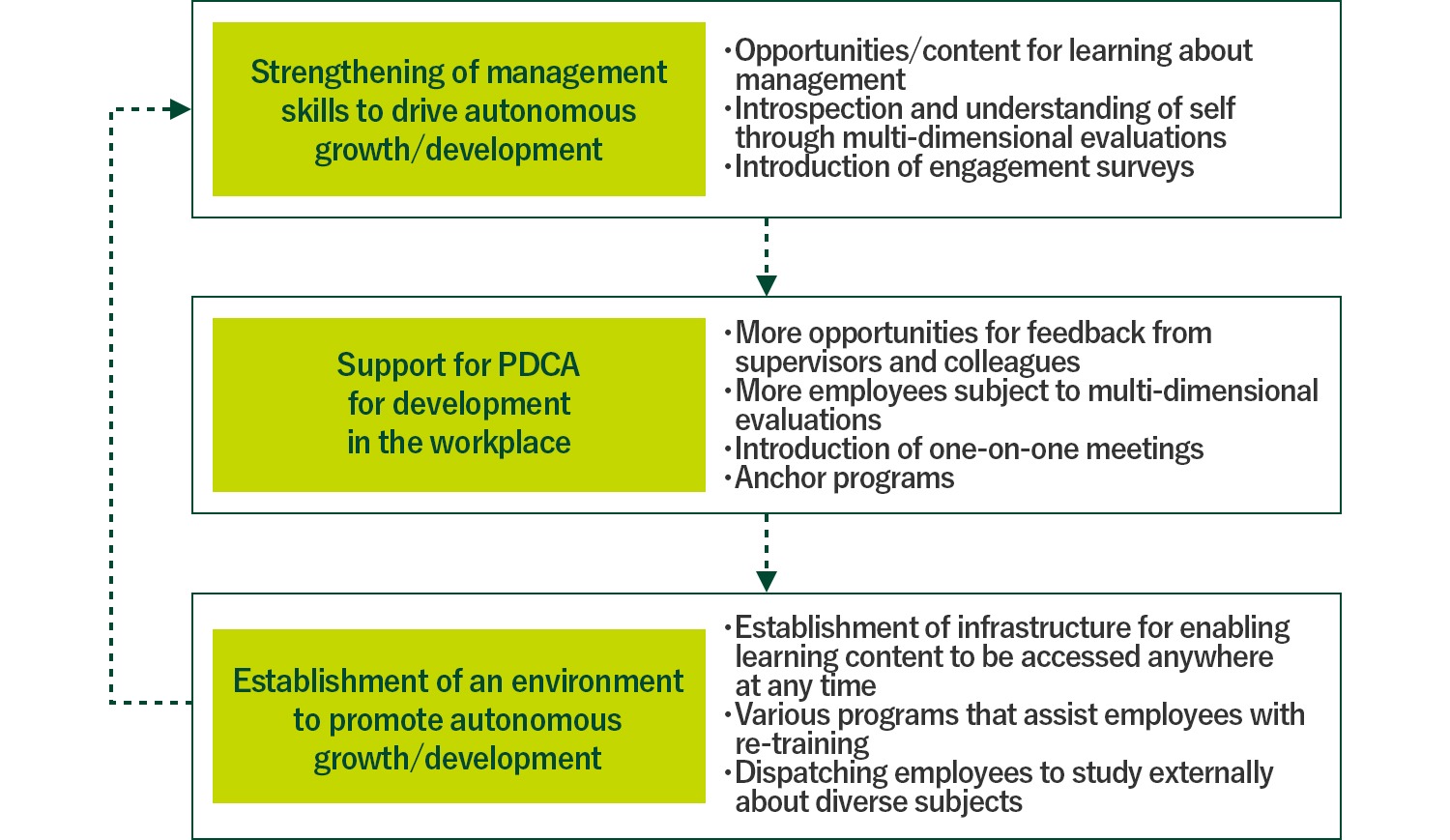
Acceleration of Experiential Learning Cycle Based on On-the-Job Training
For junior employees, SMBC Group provides frameworks through which new employees receive guidance from more experienced employees ("anchor" system) and is introducing development systems for fostering rigorous self-understanding, gaining insight on basic actions and basic knowledge, and cultivating an appropriately competitive mindset.
In addition, the wevox engagement survey system is utilized on an individual-workplace basis and one-on-one feedback meetings are held at all banks as part of our efforts to accelerate an experimental learning cycle based on on-the-job training.
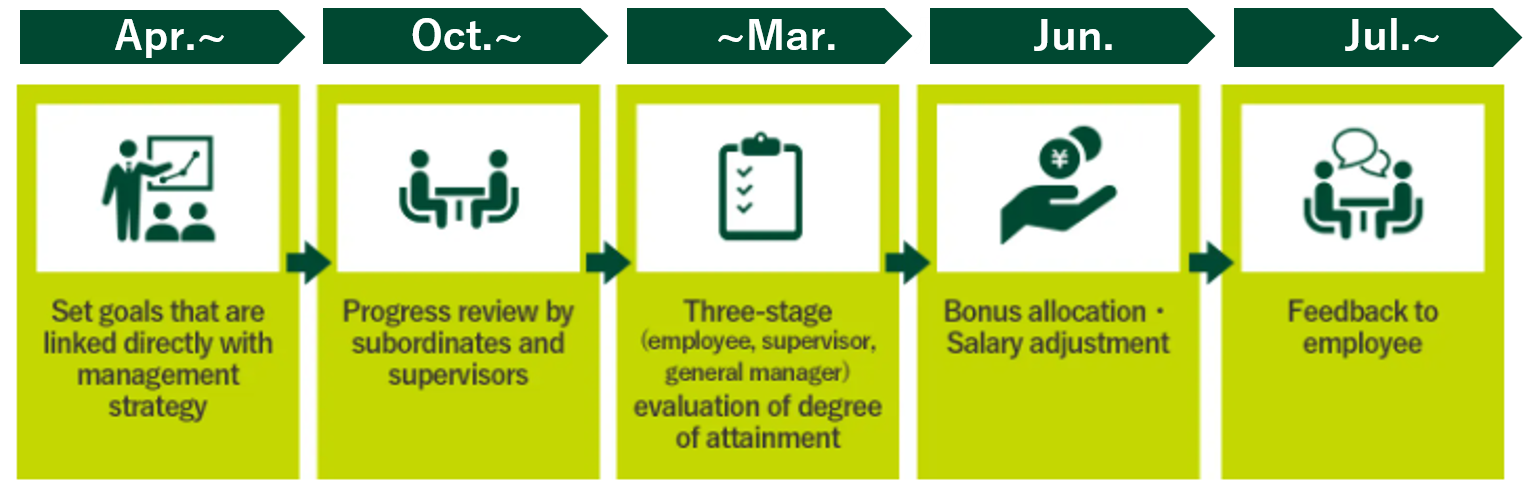
The following set of evaluation processes are operated on an annual basis in a cycle.
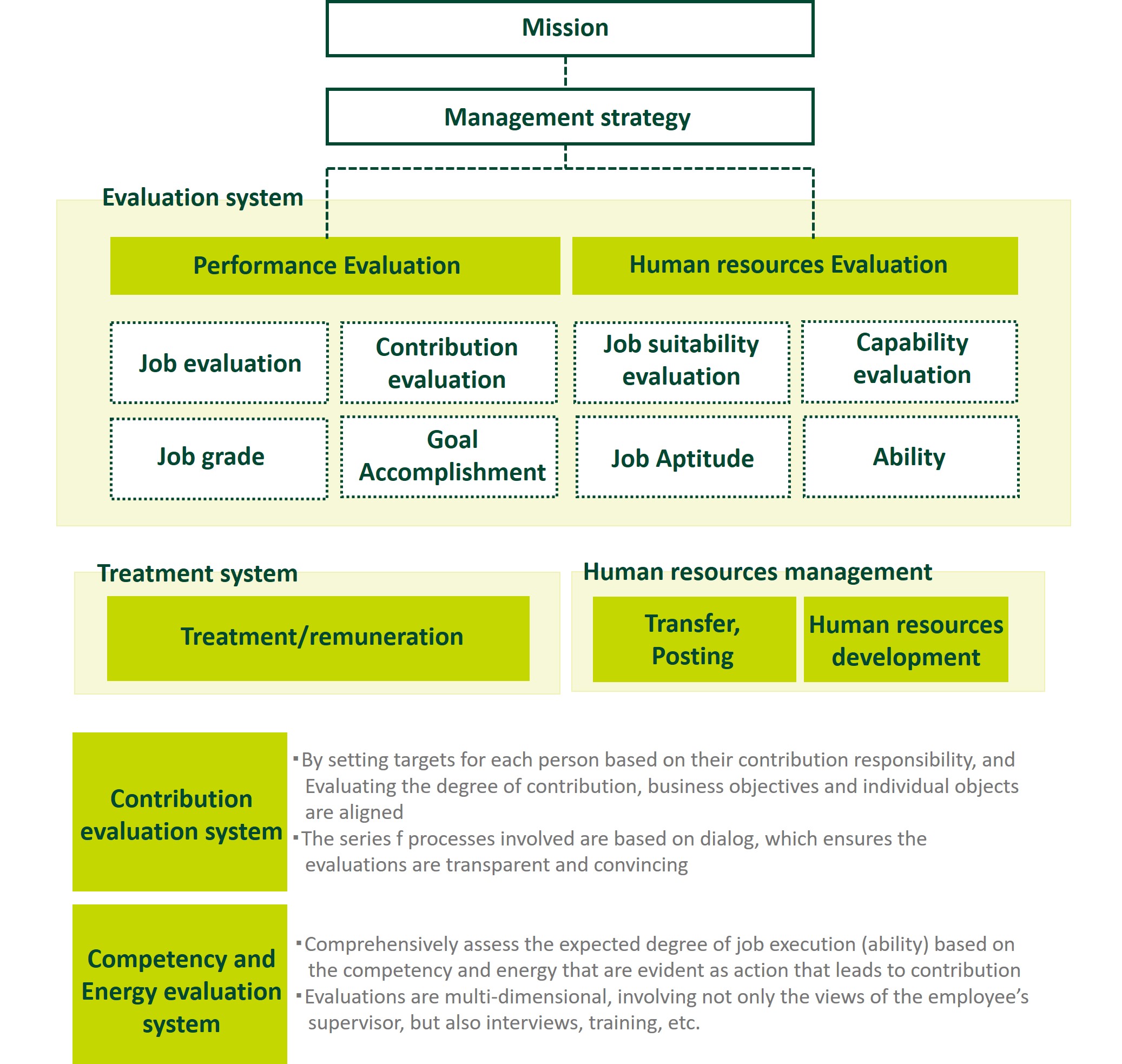
Contribution evaluation system
- ●To evaluate employees' contributions and other employees in a transparent and logical manner, and ensure that employees' are subjected to appropriate treatment.
- ● All forms of "contribution" are evaluated, not only contribution to one's own department/group, but also contribution to the Group as a whole and to other employees.
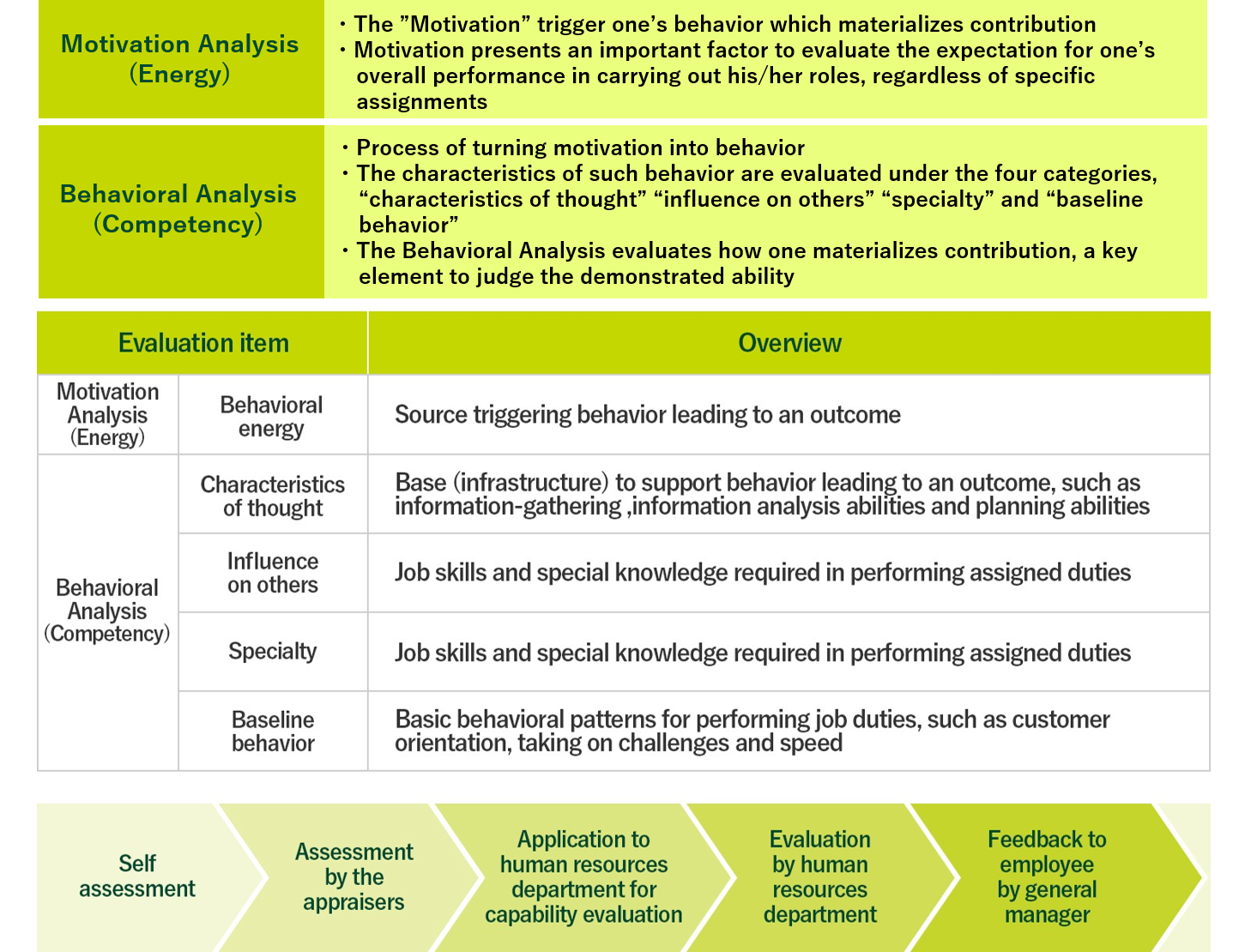
Competency/Energy evaluation system
- ●A system for comprehensive evaluation based on "behavioral analysis (competency)," which will materialize as one's own contributions, and "motivation analysis (energy)," which is unique to each individual.
- ●To ensure objective and satisfactory C/E Evaluation, information is collected from a wide range of sources not only from the general manager, but also from management from each office, as well as via interviews by HR staff during office visits or training sessions.
Initiatives targeting managerial personnel
The values of employees are changing and their work is becoming increasingly specialized, while attitudes and the environment relating to work styles are being radically transformed. To match this environment, in addition to carrying out newly appointed manager training that covers the expectations of their position, the importance of management, important points regarding human resource development, and the significance of diversity and inclusion, we are supporting all management positions by carrying out initiatives to strengthen management abilities.
Scientific studies are underway on understanding the skills required for management, and such skills have been systemized. Therefore, we have introduced management skill training that makes maximum use of the knowledge of outside specialists, including unconscious bias training, etc. Also, in addition to incorporating diversity (defined as making effective use of subordinates who have a varied sense of values as well as the differences of members to create new value) as one of our managerial evaluation factors, through multifaceted evaluations (SMBC Management Review) from subordinates and coworkers and interviews with superiors held once per year, managers reflect on their own management style from a multi-sided point of view, set their own agenda, develop the necessary skills by themselves, and repeat this cycle.

Expanding Off JT
The "Basic Education Program" is implemented with the aim of early strategic development of young employees and enhancing the training effect of OJT. For example, "SMBC First Flag Certification" and the "Check Point System" are introduced to evaluate and certify the essential basic knowledge required of young employees and the degree of acquisition and performance of basic behavior in order to create a thorough self-understanding, a thirst for independent growth, and an appropriate competitive environment. And the "anchor system," which is a system that supports the guidance and development of young employees by senior employees, has been introduced to enhance the training effect of combing OJT and Off JT in multiple layers.
In addition, SMBC have introduced a "Digital University," which promotes the cultivation of digital knowledge and skills through e-learning content, and theme-based training programs aimed at intensively strengthening specialized knowledge in areas such as credit and foreign exchange, in addition to position-based training for long-term career prospects, including management positions, and leadership training for leaders who are in charge of management. For leadership training, SMBC has also introduced advanced programs developed jointly with external specialized institutions such as the such as strengthening the specialized knowledge from the University of Tokyo, the University of Pennsylvania, and the Wharton School in the United States.